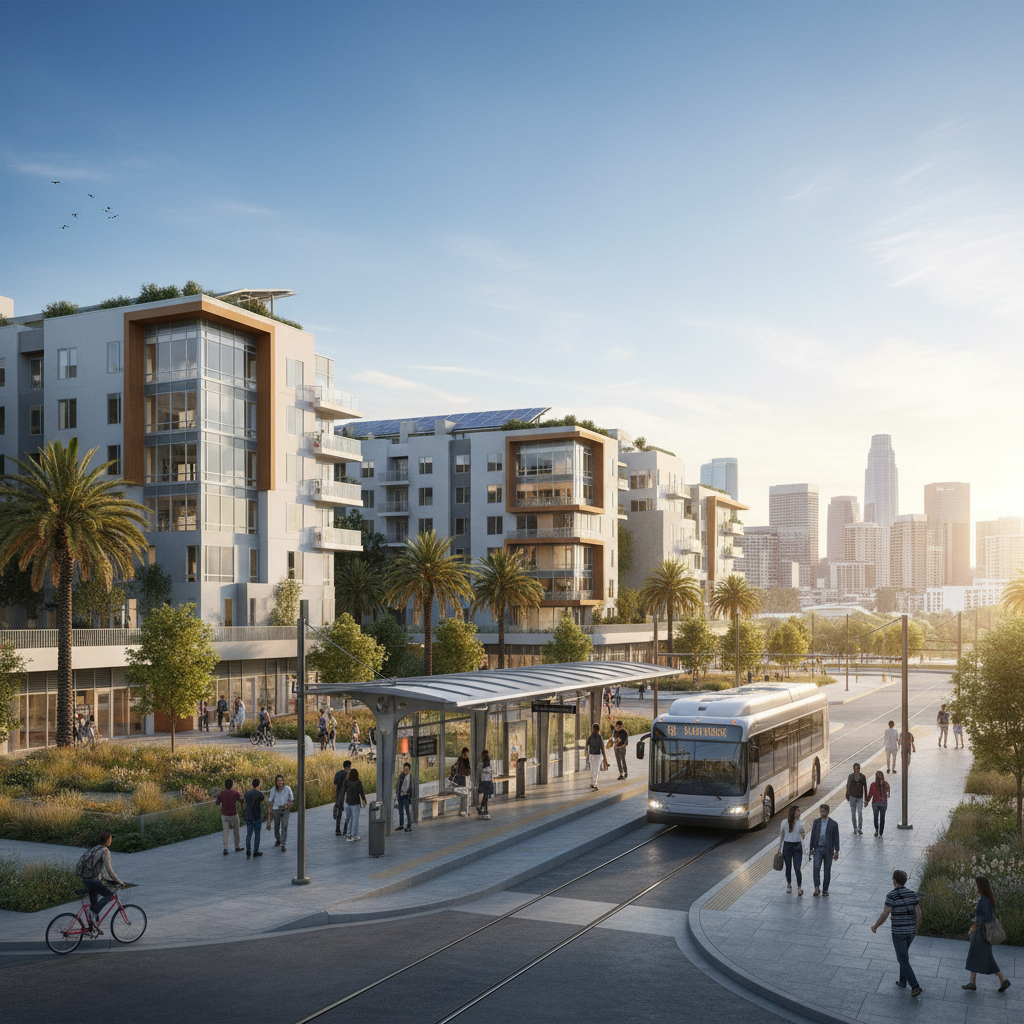
Maximizing Long-Term Value in California’s 2026 Transit Corridors
As we navigate the California real estate market in mid-2026, the traditional metric of 'location, location, location' has evolved. While insurance availability and retrofit compliance dominated the headlines earlier this year, a more fundamental shift is occurring in how property value is being measured: transit proximity. With the California Association of Realtors (CAR) reporting a housing affordability index hovering near 16% this June, buyers are increasingly looking toward 'Transit-Oriented Developments' (TOD) to offset the high costs of car ownership and secure future appreciation.
The AB 2097 Advantage
One of the most significant tools for the 2026 buyer is leveraging Assembly Bill 2097. This law prohibits local governments from imposing minimum parking requirements on most developments within a half-mile of a major transit stop. For buyers, this translates to a specific type of 'transit-rich' inventory that often carries a lower price point than traditional single-family homes with three-car garages, but offers higher density and rental potential. Data from recent 2025-2026 MLS transactions show that properties within these zones have appreciated 4.2% faster than their suburban counterparts, as the state moves toward a less car-dependent model.
Identifying High-Growth Corridors
Successful 2026 buyers are looking beyond the immediate neighborhood to infrastructure timelines. Key areas of focus include:
- The Brightline West Extension: With the high-speed rail link between Las Vegas and Rancho Cucamonga nearing completion, the Inland Empire's transit hubs are seeing a surge in 'commuter-lite' demand.
- LA Metro's D Line (Purple Line) Extension: As Los Angeles prepares for the 2028 Olympics, the Section 3 expansion toward Westwood is creating a value-capture window for buyers in West LA.
- The Central Valley HSR Nodes: In cities like Fresno and Bakersfield, the proximity to future High-Speed Rail stations is beginning to influence appraisal premiums for the first time in the state's history.
Practical Takeaways for 2026 Buyers
To capitalize on this trend, buyers should integrate these steps into their search protocol: 1. Verify the 'Major Transit Stop' Status: Do not rely on marketing descriptions. Use local GIS maps to confirm if a property sits within the 0.5-mile radius required for AB 2097 benefits. 2. Evaluate the Walk Score vs. Transit Score: In the 2026 market, a high transit score is often a better predictor of rental yield than a high walk score, particularly in the tech hubs of San Jose and the East Bay. 3. Account for the 'Olympic Premium': In Southern California, identify properties near planned 2028 venues where infrastructure spending is already finalized, as these areas often see accelerated utility and sidewalk upgrades. 4. Analyze Parking Flexibility: If buying a property without a garage in a TOD zone, ensure the local permit parking regulations haven't been tightened, a common 2026 municipal response to increased density.
Conclusion
The 2026 California buyer cannot afford to ignore the intersection of housing and infrastructure. By focusing on transit-oriented inventory, buyers can mitigate the high cost of living through reduced transportation expenses while positioning themselves in the path of the state’s most significant long-term growth. As density becomes the mandated norm, proximity to the rail or bus rapid transit line is no longer just a convenience—it is a primary driver of equity.


