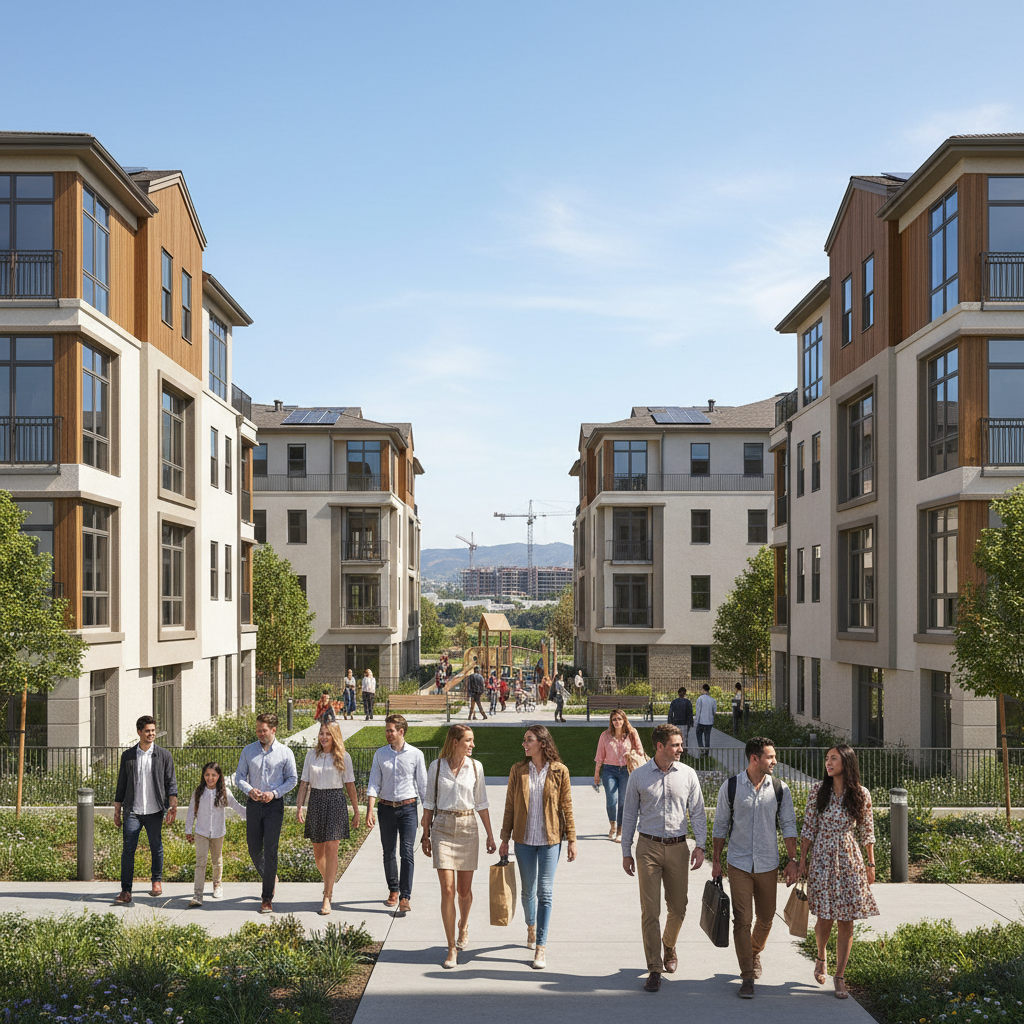
The 2026 Pivot: From Luxury Glut to Essential Housing
As of June 2026, the California real estate landscape has reached a significant inflection point. While the luxury tier (top 5% of market value) in markets like Santa Monica and Palo Alto has seen a 12% increase in days-on-market over the last year, a new institutional favorite has emerged: Workforce Housing. Specifically, assets targeting the 'Missing Middle'—households earning between 80% and 120% of the Area Median Income (AMI)—are seeing cap rate compression even as other sectors stabilize.
Data from the California Department of Housing and Community Development (HCD) indicates that while the state has made strides in low-income housing production, a 450,000-unit deficit remains for the moderate-income workforce. This supply-demand imbalance, coupled with the expiration of several high-end tax abatements, has created a unique arbitrage opportunity for investors who can navigate the regulatory incentives of 2026.
The Legislative Tailwinds: SB 423 and Beyond
The primary driver for this shift is the full implementation of Senate Bill 423, which extended and expanded streamlined approvals for multi-family developments. In 2026, developers who commit to 20% moderate-income set-asides are bypassing traditional CEQA (California Environmental Quality Act) delays, reducing entitlement timelines by an average of 18 months. According to CBRE’s Q2 2026 California Outlook, this 'entitlement speed' translates to an estimated 150-200 basis point increase in Internal Rate of Return (IRR) for mid-market projects compared to traditional discretionary approvals.
Economic Trends: The Rental Ceiling and Stability
The economic rationale is clear. While luxury rents have hit a hard ceiling due to remote work decentralization, workforce housing rents remain resilient. National Association of Realtors (NAR) data for June 2026 shows that California’s essential workers—teachers, healthcare professionals, and first responders—have seen wage growth of 4.2% year-over-year, outpacing the general inflation rate. For the investor, this means a lower delinquency risk and higher tenant retention compared to the volatile 'renter-by-choice' luxury demographic.
Practical Takeaways for 2026 Investors
- Target the 'Suburban-Urban' Fringe: Look for parcels in secondary transit zones where SB 423 streamlining applies but land costs haven't yet peaked. Areas like the Inland Empire’s western edge and the Sacramento periphery are currently seeing the highest volume of workforce-focused permit filings.
- Leverage the 'Middle-Income' Tax Credit: Investigate the 2026 expansion of the California Tax Credit Allocation Committee (TCAC) programs, which now offer enhanced credits for projects specifically serving the 80-120% AMI bracket.
- Focus on 'Durability of Income': In a 2026 economy characterized by AI-driven job displacement in white-collar sectors, properties located near healthcare clusters or regional logistics hubs offer the most stable cash flows.
Conclusion: The New Value Proposition
The California market in 2026 is no longer about betting on perpetual appreciation in the highest-cost coastal pockets. Instead, the 'Alpha' is found in the reliability of the middle. By aligning investment strategies with state-mandated housing goals and the economic realities of the California workforce, savvy players are securing long-term yields that the luxury market can no longer guarantee.