The Pivot to ‘Deep Tech’ Residential
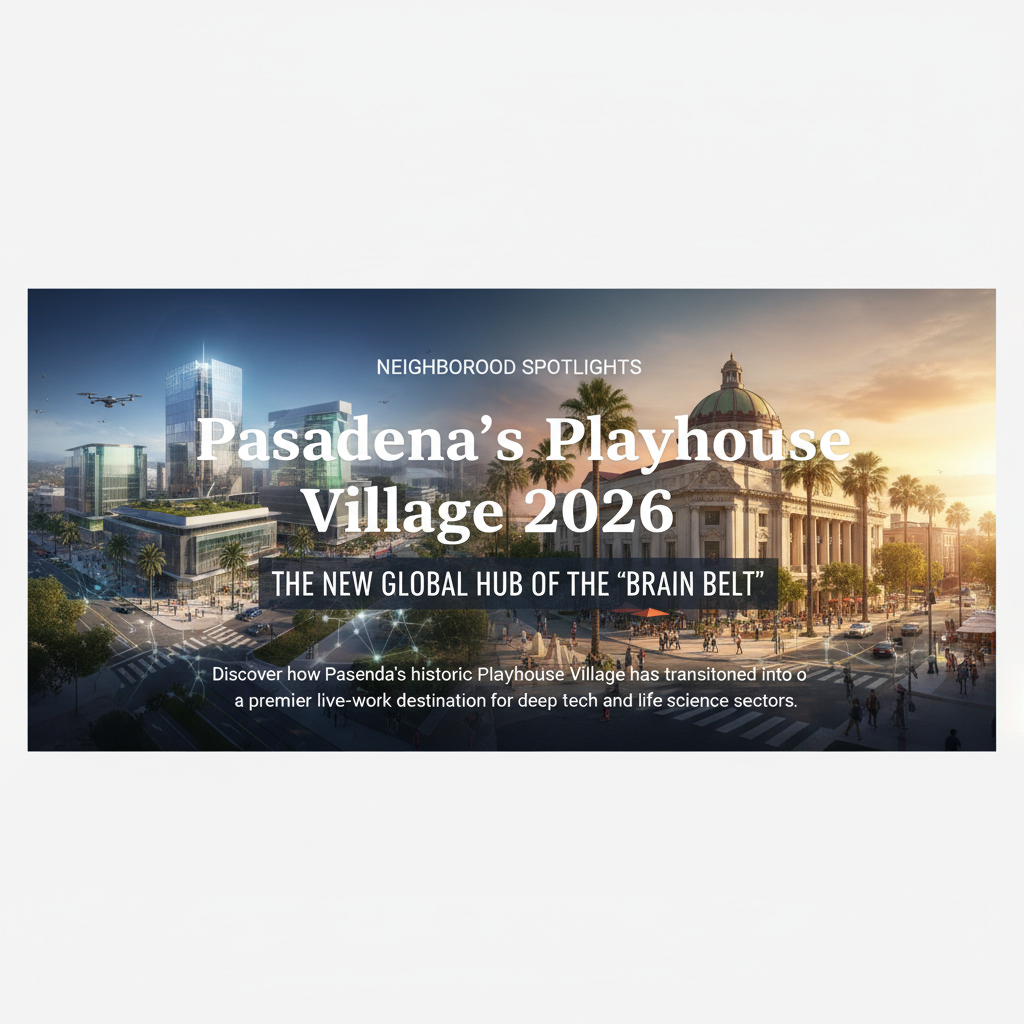
As of mid-2026, the narrative of the Southern California real estate market has shifted from sprawling suburban growth to the tactical intensification of specialized urban nodes. While the ‘Cerebral Valley’ of San Francisco remains the software capital, Pasadena’s Playhouse Village has emerged as the definitive anchor for the ‘Brain Belt’—a high-density corridor dedicated to life sciences, robotics, and hardware-integrated AI. This transition is not merely economic; it is a fundamental reconfiguration of one of California’s most historic neighborhoods into a walkable, transit-oriented innovation district.
The Infrastructure of Innovation: Lab Space and Adaptive Reuse
The transformation of Playhouse Village has been fueled by a strategic pivot in commercial real estate. According to CBRE’s Q1 2026 Life Sciences Report, Pasadena now boasts over 1.2 million square feet of Class A lab space, with a vacancy rate of just 4.2%. Much of this inventory was created through the adaptive reuse of mid-century office blocks along Colorado Boulevard and Lake Avenue. Unlike the generic tech campuses of the past, these facilities are integrated directly into the streetscape, placing researchers and engineers steps away from luxury residential units and historic cultural institutions.
Market Dynamics: Inventory and Pricing Data
The residential market in Playhouse Village reflects this influx of high-earning human capital. Data from the California Association of Realtors (CAR) and local MLS listings for June 2026 indicate a robust appreciation for multi-family units and luxury condominiums:
- Median Condo Price: $1,150,000 (a 6.8% YoY increase).
- Price per Square Foot: $920, significantly higher than the broader San Gabriel Valley average.
- Inventory Levels: Supply remains tight at 2.4 months, driven by the ‘lock-in’ effect of homeowners with low-rate mortgages from the early 2020s and high demand from JPL and Caltech-affiliated professionals.
Community Features and Lifestyle Amenities
The appeal of Playhouse Village lies in its ‘Academic Urbanism.’ The neighborhood serves as the cultural heart of Pasadena, anchored by the legendary Pasadena Playhouse and the USC Pacific Asia Museum. In 2026, the completion of the ‘Green Loop’—a series of pocket parks and widened, shaded sidewalks—has successfully mitigated the urban heat island effect, making the district one of the most pedestrian-friendly environments in the county.
Transportation is a primary value driver. The Metro A Line (formerly Gold Line) provides a direct 20-minute connection to Downtown Los Angeles, while the 2025 expansion of the Pasadena Transit micro-shuttle system offers seamless connectivity between the Village and the Caltech campus. For families, the neighborhood is served by the Pasadena Unified School District, complemented by elite private institutions like Poly and Westridge, which continue to draw affluent buyers back into the urban core.
Practical Takeaways for Stakeholders
For Buyers
Focus on new-construction condominiums along the El Molino corridor. These units are increasingly designed with ‘flex-work’ spaces that cater to the hybrid schedules typical of the tech and research sectors. Look for buildings with LEED Platinum certification, as energy efficiency is becoming a major resale differentiator in the 2026 market.
For Investors
The ‘missing middle’ housing remains the highest-yield opportunity. Small-scale multi-family properties (4–10 units) that can be renovated into boutique rentals are fetching premium rents from post-doctoral researchers and engineers who prioritize proximity to their labs over suburban acreage.
For Sellers
With inventory levels at historic lows, sellers in the Playhouse Village hold significant leverage. Highlighting proximity to the ‘Brain Belt’ employers—such as the expanding BioLabs Pasadena—is essential for capturing the attention of the current buyer demographic.