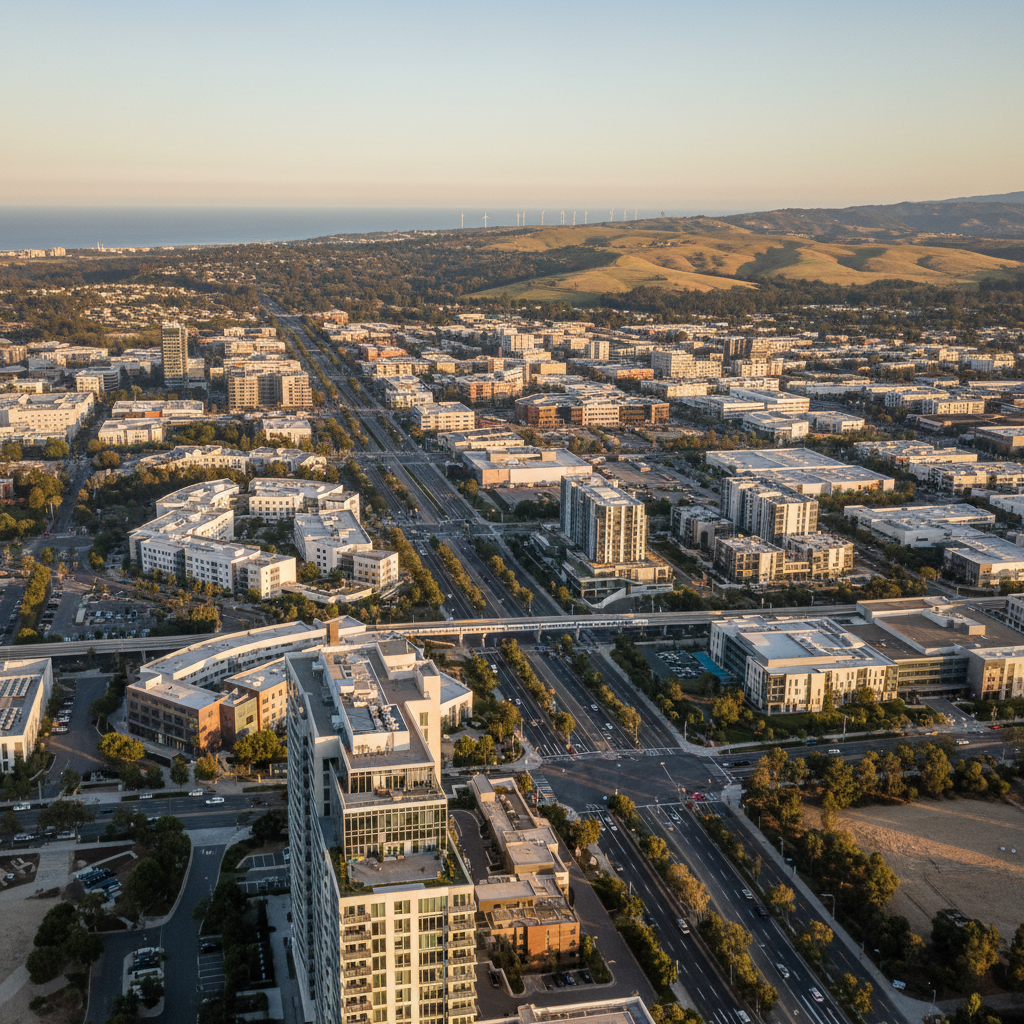
The Great Yield Pivot: Beyond the Coastal Ceiling
As we reach the midpoint of 2026, the California real estate narrative has shifted from 'recovery' to 'redefinition.' While the legacy hubs of San Francisco and Los Angeles remain the state’s economic anchors, a distinct trend has emerged in the data: the institutional flight to California’s 'Secondary Cores.' Market analysis from the first half of 2026 indicates that capital flow into the Inland Empire and the Sacramento-San Joaquin corridor has surpassed coastal investment by a margin of 14% year-over-year.
The Convergence of Affordability and Infrastructure
The primary driver of this migration is the exhaustion of the coastal yield. According to recent MLS data and CBRE quarterly reports, the cap rates for multi-family assets in Santa Clara and Orange Counties have compressed to sub-3.5% levels, driven by restricted inventory. In contrast, the Central Valley and Inland Empire are offering stabilized yields between 5.2% and 5.8%.
However, this is no longer a simple 'flight to cheap land.' The 2026 market is reacting to significant infrastructure milestones. The progress of the California High-Speed Rail (now entering advanced testing phases in the valley) and the expansion of the Port of San Pedro’s inland logistics network have turned cities like Fresno, Stockton, and Riverside into self-sustaining economic engines. These are no longer just 'dormitory' cities for coastal workers; they are becoming primary hubs for the logistics, ag-tech, and renewable energy sectors.
Economic Trends: The Reshoring Ripple Effect
U.S. Census Bureau migration patterns for early 2026 show a stabilization of the 'California Exodus.' While out-migration to Texas and Arizona has cooled, intra-state migration is at a ten-year high. Professional cohorts are moving from the coast to the interior not just for lower prices, but for a higher 'Quality of Life per Dollar' (QLD) ratio. This shift is supported by the 2026 'hybrid-permanency' labor market, where 65% of California’s tech and service workforce maintains a local-remote status, requiring proximity to a regional office but not a daily coastal commute.
Investment Perspectives: The 'Secondary Core' Strategy
For the sophisticated investor, the play in 2026 is less about speculative appreciation and more about durable cash flow. The 'Secondary Core' strategy focuses on Class B+ multi-family assets and transit-oriented developments in the Inland Empire.
- Low Vacancy Insulation: Vacancy rates in the Sacramento metro area have remained below 4.2% throughout Q1 and Q2 2026, significantly lower than the luxury-heavy markets of downtown LA.
- Rental Growth Momentum: While coastal rents have stabilized at a 2% annual growth rate, the Central Valley is seeing a 5.5% lift, driven by the influx of high-earning remote professionals.
Practical Takeaways for 2026 Stakeholders
For Investors: Look for assets within a 15-mile radius of the planned High-Speed Rail stations or emerging logistics hubs. The 2026 market rewards 'logistical proximity' over 'coastal prestige.'
For Sellers: In secondary markets, the buyer pool is currently dominated by 1031-exchange investors moving out of coastal properties. Highlighting long-term lease stability and energy efficiency is key to capturing this institutional capital.
For Buyers: The 'window of arbitrage' is narrowing. As institutional players enter these secondary markets, the barrier to entry for individual buyers is rising. Mid-2026 represents the last phase of 'accessible' pricing before these regions are fully re-rated as primary markets.
The California market of 2026 is no longer a monolith of coastal dominance. It is a bifurcated landscape where the smartest capital is moving inland, seeking the elusive combination of yield, stability, and future-proof infrastructure.