The Evolution of Master-Planned Living
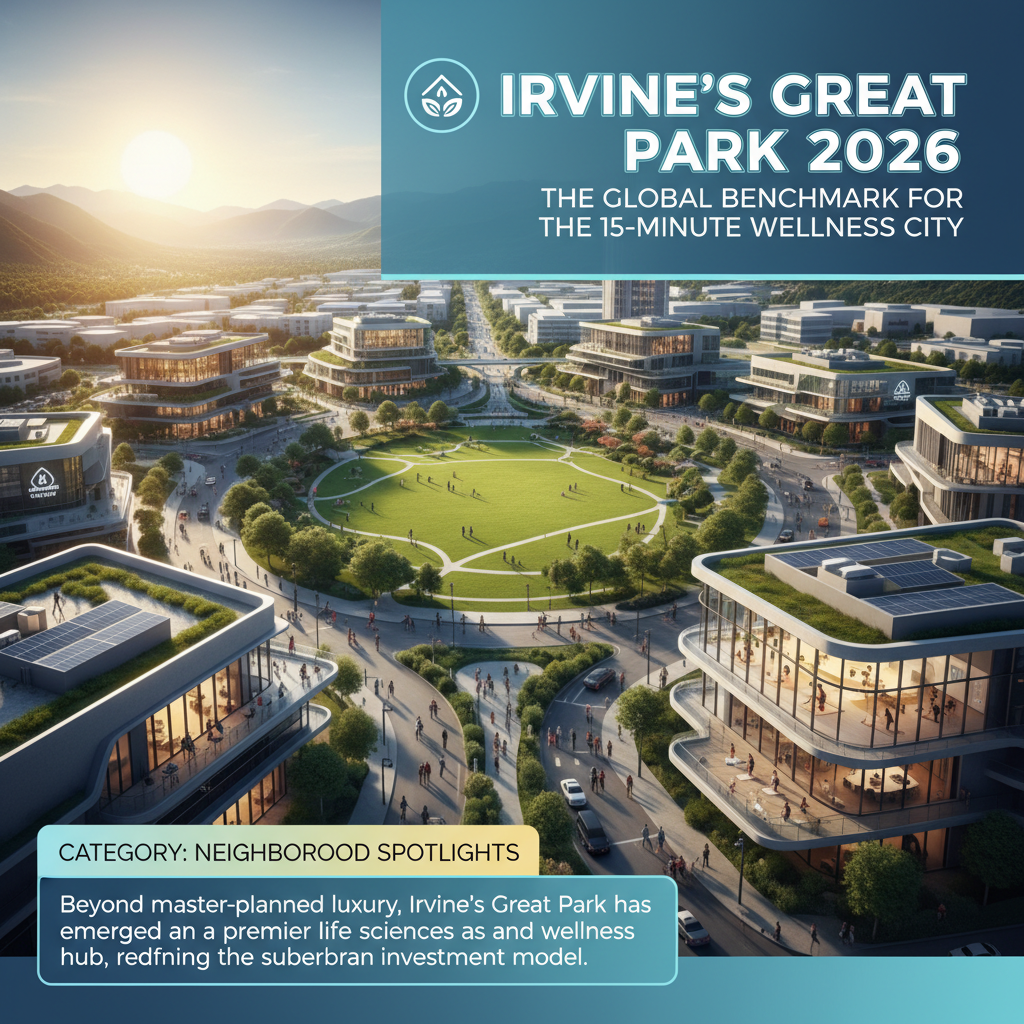
As of mid-2026, Irvine’s Great Park Neighborhoods (GPN) have transcended their initial reputation as a high-end suburban enclave to become the definitive global benchmark for the '15-minute wellness city.' Built on the site of the former Marine Corps Air Station El Toro, the district has successfully integrated high-density life sciences employment with a lifestyle-first residential model that prioritizes mental and physical health.
A High-Octane Economic Engine
The primary driver behind the GPN’s 2026 dominance is its proximity to the 'Irvine Spectrum Life Science Corridor.' According to recent CBRE market reports, laboratory vacancy rates in the immediate vicinity remain below 4%, driven by the expansion of anchors like Edwards Lifesciences and the full integration of the UCI Health-Irvine medical campus. This proximity has created a unique 'white-collar walkability' where nearly 18% of GPN residents now commute via e-bike or pedestrian paths to the adjacent employment hubs.
Community Infrastructure and Amenities
The Great Park itself, spanning 1,300 acres, serves as the neighborhood’s backyard. In 2026, the completion of the 'Cultural Terrace' has added world-class museums and a permanent outdoor amphitheater to the existing 194-acre sports park. Unlike traditional suburbs, the GPN is divided into 'collections'—such as Solis Park and Rise—each featuring hyper-local amenities including botanical gardens, glass-walled co-working pavilions, and Olympic-grade aquatic centers. All collections are linked by the 'Bosque,' a massive linear park that ensures no home is more than a five-minute walk from a nature trail.
Educational Excellence and Transportation
Education remains a cornerstone of the GPN appeal. The Irvine Unified School District (IUSD) continues to rank in the top 1% nationally, with Cadence Park and Solis Park schools offering specialized STEAM curricula that draw international families. For transportation, the Irvine Station serves as a multi-modal hub, providing Metrolink and Amtrak Pacific Surfliner access, connecting residents to Los Angeles and San Diego in under 90 minutes, while the 133 and 241 toll roads offer immediate access to the Orange County coast.
Data-Driven Real Estate Trends
The financial resilience of this neighborhood is evidenced by MLS data from the first half of 2026:
- Median Sales Price: The median price for detached single-family homes in GPN has stabilized at $2.1 million, a 14% increase since 2024.
- Inventory Velocity: Average days on market (DOM) sits at 18 days, significantly lower than the broader Orange County average of 32 days.
- Price Per Square Foot: Luxury townhomes are commanding a premium of $950–$1,100 per square foot, reflecting the demand for 'lock-and-go' high-end living.
Strategic Takeaways for Stakeholders
For Buyers: The GPN is no longer a 'ground-floor' opportunity, but it remains a primary choice for capital preservation. The scarcity of remaining developable land within the park’s perimeter suggests that long-term appreciation will likely outpace the regional average.
For Investors: Rental demand remains insatiable among life science professionals and international students. Modern 3-bedroom townhomes are yielding strong rental returns, with low vacancy risks due to the IUSD school draw.
For Sellers: The 2026 market favors properties with integrated 'wellness' features—such as whole-home air filtration and dedicated home-office suites—as the neighborhood continues to attract a demographic that blends remote work with high-intensity professional roles.