The Shift to the California Compound
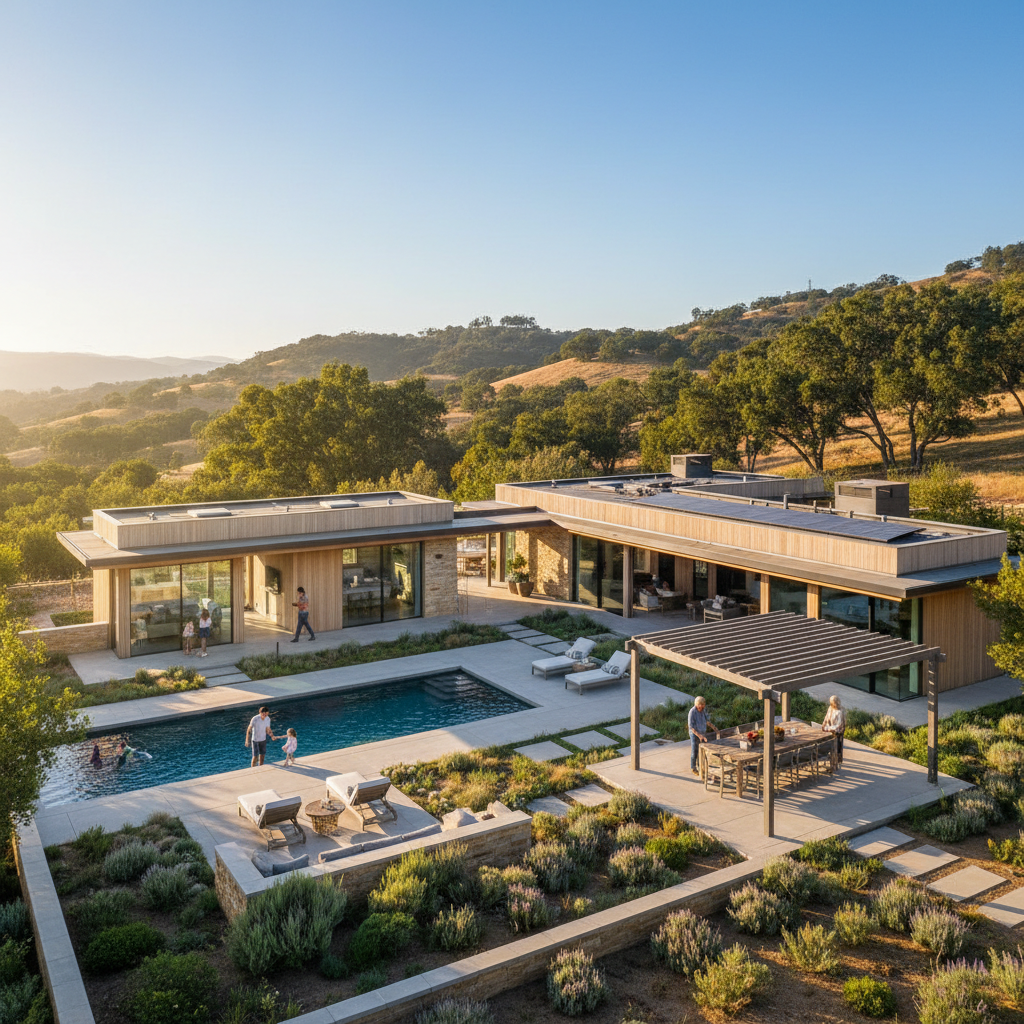
By mid-2026, the California housing market has undergone a fundamental structural change. The traditional single-family residence is increasingly marketed as a "Compound"—a multi-functional estate designed for co-living, aging in place, and independent income generation. Data from the California Association of Realtors (CAR) indicates that 21% of successful transactions in high-demand coastal zones now involve multi-generational buyers, a 4% increase from 2024. This trend is not merely a response to affordability but a lifestyle shift toward consolidated family wealth.
Capturing the "Sandwich Generation" Premium
The primary driver of the 2026 market is the "Sandwich Generation"—middle-aged professionals supporting both college-age children and elderly parents. To maximize value, sellers must present their homes as a solution to this demographic's unique friction points. According to a 2026 CBRE housing report, properties that feature "Universal Design" (accessibility-focused architecture) sell 15% faster than those with traditional layouts. Positioning your home as a "forever solution" for an extended family unit creates a psychological value that transcends mere square footage.
Three Pillars of the Compound Strategy
1. Functional Autonomy: In the 2026 market, buyers prioritize separate living spheres. When preparing your home, ensure that secondary spaces (finished basements, ADUs, or converted garages) have independent access points. Highlighting these in your marketing materials as "Autonomous Living Zones" rather than just extra bedrooms can justify a higher asking price.
2. The Infrastructure Audit: Multi-generational living puts a strain on residential systems. Sellers who provide proof of upgraded electrical panels (at least 200-amp service) and high-capacity tankless water heaters will outperform the market. These "invisible upgrades" are essential for homes hosting five or more occupants and are frequently cited by 2026 inspectors as critical deal-points.
3. SB 9/10 Potential as an Asset: Even if your property isn't currently split, the right to develop is a tangible asset. Providing a "Development Prospectus" that outlines how the lot can be split or densified under California’s mature SB 9 and SB 10 frameworks provides buyers with a roadmap for future equity, making your listing an investment vehicle as much as a residence.
Practical Takeaways for Sellers
- Audit for Universal Access: Minor modifications like lever-style door handles and step-free entries attract the lucrative multi-gen buyer pool looking for long-term aging-in-place solutions.
- Visualize the Space: Use virtual staging to show a large primary suite as a multi-functional guest wing or a separate office area as a "Junior ADU" to help buyers see the multi-gen potential.
- Highlight Digital Capacity: With multiple adults working from one address, verifiable 10-gigabit fiber availability or integrated Mesh Wi-Fi 7 systems are top-tier selling points in the 2026 tech-centric market.