The Transformation of Commercial Corridors
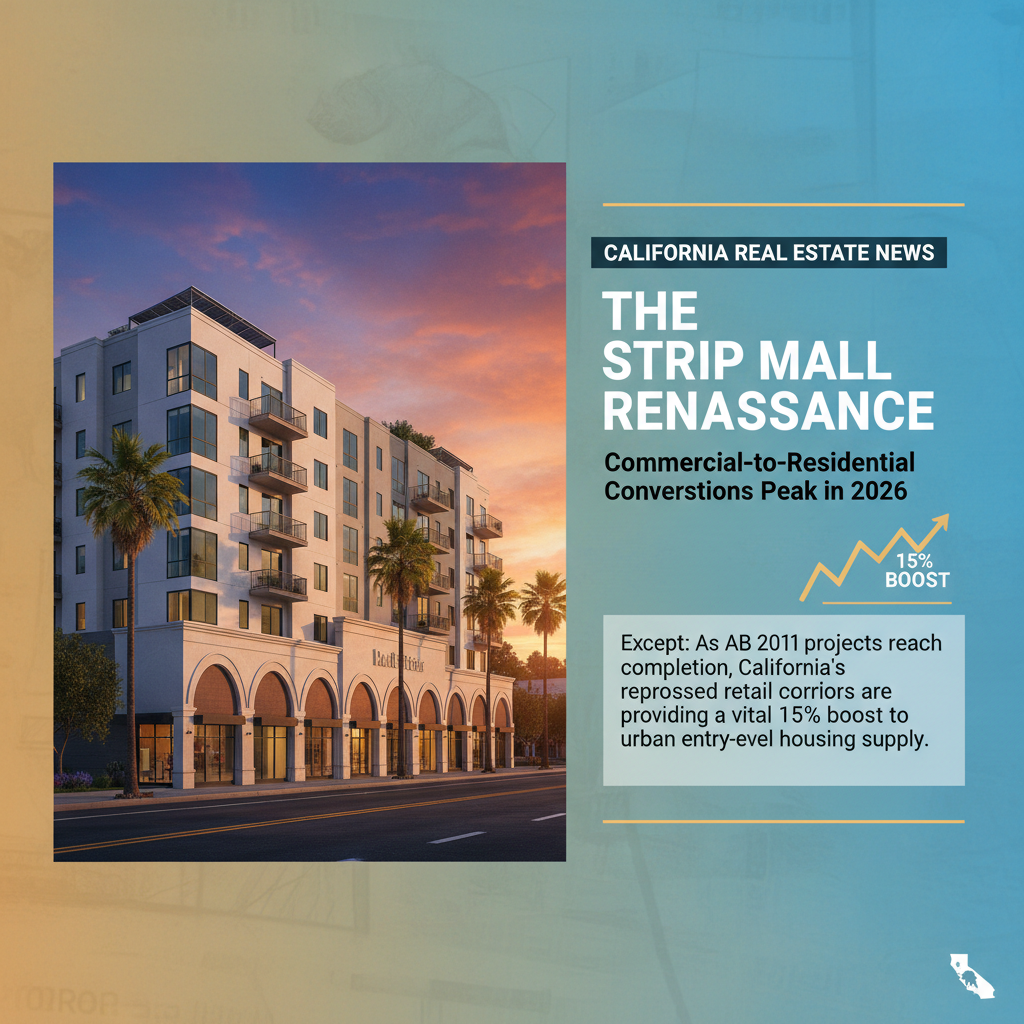
As of June 21, 2026, the California real estate landscape is witnessing its most significant structural shift in decades. The 'Zombie Mall' phenomenon, once a symbol of retail decline, has become the state's most prolific source of new housing inventory. Thanks to the full maturation of the Affordable Housing on High Road Jobs Act (AB 2011) and the Middle Class Housing Act (SB 6), developers have bypassed traditional local rezoning hurdles to convert underutilized shopping centers and aging office parks into vibrant, mixed-use residential hubs.
Market Data and Trends
According to recent data from the California Department of Housing and Community Development (HCD), residential conversions of commercially-zoned land accounted for 42% of all new multi-family permits issued in the first half of 2026. In major metropolitan areas like Los Angeles, San Diego, and the Silicon Valley, the 'Retail-to-Residential' (R2R) segment has seen a 28% year-over-year increase in transaction volume. These units are hitting the market at a critical time, providing a median price point roughly 18% lower than traditional new-build suburban detached homes, making them a primary target for Gen Z and Millennial buyers who prioritize transit proximity over square footage.
Why Investors are Pivoting
Institutional investors are shifting focus from traditional Class-A office space to these 'Integrated Living' projects. The appeal lies in the existing infrastructure; these sites are already connected to major power grids and transit arteries, avoiding the delays common in greenfield developments. Recent MLS data indicates that R2R assets are currently yielding cap rates of 6.1%, significantly outperforming the stagnating commercial office market, which has plateaued at 3.9% due to persistent remote-work trends. 'The cost-to-build on a converted parking lot is nearly 25% lower than standard urban infill once you factor in the streamlined CEQA exemptions,' reports a June analysis by CBRE.
Practical Takeaways
- For Buyers: Prioritize units in projects converted from retail hubs. These developments often offer superior walkability scores and come with built-in amenities like grocery stores and gyms on the ground floor, reducing overall cost-of-living.
- For Sellers: Owners of smaller commercial strips or warehouse spaces should evaluate their 'Residential Re-use' value before listing. The market for land sale to residential developers is currently at a record high for commercial assets located near urban cores.
- For Investors: Focus on the 'Missing Middle.' The highest demand in June 2026 is for one- and two-bedroom units within these conversions, as they cater to the massive demographic of hybrid workers who no longer require a dedicated home office but value high-speed urban connectivity.