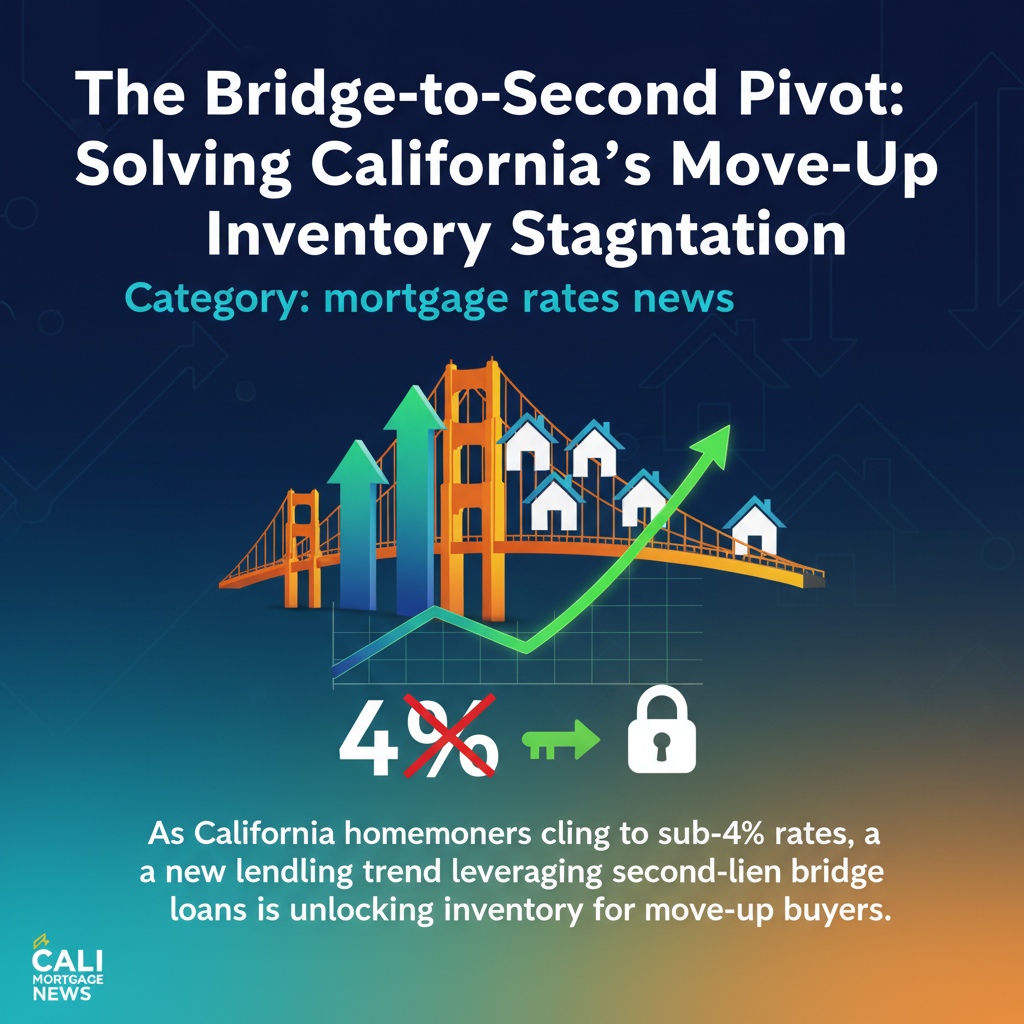
Navigating the 2026 Equity Trap
As of June 21, 2026, the California real estate market remains defined by a paradoxical tension: record-high homeowner equity alongside a persistent reluctance to abandon the low-interest-rate mortgages of the early 2020s. With the 30-year fixed mortgage rate currently hovering around 6.35%—a significant improvement from the peaks of 2023 but still nearly double the pandemic-era lows—the 'lock-in effect' continues to stifle inventory. However, a sophisticated lending strategy is gaining traction across the Golden State: the Stand-Alone Purchase-Money Second.
The Blended Rate Advantage
For the average California homeowner, a traditional cash-out refinance to fund a move-up purchase is mathematically unattractive. Refinancing an existing $500,000 balance at 3% into a new $900,000 loan at 6.35% results in a prohibitive increase in monthly debt service. According to recent data from the California Association of Realtors (CAR), nearly 72% of state residents hold a primary mortgage under 4.5%.
Instead of extinguishing these low-rate first mortgages, lenders are increasingly offering high-LTV (Loan-to-Value) second liens that allow buyers to tap into their existing equity for a down payment on a new property. This 'bridge-to-second' strategy allows the owner to retain their primary low-rate mortgage on their first home—often converting it into a high-yield rental—while securing a second home with a 'blended' interest rate that is significantly lower than a full market-rate refi.
Data Points: Equity and Liquidity in June 2026
- California Home Equity: The average California homeowner now holds over $540,000 in tappable equity, a 12% increase year-over-year as inventory shortages sustain price floors.
- Inventory Velocity: While traditional listings are down 5% since March, the volume of 'buy-before-you-sell' transactions involving second-lien financing has risen by 18% in high-cost hubs like San Jose and San Diego.
- Debt-to-Income (DTI) Flexibility: New 2026 underwriting guidelines from major secondary market players have expanded DTI limits to 50% for borrowers who can demonstrate 'rental offsets' on their departing residence.
Practical Takeaways for California Buyers
Prospective move-up buyers should consider the following steps to navigate the current lending environment:
- Audit Your Blended Rate: Work with a lender to calculate the weighted average of your existing 3% mortgage and a new 7.5% second lien. Often, the resulting 'blended rate' is closer to 4.8%, making the move financially viable.
- The Rental Conversion Play: Given California’s extreme rental demand, many buyers are using second-lien equity to buy a new primary home while keeping the old one as an investment. This builds a dual-equity engine without losing the low-cost debt of the original home.
- Target 'Simultaneous Seconds': Look for lenders specializing in 'piggyback' loans that allow for 85% to 90% combined loan-to-value (CLTV). This minimizes the cash-outlay required in expensive markets like Orange County or the Bay Area.
By shifting the focus from the headline 30-year fixed rate to a strategic utilization of existing equity, California buyers are finding a path forward that preserves their historic low-cost debt while allowing for necessary lifestyle transitions.


