The Summer Inventory Stagnation of 2026
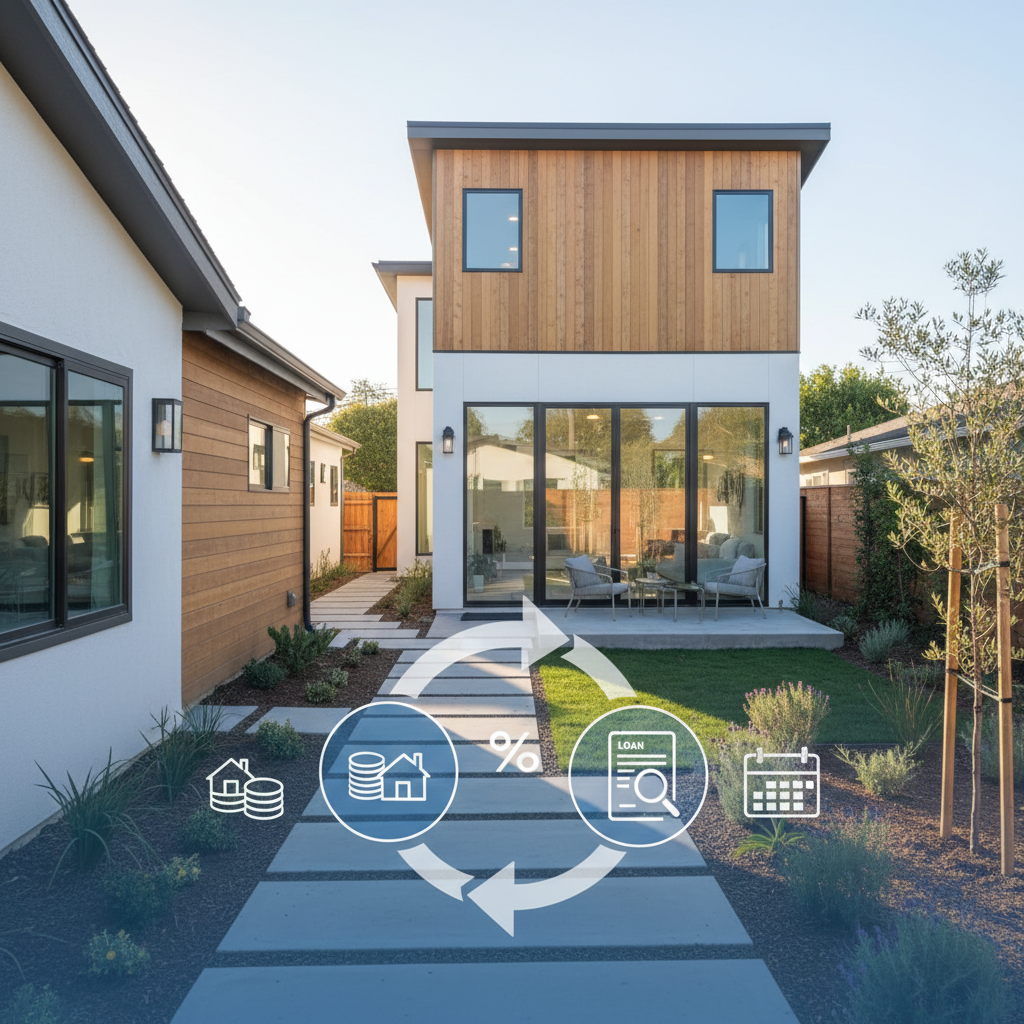
As we enter the official start of the summer season on June 20, 2026, the California real estate market continues to grapple with a persistent lack of existing-home inventory. While national mortgage rates have plateaued at approximately 6.35% for the 30-year fixed-rate mortgage, California’s high-cost basins—specifically the Bay Area and Coastal SoCal—are seeing a shift in how buyers and current homeowners perceive value. Rather than waiting for a 'perfect' listing that may never hit the MLS, the market is pivoting toward the 'ADU Equity Cycle,' where Accessory Dwelling Units are no longer just an afterthought but a primary financing strategy.
Data-Driven Shifts in California Lending
According to recent data from the California Association of Realtors (CAR), nearly 22% of all single-family residential transactions in Q2 2026 involved properties with existing ADUs or permitted plans for one. This is a significant jump from 2024 levels. Furthermore, the California Department of Housing and Community Development reports that ADU permits now account for nearly one-third of all new housing units in the state. From a lending perspective, the 'Backyard Pivot' is being fueled by Fannie Mae’s updated guidelines which allow lenders to consider up to 75% of the projected rental income from an ADU when qualifying a borrower for a purchase or refinance mortgage.
The Rise of Renovation-to-Permanent Financing
Standard jumbo and conforming loans are being increasingly paired with renovation-specific products. The 'HomeStyle' renovation loan and its competitors have become the go-to tools for California buyers looking to offset high monthly payments. By rolling the construction costs of an ADU into the initial purchase mortgage, buyers are essentially creating their own inventory. In markets like San Diego and Los Angeles, where the median home price remains above $950,000, the ability to qualify using future rental income is the difference between an approved loan and a denied application.
Practical Takeaways for the 2026 Market
- For Buyers: Look for properties with 'excess' lot size rather than finished upgrades. Utilize a renovation-to-permanent loan to finance the construction of an ADU immediately upon closing. This allows you to leverage the future value of the property to meet equity requirements.
- For Homeowners: With home equity at record highs in June 2026, a second-lien HELOC specifically earmarked for ADU construction can provide a better ROI than a traditional cash-out refinance, especially if your first mortgage is locked in at a lower historical rate.
- For Investors: Focus on the 'ADU-Income Offset.' By ensuring the ADU is separately metered and permitted, you maximize the percentage of rental income that lenders will count toward your Debt-to-Income (DTI) ratio for future portfolio expansions.
The Path Forward
As we navigate the second half of 2026, the California mortgage landscape is being defined by flexibility. The traditional 'buy and hold' strategy has evolved into 'buy and build.' While interest rates are no longer in the 3% range, the legislative support for density in California is providing a unique hedge against high monthly carrying costs. Buyers who understand how to navigate the intersection of ADU permits and rental income underwriting are finding opportunities in a market that remains otherwise inaccessible.