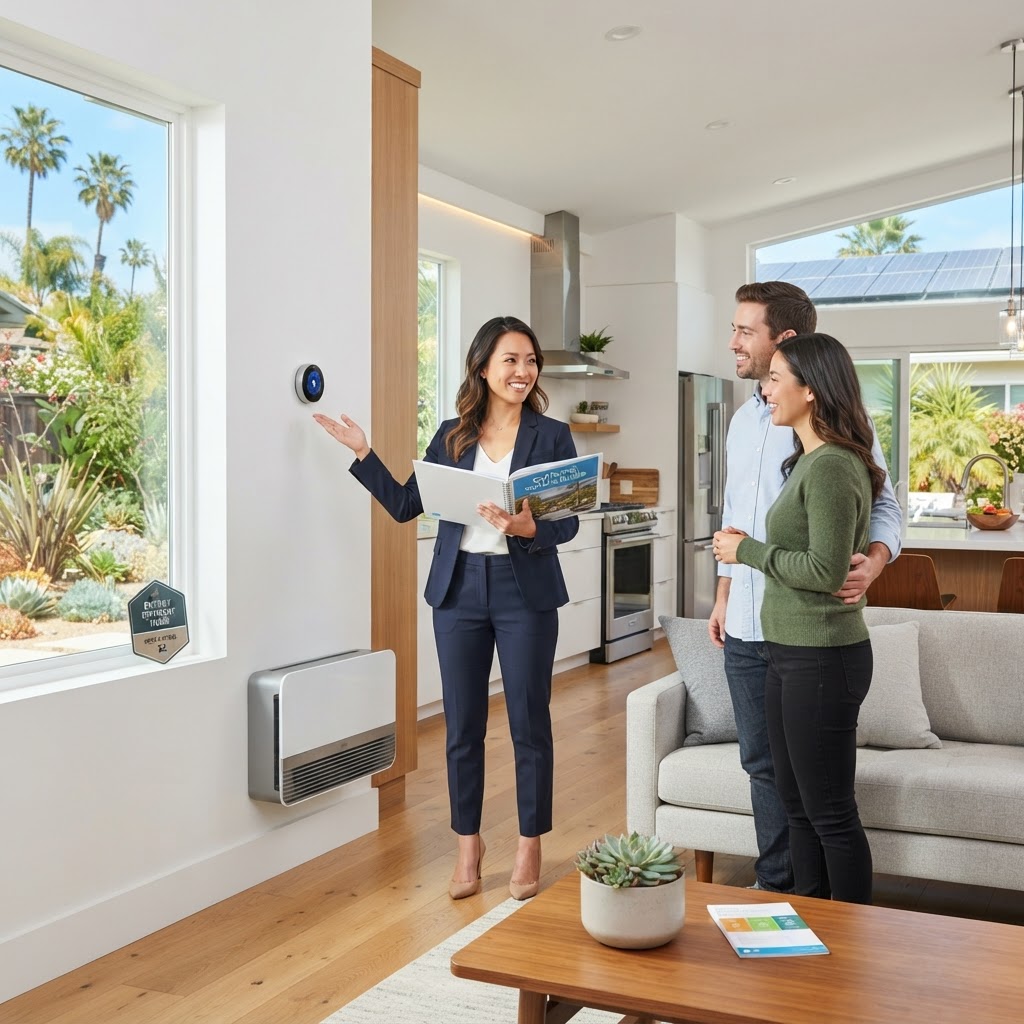
Navigating the 2026 California Sell-Side Landscape
As of June 2026, the California real estate market has transitioned into a phase of 'selective velocity.' While inventory remains tight compared to historical norms, the California Association of Realtors (CAR) May 2026 report indicates that buyers are increasingly discerning, prioritizing move-in readiness and functional flexibility. Selling a home in the Golden State now requires a shift from general preparation to hyper-targeted, high-ROI upgrades that align with modern lifestyle demands.
1. The 'Indoor-Outdoor' Integration Premium
In the post-pandemic era, the distinction between interior and exterior living spaces has blurred. For California sellers, the most significant ROI currently lies in the 'Third Space.' According to 2026 MLS data, homes featuring seamless indoor-outdoor transitions—such as bi-fold doors or covered 'California rooms'—command a 7.5% price premium over traditional layouts.
- Practical Takeaway: If a full remodel is not feasible, focus on 'visual continuity.' Use similar flooring materials for the patio and the adjacent indoor room to create the illusion of a singular, larger space.
2. Marketing the 'ADU Potential' Without the Construction
While SB-9 deals with lot splitting, the demand for Accessory Dwelling Units (ADUs) for multi-generational living remains a primary driver for 2026 buyers. You do not need to build an ADU to capture this value; you simply need to prove its feasibility.
- Practical Takeaway: Commission a 'Feasibility Report' from a local architect. Providing pre-vetted site plans that show exactly where an ADU could sit on your lot, including utility hookup locations, removes the 'research friction' for buyers and justifies a higher asking price.
3. The Smart Energy Standard (Title 24 and Beyond)
With California's aggressive energy mandates and rising utility costs, 'Green Readiness' is no longer a niche preference; it is a financial necessity for buyers. Data from the 2026 Green Building Council report suggests that homes with integrated EV charging stations and battery-storage-ready solar arrays sell 14 days faster than those without.
- High-ROI Upgrade: Ensure your electrical panel is upgraded to at least 200 amps. A 'future-proofed' panel is a major selling point for buyers planning to add heat pumps or multiple electric vehicles.
4. The 2026 Digital Twin Strategy
In a market where 92% of buyers' first 'walkthrough' happens on a mobile device, static photography is insufficient. High-end California listings in 2026 are increasingly utilizing 'Digital Twin' technology—highly accurate 3D CAD models that allow buyers to virtually 'measure' walls for furniture or simulate renovations.
- Practical Takeaway: Invest in a high-fidelity 3D scan (such as Matterport’s 2026 Pro series). This allows remote investors and out-of-area buyers to make confident, non-contingent offers without multiple physical visits.
5. Strategic 'Soft' Renovations
The 2026 aesthetic has moved away from the 'Millennial Gray' of the early 2020s toward 'Warm Modernism.' Sellers should focus on earthy, organic textures and matte finishes. National Association of Realtors (NAR) data suggests that minor kitchen refreshes—specifically replacing hardware and updating to 'smart' faucets—yield an average return of 110% at closing.
Summary Checklist for the 2026 Seller
- Verify Title 24 Compliance: Ensure all lighting and fenestration meet current state energy codes to avoid escrow delays.
- Curb Appeal 2.0: Replace water-intensive lawns with 'Climate-Appropriate' xeriscaping. Not only does this save on maintenance, but it also signals environmental responsibility to the buyer.
- Flex-Room Staging: Stage at least one bedroom as a dual-purpose space (e.g., a high-end home office with a Murphy bed) to appeal to the 40% of California's workforce still operating in a hybrid capacity.