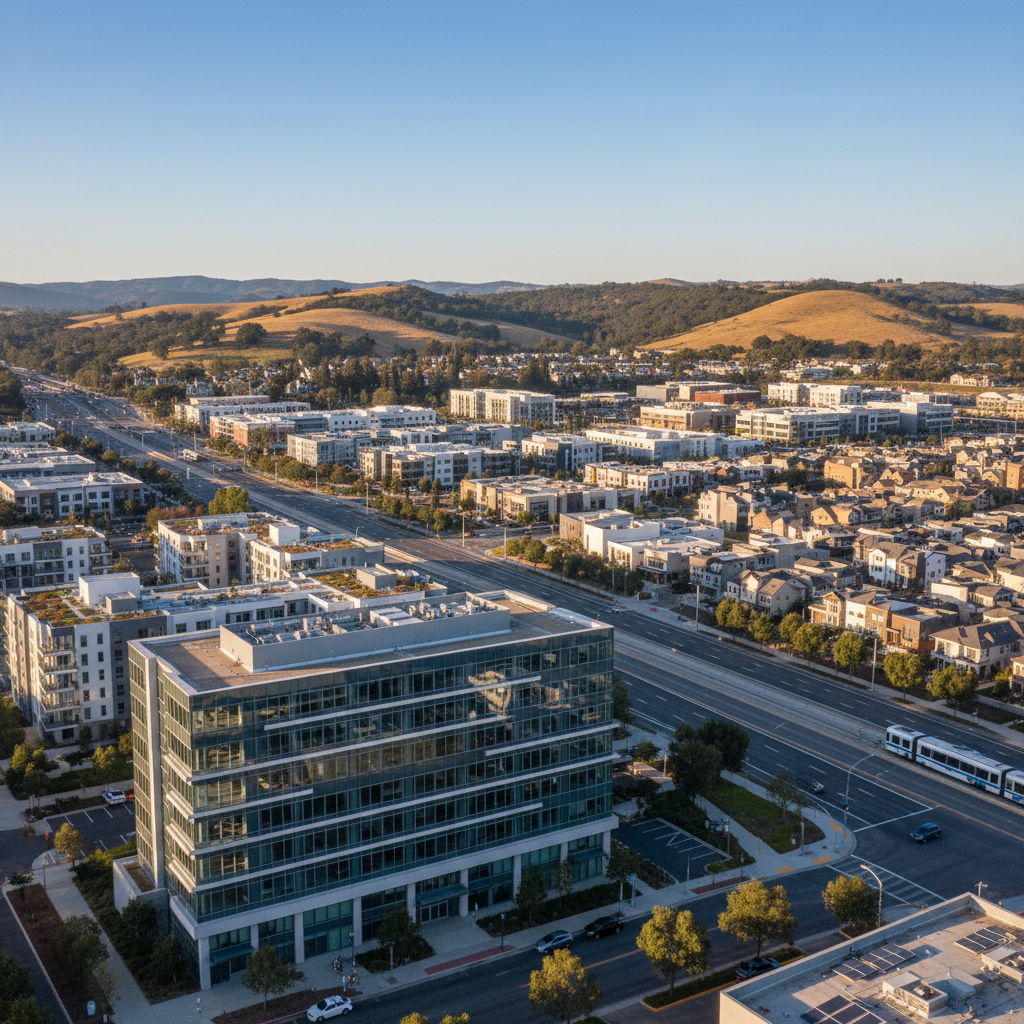
The Shift from Mega-Campuses to Micro-Clusters
As we navigate the midpoint of 2026, the California real estate landscape is witnessing a structural shift that transcends the simple 'remote vs. office' debate of years past. The era of the centralized 'Mega-Campus'—once the hallmark of Silicon Valley and Hollywood—is being replaced by the 'Distributed HQ' model. Major employers are increasingly shedding massive footprint leases in favor of smaller, specialized satellite offices scattered across Tier 2 cities. This transition is fundamentally re-weighting property valuations in regions previously dismissed as mere bedroom communities.
Data-Driven Migration: The Rise of the Satellite Hub
According to Q1 2026 data from the California Association of Realtors (CAR), while San Francisco and Los Angeles have stabilized, the most aggressive price appreciation is now concentrated in regional hubs like Sacramento, Riverside, and Fresno. CBRE’s 2026 Office Outlook indicates that while 45% of tech firms have reduced their primary headquarters footprint by at least 30%, they have simultaneously increased their regional 'satellite' presence by 55%. These aren't just co-working spaces; they are dedicated, high-spec professional environments that allow for localized collaboration without the 'super-commute' to a primary urban core.
Investment Perspective: The 'Satellite Premium'
For the strategic investor, the 'Satellite Premium' is the new metric for success. In markets like Ontario and Roseville, properties located within a five-mile radius of these emerging micro-hubs are fetching a 12-15% premium over outlying residential zones. Unlike the 2020-2022 boom, which was fueled by low interest rates and flight from density, the 2026 trend is driven by employment stability. These secondary markets are no longer just 'cheaper alternatives'; they are becoming self-sustaining professional ecosystems with diversified job bases.
Economic Trends: The Death of the 'Commuter Volatility'
Historically, secondary markets in California were the first to suffer during economic downturns due to their reliance on commuters. However, the Distributed HQ model provides a new layer of economic insulation. When a city like Fresno hosts a 15,000-square-foot satellite office for a Fortune 500 firm, it anchors high-income earners locally. This 'sticky' demographic supports local retail, services, and high-end multifamily developments, reducing the beta of these markets relative to the state's traditional powerhouses.
Practical Takeaways for the 2026 Market
- For Investors: Target 'Infill-Light' opportunities. Look for multi-family or ADU-capable single-family lots within walking distance of designated 'Class A' satellite office developments.
- For Sellers in Secondary Markets: Highlight proximity to regional professional hubs and 'high-bandwidth' infrastructure. The value of your home is increasingly tied to its integration into a local professional network, not just its distance from a major metro.
- For Buyers: Focus on the 'Golden Triangle'—areas where regional government centers, emerging tech satellites, and transit nodes intersect. These zones offer the highest resilience against the localized liquidity traps seen in purely residential exurbs.
The California market of 2026 rewards those who recognize that the 'center' has moved. As corporate footprints fragment, the value of the 'local' has never been higher. By aligning portfolios with these new professional micro-clusters, investors can capture alpha in an era of decentralized growth.


