The Great Decarbonization Divide
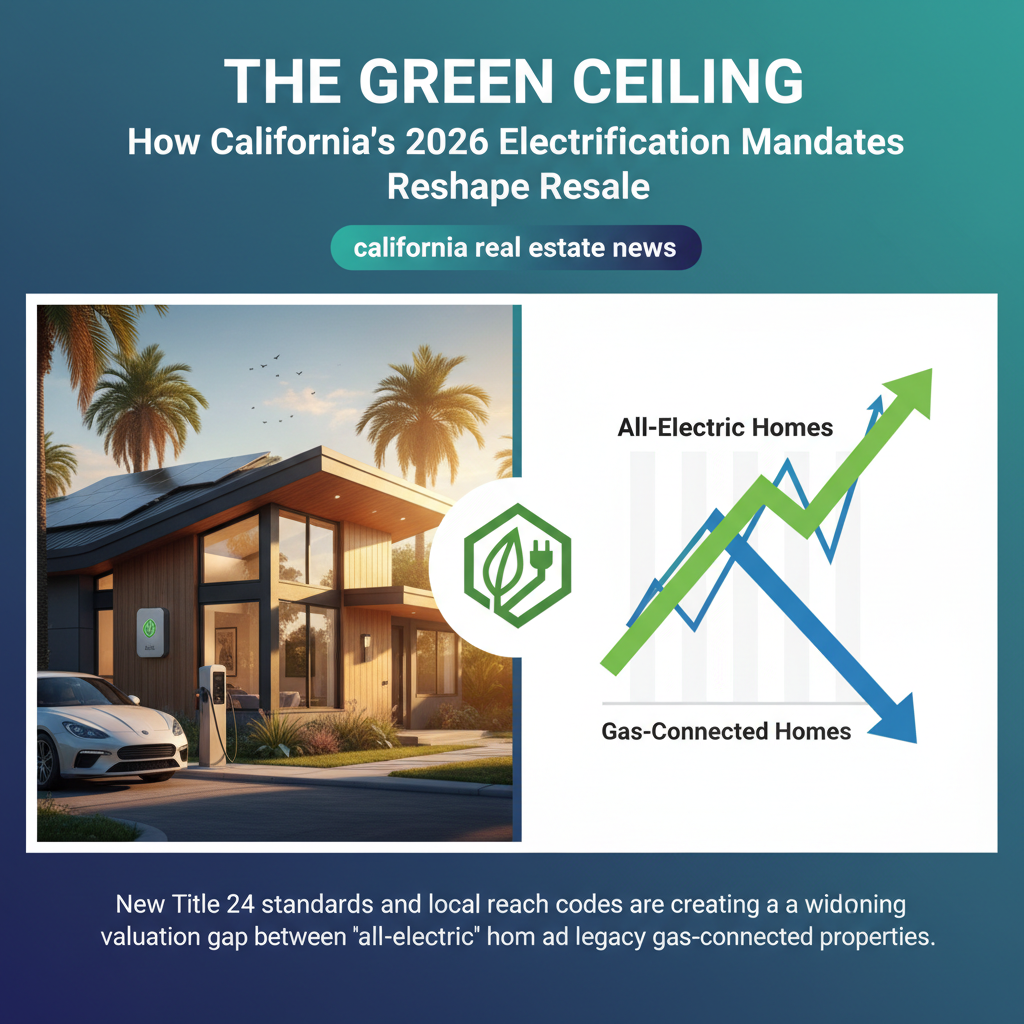
As of June 2026, the California real estate market is grappling with a new metric of value that is quickly overshadowing traditional aesthetics: the energy profile. Following the full implementation of the California Energy Commission’s (CEC) latest Title 24 updates and a wave of municipal 'reach codes,' the state is seeing a distinct 'Green Ceiling' emerge. Homes fully transitioned to electric systems—induction cooktops, heat pump HVACs, and heat pump water heaters—are outperforming their natural gas-dependent counterparts in both time-on-market and final sale price.
Data-Backed Shifts in Buyer Preference
According to recent MLS data analyzed by the California Association of Realtors (CAR), all-electric homes in coastal markets like Santa Monica and San Jose are fetching a 7.4% premium compared to similar properties with traditional gas utilities. This shift is driven by more than environmental sentiment; it is a financial calculation. With natural gas rates in California rising 18% year-over-year according to CPUC filings, and the cost of retrofitting a 2,000-square-foot home to meet 2026 compliance standards averaging $22,000, buyers are increasingly viewing gas-connected homes as properties with deferred maintenance liabilities.
The Regulatory Push: Title 24 and Beyond
The 2026 regulatory environment has made 'gas-free' the de facto standard for new construction, but the impact on the resale market is where the most volatility exists. Many California cities have now adopted 'time-of-sale' electrification requirements. These ordinances require homeowners to upgrade at least one major appliance to a high-efficiency electric version before a title transfer can be finalized. In Los Angeles and San Francisco, these mandates have led to a surge in 'Escrow Holdbacks,' where funds are set aside specifically for electrification retrofits, often reducing the seller’s net proceeds by thousands of dollars.
The Inventory Squeeze in Older Suburbs
While new developments are built to these standards, the 'California Bungalow' and mid-century ranch stocks are struggling to keep up. Neighborhoods in the East Bay and Orange County are seeing 'electrification appraisal adjustments.' Appraisers are now beginning to deduct value for aging gas infrastructure, similar to how they might account for an outdated roof or a cracked foundation. This has created a bifurcated market: 'Future-Proofed' homes that attract multiple offers, and 'Legacy-Linked' homes that sit as buyers fear the looming cost of conversion.
Practical Takeaways for Market Participants
- For Sellers: Before listing, secure an energy audit. If your home is still gas-dependent, obtaining quotes for a heat pump installation and presenting them as part of the disclosure package can prevent aggressive price negotiations during the inspection period.
- For Buyers: Look for 'Panel-Ready' homes. Upgrading an electrical panel to 200 or 400 amps is often the most expensive part of electrification. A home that has already undergone a panel upgrade is a high-value target, even if the appliances are still gas.
- For Investors: Focus on the 'Electrification Flip.' Properties with outdated gas systems in high-demand zones offer a new type of value-add opportunity. Leveraging state rebates like the TECH Clean California initiative can offset the cost of conversion, significantly boosting the ARV (After Repair Value).
As California continues its aggressive march toward a carbon-neutral economy, the real estate market is no longer just about location, location, location. In 2026, it is about the grid, the panel, and the pump.