The 2026 Renaissance: Beyond the 'Doom Loop' Narrative
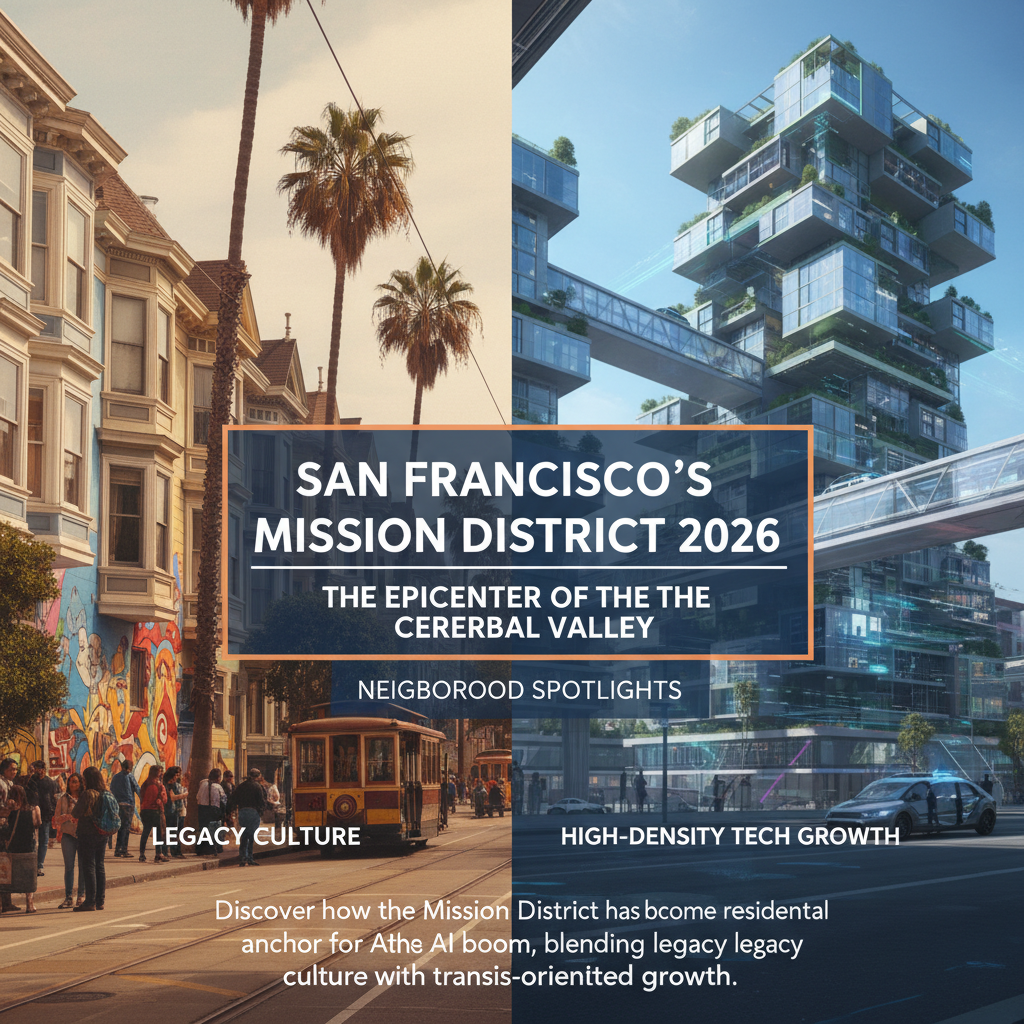
As of June 2026, the national narrative surrounding San Francisco has undergone a radical transformation. Nowhere is this shift more evident than in the Mission District. While other neighborhoods struggled with the post-pandemic commercial vacancy crisis, the Mission leveraged its unique 'missing middle' housing stock and vibrant street life to become the primary residential anchor for the 'Cerebral Valley'—the cluster of generative AI firms headquartered in the neighboring SoMa and Potrero Hill districts.
Market Dynamics: Scarcity Drives Valuation
Data from the San Francisco Association of Realtors (SFAR) for Q2 2026 indicates that the Mission District has outperformed the citywide average for price appreciation. The median sale price for a single-family Victorian home in the district now stands at $1.82 million, a 7.4% year-over-year increase. More tellingly, the condo market has stabilized with a median price of $1.15 million, driven by the conversion of soft-story industrial buildings into luxury lofts.
According to Census Bureau American Community Survey (ACS) 5-year estimates updated for 2026, the district has seen a 12% increase in residents aged 25-39 with advanced degrees. This demographic shift is fueling a competitive rental market where one-bedroom units average $3,800, maintaining a low vacancy rate of just 4.1%, significantly lower than the downtown core.
Connectivity and Urban Design
The Mission’s appeal in 2026 is anchored by its status as a 'Transit-First' triumph. With two major BART stations (16th St and 24th St) and the completed efficiency upgrades to the 14-Mission Muni line, residents enjoy a 15-minute commute to the Financial District. The permanent 'Slow Streets' program on 22nd Street has created a pedestrian artery that connects the lush slopes of Dolores Park to the tech hubs in the east, making it a model for low-carbon urban living.
Key Amenities and Lifestyle
- Dolores Park: Remains the city's premier social 'living room,' benefiting from 2025 municipal bond-funded landscape restorations.
- Valencia Corridor: A world-class dining and retail destination featuring a mix of Michelin-starred establishments and legacy Latino-owned businesses protected by the city’s Cultural District designations.
- Schooling: Mission High School has seen a resurgence in rankings following its 2024 STEM-integration initiative, while private institutions like Lick-Wilmerding continue to draw families to the neighborhood periphery.
The Investor’s Perspective: Strategic Takeaways
For buyers and investors, the 2026 Mission District offers a nuanced opportunity. The market is no longer in a speculative bubble but has entered a phase of sustained growth based on economic utility.
Practical Takeaways:
- Focus on ADUs: With California’s refined SB-9 and SB-10 regulations, investors are seeing the highest ROI on 'Mission Revivals'—the addition of accessory dwelling units to existing Victorian multi-family lots.
- Cultural Stewardship as Value: Properties within the 24th Street 'Calle 24' Latino Cultural District maintain higher long-term value due to strict zoning that prevents generic over-development, ensuring the neighborhood retains the 'soul' that attracts high-value tenants.
- Commercial Infill: The rise of 'third spaces'—membership-based social clubs and co-working ateliers—presents a high-yield opportunity for retail property owners along the Mission Street corridor.
The Verdict
The Mission District in 2026 serves as a blueprint for how a historic urban neighborhood can absorb technological wealth without losing its identity. By prioritizing transit, density, and cultural preservation, it has become the most resilient sub-market in Northern California. For those looking to capitalize on the AI-driven 'Second Gold Rush,' the Mission is no longer just a destination; it is the essential residential core.


