The Mid-2026 Lending Landscape
As of June 17, 2026, the mortgage market has entered a period of relative stability, albeit at a higher floor than many anticipated during the post-inflationary adjustments of last year. According to the latest Freddie Mac Primary Mortgage Market Survey, the 30-year fixed-rate mortgage is averaging 6.42%. For the California buyer, where the California Association of Realtors (C.A.R.) reports a statewide median price of $915,000, the difference between a 6.4% and a 5.5% rate translates to nearly $600 per month in savings.
The 7/1 Hybrid Renaissance
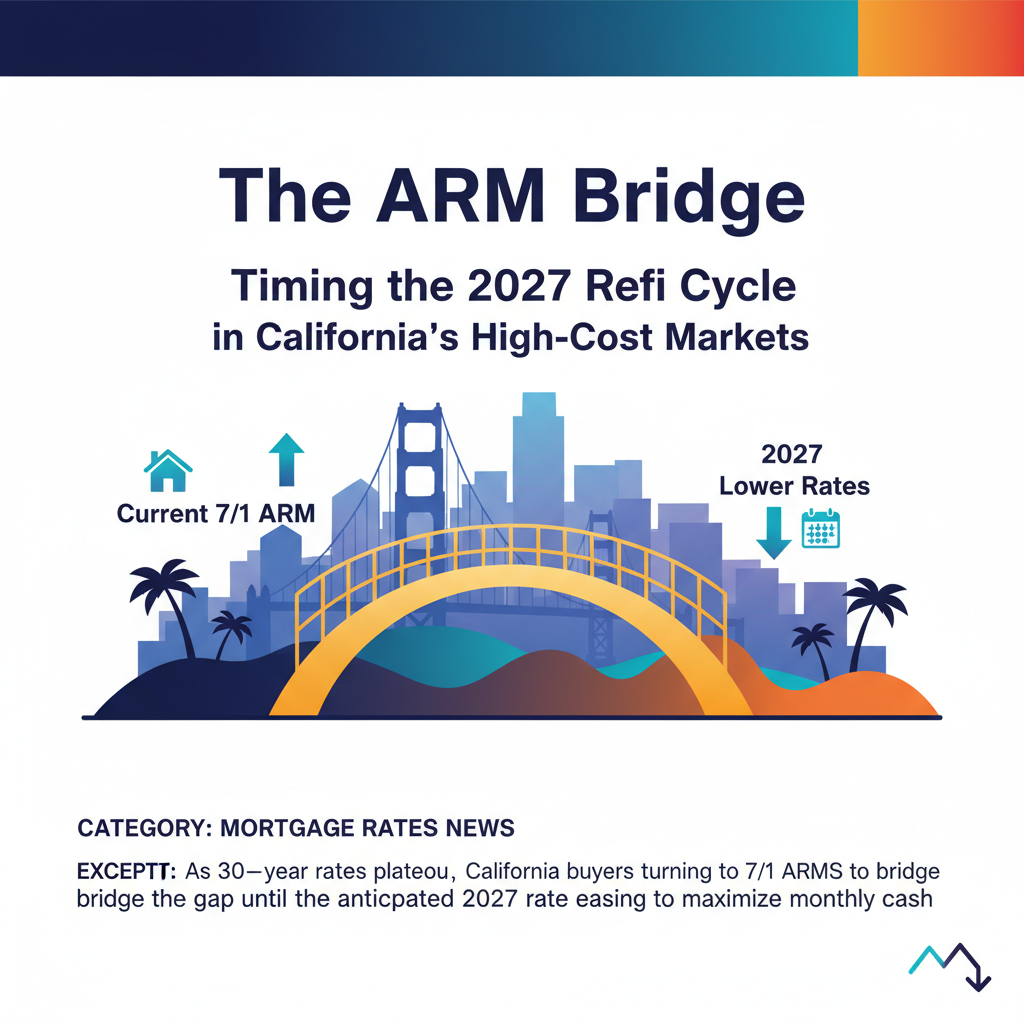
While the 30-year fixed remains the gold standard for security, the current spread between fixed and adjustable-rate mortgages (ARMs) has widened. We are seeing a resurgence in 7/1 and 10/1 Hybrid ARMs, which currently offer initial rates near 5.55%. This "ARM Bridge" strategy assumes that the Federal Reserve's long-term "neutral rate" will eventually pull 30-year fixed products into the mid-5% range by 2027 or early 2028. For a buyer in the Bay Area or Orange County, this seven-year fixed period provides a significant buffer to wait for a more favorable refinancing window without the immediate burden of the 30-year fixed premium.
Analyzing the Break-Even Point
Data from recent MLS transactions suggest that California inventory is beginning to swell as the summer selling season peaks. Buyers are using the monthly savings from ARM products to offset the higher monthly carrying costs associated with recent price appreciation. The "break-even" math is simple: if a buyer saves $7,200 annually by choosing a 7/1 ARM and the cost to refinance in three years is $10,000, the buyer remains $11,600 ahead, even after accounting for closing costs on the future loan. This logic is driving a significant portion of the mid-market volume in June 2026.
Strategic Takeaways for California Buyers
- Verify the Margin: Ensure the ARM's margin (often 2.25% to 2.75%) is low enough that if you cannot refinance, the fully indexed rate remains manageable relative to current fixed options.
- Check the Caps: In a volatile market, look for "2/2/5" cap structures to limit potential upward movement after the initial period ends.
- The 2027 Outlook: Consult with a lender about "no-cost" refinance options that can be triggered once the 30-year fixed rate hits your target threshold.


