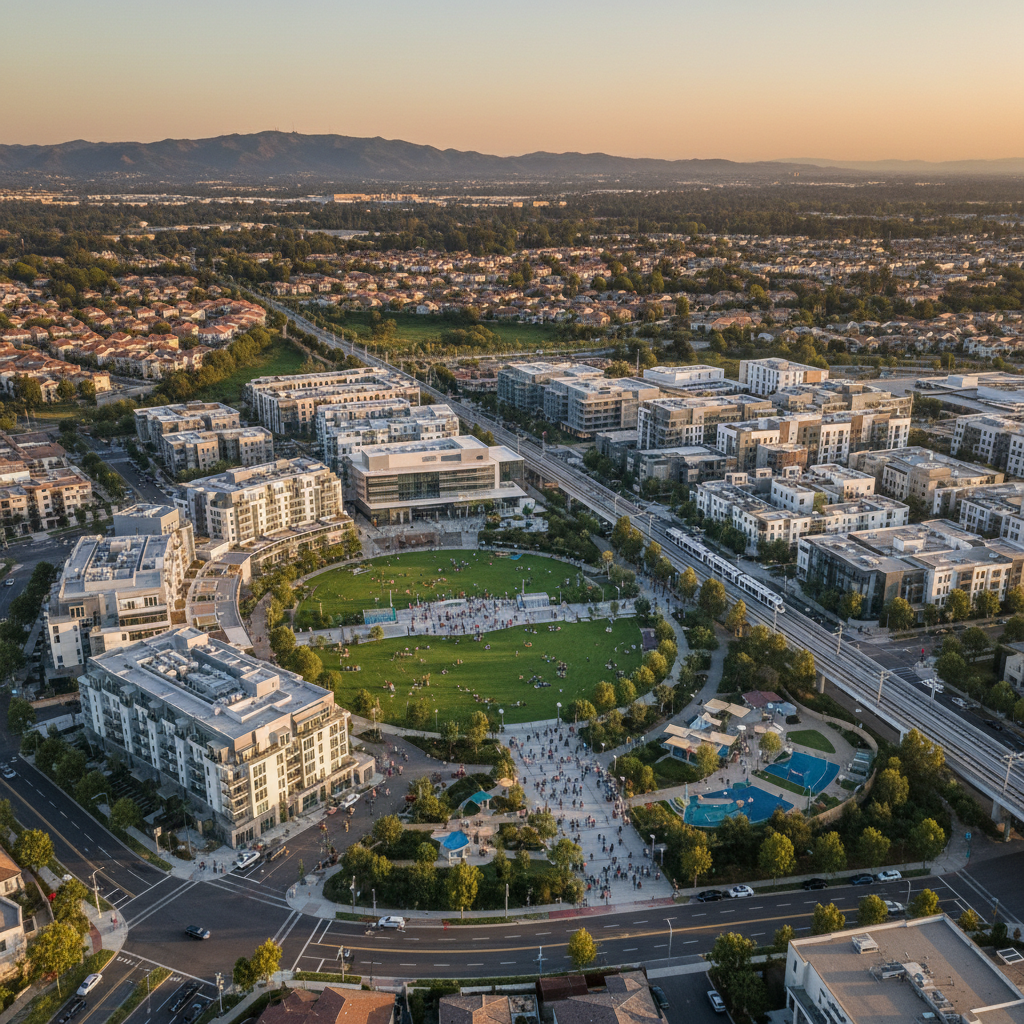
The Maturity of the Master-Planned Vision
In mid-2026, the narrative surrounding Irvine’s Great Park Neighborhoods has shifted from 'emerging residential development' to 'Southern California’s premier civic hub.' While the city has long been synonymous with master-planned order, the Great Park (formerly the El Toro Marine Corps Air Station) has reached a critical mass. With the completion of the $1 billion ‘Heart of the Park’ phase, this 1,300-acre district now represents the pinnacle of the ‘Lifestyle Hub’—a real estate trend where residential value is anchored by world-class recreational and cultural infrastructure rather than mere proximity to employment centers.
The Civic Anchor: Amenities and Public Investment
The defining feature of the Great Park in 2026 is the seamless integration of high-density living with massive public amenities. The Framework Plan has delivered the much-anticipated botanical gardens and the permanent 12,000-seat amphitheater, which now serves as a regional draw for the Live Nation circuit. According to CBRE’s 2026 Orange County Retail Report, commercial occupancy within the Great Park’s 'Gateway' district has maintained a 98% rate, driven by a curated mix of health-tech boutiques and high-end culinary concepts that cater to the neighborhood’s high-income demographic.
Educational Excellence as a Market Driver
For buyers, the Irvine Unified School District (IUSD) remains the primary catalyst for long-term appreciation. In 2026, the district continues to rank in the top 1% of California public schools. Specific to the Great Park, the completion of the newest K-8 campuses—Solis Park and Cadence Park—has created a 'walkable education' ecosystem. Data from the National Association of Realtors (NAR) indicates that homes within the Great Park zip code (92618) command a 22% price premium over comparable properties in neighboring cities, largely attributed to the school-pathway guarantees inherent in the FivePoint development model.
Transportation: The E-Bike and Metrolink Synergy
Irvine has solved the 'last-mile' problem through a sophisticated network of 'Great Park Trails'—dedicated, grade-separated paths for pedestrians and electric vehicles. By June 2026, the city’s e-bike ridership has tripled, reducing internal neighborhood traffic. Furthermore, the proximity to the Irvine Transportation Center provides residents with seamless Metrolink and Amtrak Pacific Surfliner access, connecting the neighborhood to the Los Angeles and San Diego metros. This connectivity has made the district increasingly attractive to ‘hybrid-supercommuters’ who value space but require occasional access to urban cores.
Investor and Buyer Takeaways
The 2026 market in the Great Park presents a unique set of opportunities and challenges:
1. The Premium for Proximity: Residential units within a quarter-mile of the ‘Sports Park’ or ‘Cultural Terrace’ are seeing the highest rental yields, currently averaging $4.80 per square foot for luxury multi-family builds.
2. Resale Resilience: MLS data shows that the ‘original’ neighborhoods like Pavilion Park are seeing strong appreciation as their mature landscaping and established character appeal to buyers wary of new-construction dust.
3. Future Growth: With the final residential phases nearing completion, the 'scarcity phase' is beginning. Investors should look toward the remaining commercial-adjacent parcels, where zoning allows for high-density live-work configurations.
Conclusion
Irvine’s Great Park Neighborhoods in 2026 offer a glimpse into the future of the California suburb: a place where the sprawl has been replaced by intentional density, and the backyard has been replaced by a billion-dollar public park. For those seeking stability, top-tier education, and an active lifestyle, it remains the gold standard of the Orange County market.


