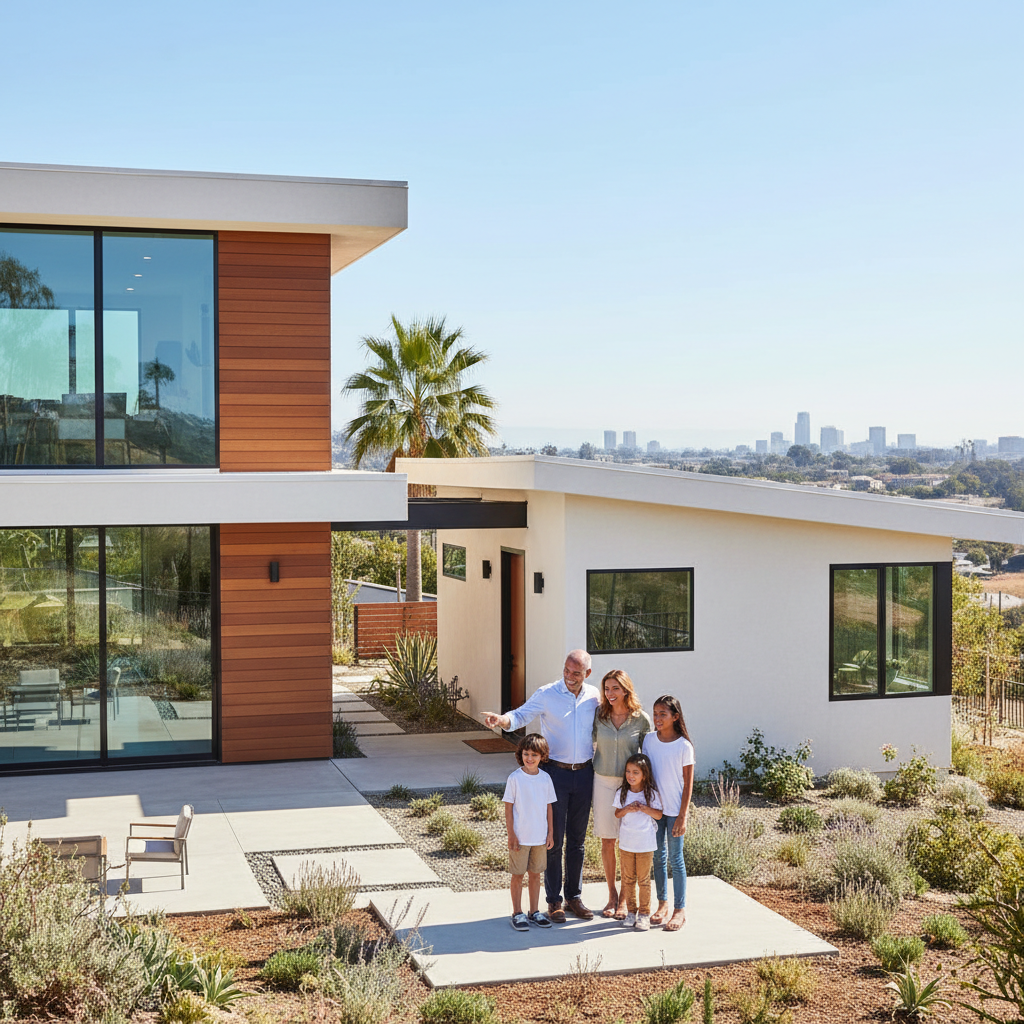
The Shift Toward Collective Ownership in the Golden State
As of June 2026, California’s median home price persists above the $900,000 threshold, forcing a shift in buyer behavior. The 'lone wolf' buyer is becoming a rarity. According to recent data from the National Association of Realtors (NAR), multi-generational home purchases now account for approximately 18% of the market—a record high driven by California’s unique economic pressures. For many, the path to homeownership in 2026 is no longer about finding a starter home, but about securing a multi-unit or ADU-capable property through co-buying.
Defining the Co-Buying Legal Structure
When purchasing with extended family or non-spouse partners, the method of holding title is your first critical decision. In California, buyers typically choose between Joint Tenancy and Tenancy in Common (TIC). Joint Tenancy includes the right of survivorship, which is often preferred by families. However, a TIC is increasingly popular for non-traditional co-buyers, as it allows for unequal ownership percentages (e.g., 70/30) and the ability to pass your share to an heir rather than the co-owner. Before signing a California Residential Purchase Agreement, consult with a real estate attorney to draft a 'Co-Ownership Agreement' that outlines exit strategies and maintenance responsibilities.
The ADU Audit: Beyond the Backyard
With California’s Housing and Community Development (HCD) department reporting a 25% year-over-year increase in ADU completions, many buyers are targeting properties with 'value-add' potential. However, not every large lot is ADU-ready. Buyers must perform a 'Utility Capacity Audit.' In 2026, many older CA neighborhoods face electrical grid constraints. Ensure the property’s electrical panel can handle the 200-amp service required for an all-electric ADU. Additionally, verify local 'Setback' requirements; while state law has relaxed these, fire-prone zones may still have stringent 4-foot side and rear clearance mandates that can kill a project's feasibility.
Financing the 'Missing Middle'
The 2026 mortgage landscape offers specialized tools for those buying 2-4 unit properties. If you plan to live in one unit and rent the others (house hacking), FHA loans allow for a 3.5% down payment on multi-unit properties, provided the buyer meets the 'Self-Sufficiency Test' (where 75% of the projected rent covers the full mortgage payment). For those building an ADU post-purchase, 2026 has seen an uptick in 'Construction-to-Permanent' loans that allow buyers to wrap the ADU build costs into their primary mortgage, often at a lower interest rate than a separate HELOC.
Practical Takeaways for 2026 Buyers
- Draft a Partition Agreement: Before closing, create a legal document that defines what happens if one party wants to sell while the other doesn't.
- Verify ADU Sewer Laterals: Many CA municipalities now require a sewer lateral inspection for the main house before permitting a second unit. Budget $500–$800 for this during your inspection contingency.
- Analyze 'Effective' DTI: When co-buying, lenders look at the aggregate Debt-to-Income ratio. Ensure all parties have stabilized their credit at least six months prior to the search.
- Check for Local ADU Grants: Several California counties continue to offer 'Pre-Approved Plan' programs that can save buyers $10,000–$15,000 in architectural and permitting fees.


