Beyond the Listing: Prioritizing Transactional Velocity in 2026
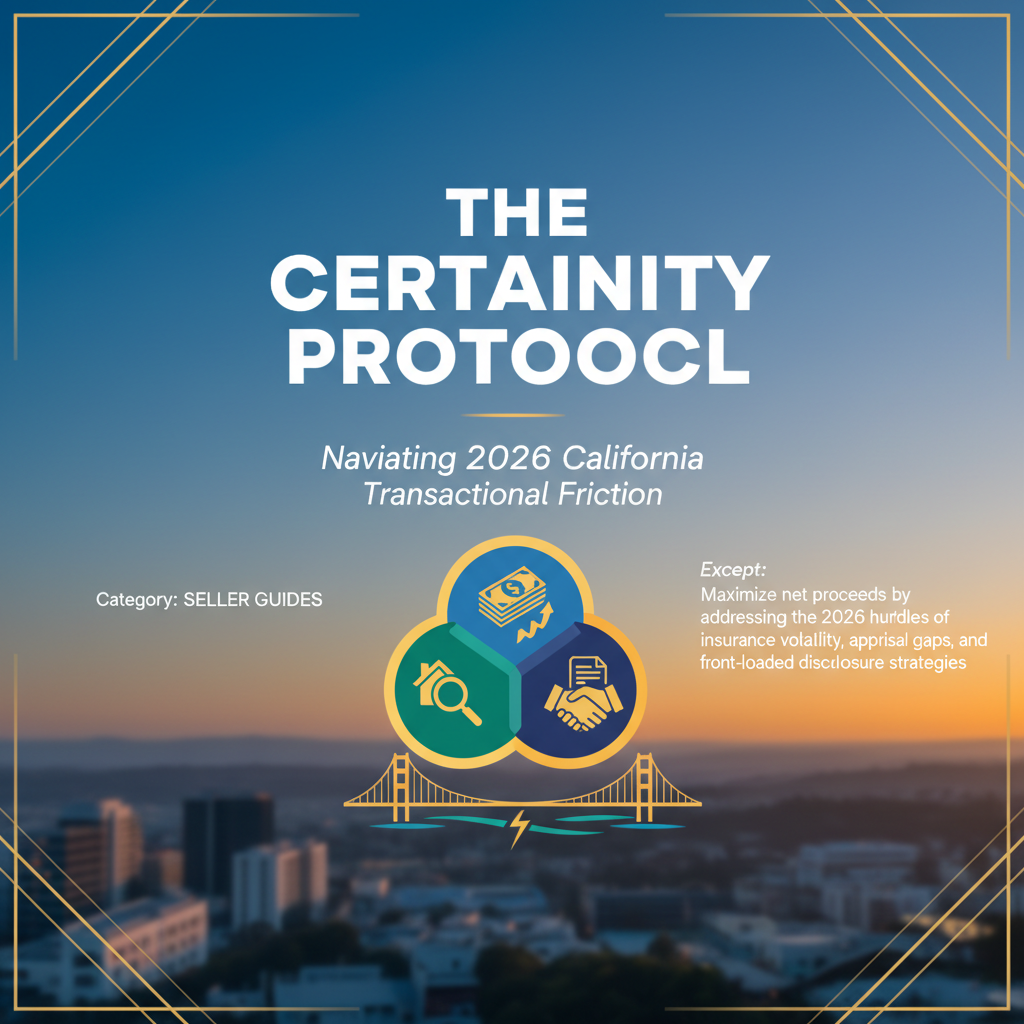
As we move through the midpoint of 2026, the California real estate market remains characterized by a structural paradox: high median prices (projected by the California Association of Realtors to hover near $920,000) coupled with increased buyer sensitivity to carry costs. While previous strategies focused heavily on aesthetic staging, the 2026 'Certainty Protocol' focuses on eliminating the friction points that cause nearly 18% of California contracts to fall out of escrow: insurance unavailability, appraisal gaps, and late-stage inspection discoveries.
1. The Insurance Pre-Clearance Strategy
In 2026, the primary threat to a successful closing in California isn't the buyer's credit score; it is the property's insurability. With major carriers continuing to restrict new policies in high-fire-risk zones and even suburban interface areas, the 'California FAIR Plan' has become a standard fallback rather than an exception. To maximize value, sellers must provide an Insurance Prospectus as part of the marketing suite.
- Actionable Step: Secure a 'conditional commitment to insure' from your current provider or a broker before listing. Showcasing a transferrable policy quote or a pre-vetted FAIR Plan estimate reduces buyer anxiety and prevents 11th-hour financing collapses.
- Data Point: According to 2025-2026 insurance industry data, properties with pre-verified insurance options close 12 days faster than those without.
2. Front-Loading the Disclosure Narrative
California is a strict disclosure state. Traditionally, the Transfer Disclosure Statement (TDS) and Natural Hazard Disclosure (NHD) are provided after an offer is accepted. In 2026, the 'Front-Loading' model is the winning play. By providing a completed disclosure package and a comprehensive home inspection report before the first open house, sellers can demand 'non-contingent' or 'shortened contingency' offers.
- The 'As-Is' Reality: Use the 2026 C.A.R. Residential Purchase Agreement (RPA) to your advantage. By disclosing a 5-year-old roof or a dated electrical panel upfront, you shift the negotiation from a post-inspection credit request to an upfront price adjustment, preserving your leverage.
3. Engineering the Appraisal Gap Guarantee
With California’s 2026 inventory remaining tight, bidding wars still occur, often pushing contract prices above recent comparables. To protect the sale, savvy sellers are now requiring Appraisal Gap Coverage clauses. This requires the buyer to commit to bringing additional cash to the table if the bank’s appraisal comes in lower than the purchase price.
- Strategic Implementation: Rather than simply accepting the highest offer, prioritize offers that include a 'Gap Waiver' up to a specific dollar amount. A $950,000 offer with a $25,000 gap guarantee is often superior to a $970,000 offer with a full appraisal contingency.
4. The 2026 Pre-Escrow Audit
Avoid the 'administrative crawl' that plagues California escrows. Before hitting the market, conduct a preliminary title search to identify any outdated liens, solar lease complications, or unpermitted ADU issues. In 2026, the rise of SB-9 lot splits and complex ADU financing means title reports are often more 'noisy' than in previous decades.
The 2026 Seller’s Checklist for Transactional Success
- Verify Title: Confirm no surprise liens or outdated clouds on title exist.
- Insurance Binder: Obtain a quote for the next owner to prove the home is insurable.
- Pre-Inspection: Conduct termite, roof, and general home inspections to eliminate the 'inspection credit' dance.
- Permit History: Gather a 'Permit History Report' from the city to validate all square footage.
By shifting focus from how the home looks to how the deal closes, California sellers in 2026 can ensure they not only capture record-high prices but actually see those funds arrive in their bank accounts without the delays of the modern regulatory landscape.