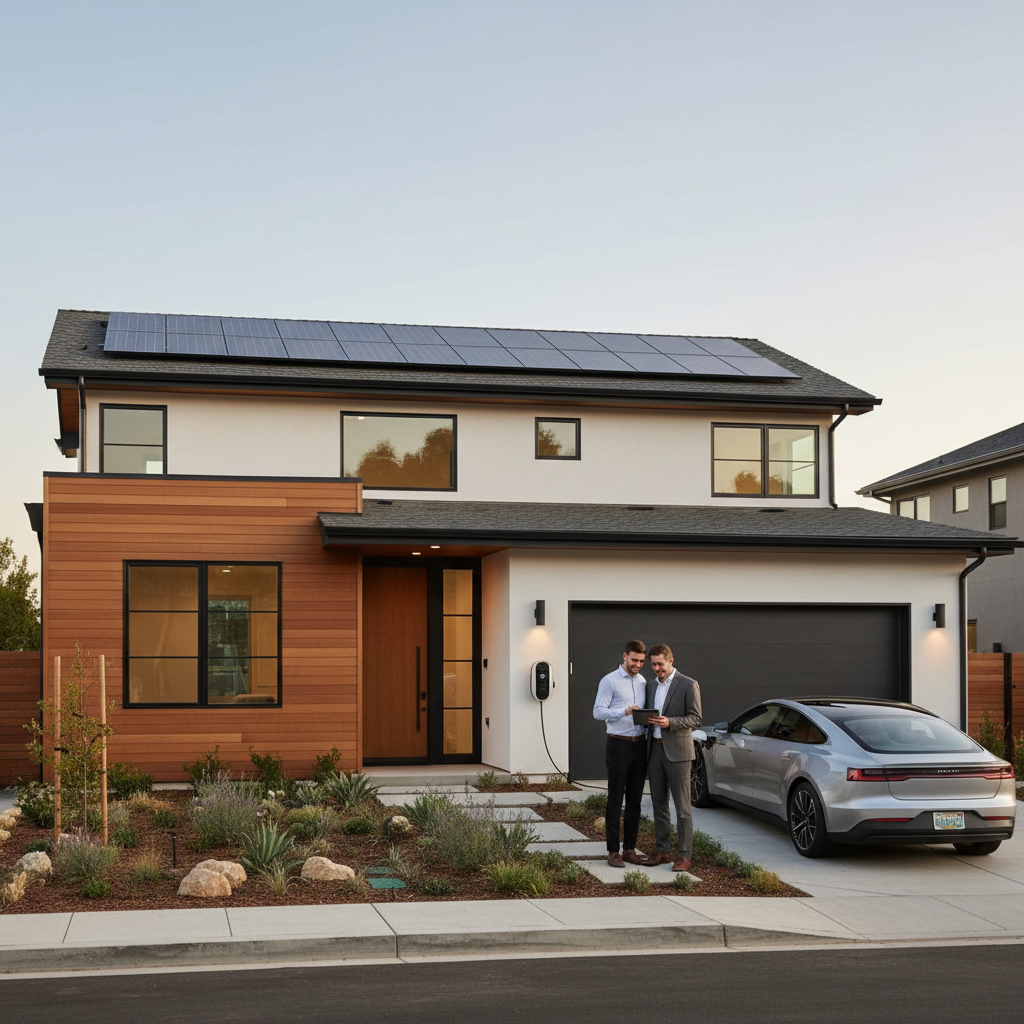
The New Baseline: Why Decarbonization Defines 2026 Valuations
In the California real estate market of June 2026, the traditional 'fixer-upper' has been redefined. While previous generations of buyers focused on granite countertops and hardwood floors, today’s savvy investors and homeowners are looking at the utility closet. With the California Energy Commission’s (CEC) accelerated push toward carbon neutrality and the maturation of Title 24 building standards, the presence of gas-fired appliances is increasingly viewed as a deferred maintenance liability rather than a standard feature.
Data from the 2025 California Association of Realtors (CAR) Annual Report indicates that homes equipped with full heat pump systems and EV-ready garages sold for a 4.2% premium compared to gas-dependent counterparts. As we navigate the mid-2026 market, buyers must prioritize 'electrification due diligence' to avoid significant retrofit costs within the first five years of ownership.
The 200-Amp Audit: The Most Critical Inspection Point
The single most important technical specification for a 2026 California homebuyer isn't square footage—it's the electrical panel capacity. The transition to an all-electric lifestyle (induction cooking, heat pump HVAC, heat pump water heaters, and Level 2 EV charging) requires significant amperage that many mid-century California bungalows simply do not have.
- The 100-Amp Risk: Many homes built before 1980 still operate on 100-amp service. Upgrading to the 200-amp or 225-amp service required for modern electrification can cost between $4,000 and $12,000 depending on utility line proximity and panel location.
- The Smart Panel Advantage: Look for homes already equipped with smart panels (like Span or Leviton). These allow for 'load shedding,' which can prevent the need for expensive utility-side transformer upgrades.
Evaluating Heat Pump Maturity
By June 2026, the 'Heat Pump vs. AC' debate has been settled by mandate and efficiency. When touring a property, buyers should verify the Seasonal Energy Efficiency Ratio (SEER2) and the Heating Seasonal Performance Factor (HSPF2). In California’s Climate Zones 4 and 9 (heavily populated inland and coastal regions), a system with an HSPF2 rating below 9.0 may lead to surging winter utility bills under the current tiered rate structures of providers like PG&E and SCE.
Practical Takeaways for the 2026 Buyer
To ensure a sound investment in the current regulatory environment, buyers should incorporate the following into their acquisition strategy:
- Request an 'Electric Load Calculation': During the inspection contingency, ask a licensed electrician to provide a load calculation. This determines if the current panel can support an additional ADU or an EV charger without a service upgrade.
- Audit the Inflation Reduction Act (IRA) History: Determine if the previous owner already claimed the $2,000 federal tax credit for heat pumps or the $1,200 for weatherization. These credits are often tied to the property/owner and may affect your ability to claim future rebates.
- Check for 'Induction-Ready' Wiring: Even if the home currently has a gas range, check if there is a 240V outlet behind the stove. If not, budget $1,500–$3,000 for the electrical run.
- Analyze Time-of-Use (TOU) Potential: In 2026, energy storage (batteries) is the key to affordability. Prioritize homes with existing solar-plus-storage systems, as they are shielded from the peak-hour rate hikes that have become standard across California.
The Resilience Premium
Ultimately, buying in California in 2026 requires a shift in perspective. A home that is 'grid-ready' and decarbonized is not just an environmental choice; it is a financial defensive play. As municipal gas bans continue to expand and carbon-linked impact fees become more common during renovations, the 'all-electric' home represents the highest tier of liquidity in the California market.