Beyond the Premium: The Structural Shift in Asset Pricing
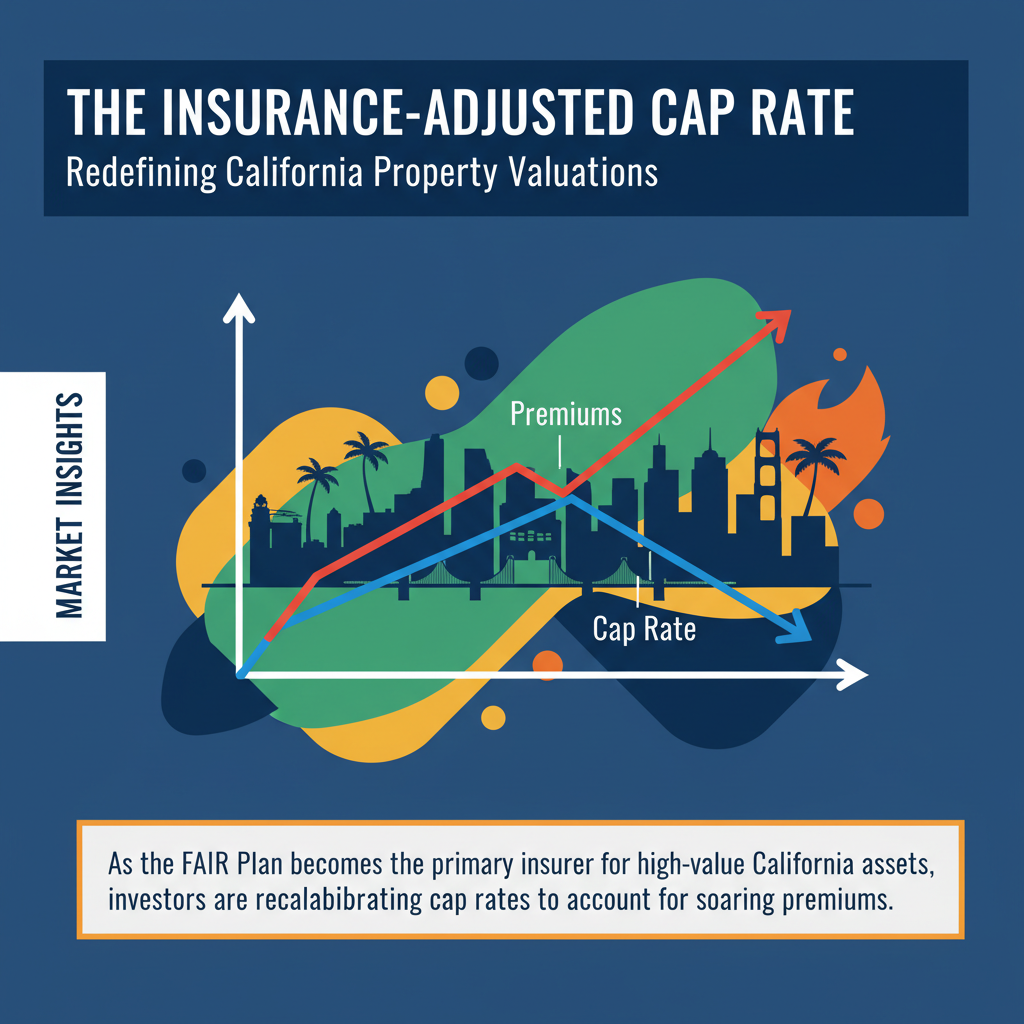
In mid-2026, the California real estate landscape has reached a pivotal realization: insurance is no longer a line-item operating expense; it is a fundamental driver of asset valuation. According to data from the California Department of Insurance, enrollment in the FAIR Plan has increased by 140% since 2023, signaling a departure of private carriers from high-risk tiers. For investors, this shift necessitates the 'Insurance-Adjusted Cap Rate'—a valuation metric that discounts property value based on long-term premium volatility and coverage gaps.
The Rise of the FAIR Plan Anchor
With traditional insurers maintaining restricted footprints, the FAIR Plan now covers over $400 billion in total insured value across the state. While it provides a safety net, the premiums—often 3x to 5x higher than historical private market rates—are hollowing out Net Operating Income (NOI). MLS data for Q2 2026 indicates that properties in 'Very High Fire Hazard Severity Zones' are trading at a 12-15% discount compared to similar properties in low-risk zones, regardless of luxury finishes or square footage. This 'insurance discount' is the primary factor cooling the mountain and coastal luxury markets that previously defied interest rate pressures.
Institutional Recalibration and the Flight to 'Inland Resilience'
CBRE’s latest market outlook suggests that institutional capital is increasingly bypassing assets that cannot secure private-market 'wraparound' excess coverage. The 2026 trend shows a flight to 'Inland Low-Risk Pockets'—areas identified by the state’s updated mapping as resilient to wildfire and sea-level rise. Here, cap rates remain compressed because the predictability of carrying costs allows for tighter underwriting. In contrast, commercial properties in urban-wildland interfaces are seeing cap rate expansion as lenders demand higher debt-service coverage ratios (DSCR) to offset the risk of insurance non-renewal.
Practical Takeaways for the 2026 Market
- Audit Before You Offer: Buyers should demand 'Insurance Portability Reports' during the due diligence phase. Knowing if a property is eligible for a private-market policy versus the FAIR Plan can change a bid by hundreds of thousands of dollars.
- Hardening as ROI: Investments in Class-A non-combustible materials and 100-foot defensible space are no longer just safety measures; they are essential for securing 'Preferred Risk' status, which can improve an asset's valuation by 5-8% via lower operating costs.
- The Self-Insurance Reserve: Savvy commercial investors are now allocating 2% of gross income to a dedicated 'Insurance Contingency Fund' to buffer against the 20% annual premium hikes observed in 2025. This proactive reserve is becoming a standard requirement for CMBS (Commercial Mortgage-Backed Securities) financing in the California market.


