The Shift from Aesthetics to Utility in the 2026 California Market
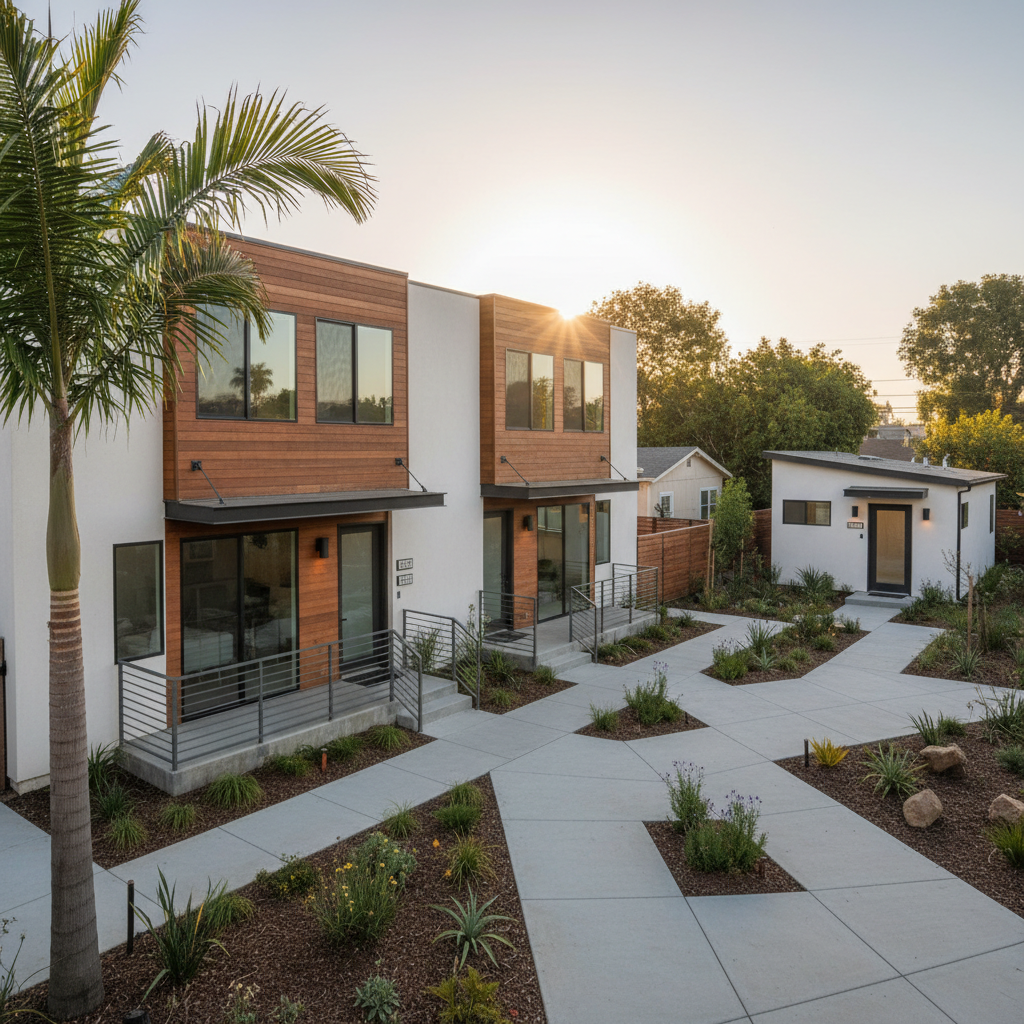
As we navigate the mid-point of 2026, the California real estate landscape has moved beyond the 'staging wars.' While curb appeal remains a baseline requirement, the most significant value appreciation is now being driven by a property’s functional density. With the California Department of Finance projecting a continued shortage of 1.2 million housing units, sellers who can prove their property’s potential for additional dwelling units (ADUs) or lot splits under Senate Bill 9 (SB-9) are commanding premiums of 12% to 18% above neighborhood comps.
Unlocking the SB-9 Premium
For years, SB-9 was a dormant policy for many homeowners. In 2026, it has become a primary valuation lever. According to data from the Terner Center for Housing Innovation, properties in R-1 zones that qualify for a 'ministry-level' lot split are seeing increased interest from a new class of 'micro-developer' buyers. To maximize your value, don't just list your home; list its development potential.
Sellers should consider commissioning a preliminary 'Density Feasibility Report.' This document, provided to prospective buyers, outlines the exact setbacks, utility capacities, and square footage maximums allowed for a second primary dwelling. By removing the guesswork for the buyer, you anchor the price to the property's future income-generating potential rather than its current three-bedroom footprint.
The ADU 'Permit-Ready' Strategy
The National Association of Realtors (NAR) 2026 Home Buyer and Seller Generational Trends report indicates that 22% of California buyers are now seeking multi-generational living solutions—a 5% increase from 2023. If your property has an underutilized garage or a large backyard, you do not necessarily need to build an ADU to capture its value.
Instead, the 2026 'Best Practice' is to offer 'Permit-Ready' status. By obtaining pre-approved architectural plans from the local municipality—a process streamlined by many California cities like San Jose and Los Angeles—sellers can market their homes as 'shovel-ready.' This reduces the buyer's risk and time-to-occupancy, justifying a higher asking price without the seller having to manage a major construction project.
Marketing to the Multi-Generational Wealth Segment
In a high-interest-rate environment, the 2026 buyer is often a 'syndicate' of family members. Your marketing strategy must pivot to address the needs of multiple decision-makers. Highlighting 'independent access points' and 'utility sub-metering readiness' in your listing description appeals directly to families looking to pool resources. Data from the California Association of Realtors (CAR) suggests that homes marketed with explicit 'rental-offset' calculations—showing how an ADU could cover 30-40% of the primary mortgage—sell 14 days faster than traditional listings.
Practical Takeaways for the 2026 Seller
- Order a Preliminary Title and Zoning Audit: Confirm your property is not subject to restrictive covenants that pre-date SB-9, as these can be deal-breakers for density-focused buyers.
- Quantify the 'Unbuilt' Square Footage: In your listing, include a line item for 'Potential Additional Living Area' based on local FAR (Floor Area Ratio) limits.
- Consult a Land-Use Consultant: Spend $1,500 on a professional assessment of your lot’s split potential to justify a six-figure bump in your asking price.
- Highlight Energy Capacity: Ensure your electrical panel is rated for 200+ amps. Buyers in 2026 look for the capacity to support both an EV charger and a future ADU without costly infrastructure upgrades.