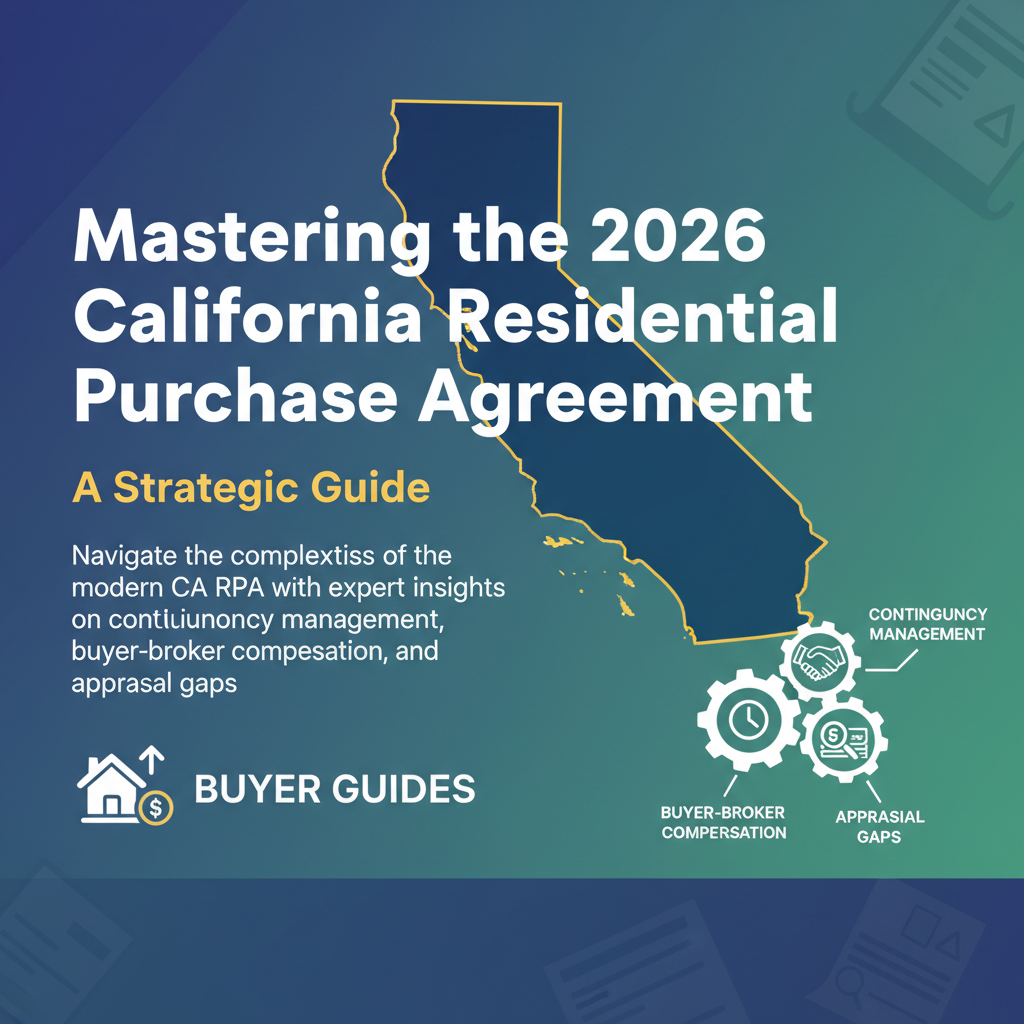
The Evolution of the California RPA in 2026
By mid-2026, the California real estate market has stabilized into a 'new normal' characterized by persistent low inventory and a sophisticated contractual landscape. According to recent data from the California Association of Realtors (CAR), the median price for a single-family home remains resilient at approximately $885,000, despite mortgage rates hovering around 6.2%. For today's buyer, success is no longer just about the highest offer; it is about the cleanest, most strategic execution of the Residential Purchase Agreement (RPA).
The Post-Settlement Buyer-Broker Framework
In this 2026 market, the transparency of buyer-broker compensation is paramount. Buyers must enter the process with a signed Buyer Representation and Broker Compensation Agreement (BRBC). Unlike the pre-2024 era, your offer must explicitly address how your representation is being funded—whether through a seller concession or direct payment. Data from the MLS suggests that 78% of successful June 2026 closings in high-demand areas like Orange County and the East Bay still utilize seller-paid commissions, but these are now negotiated as a distinct line item in the RPA, often categorized under 'Seller Payment to Buyer's Broker' (SPBB).
Strategic Contingency Management
While the standard RPA provides a 17-day default for most contingencies, the 2026 market demands precision. To compete with institutional capital and all-cash offers, savvy buyers are utilizing 'tiered' contingency removals. For loan and appraisal contingencies, providing a 'gap coverage' clause up to a specific dollar amount can be more effective than waiving the appraisal entirely. Furthermore, with the 2026 focus on climate-related risks, ensure your physical inspection includes a specific 'Wildfire and Flood Hardening' assessment, which many modern lenders now scrutinize as part of their underwriting safety standards.
The 2026 Market Context
Inventory levels in California remain 22% below the ten-year seasonal average as of June 9, 2026. This scarcity means the 'Request for Repair' (RR) phase has become a strategic pivot point rather than a list of grievances. Successful buyers are focusing on 'Big Four' items—roof, HVAC, electrical, and foundation—while conceding cosmetic issues to ensure the deal stays on track. Listing agents report that offers with shortened investigation periods (7-10 days) are 3x more likely to be accepted in the Greater Los Angeles and Bay Area markets.
Practical Takeaways for Buyers
- Audit Your Representation Agreement: Before viewing homes, ensure your BRBC clearly outlines the services provided and the maximum compensation to avoid surprises during escrow.
- Pre-Offer Inspection Review: In many CA metro areas, sellers now provide pre-inspections. Have your inspector perform a 'walk-through' review of these reports to shorten your investigation period and strengthen your offer.
- Proof of Funds 2.0: Beyond a basic pre-approval, top-tier listing agents in 2026 are looking for 'Verified Desktop Underwritten' (DU) approvals to mitigate mid-escrow financing fallout.