The Shift from Port City to Blue Tech Powerhouse
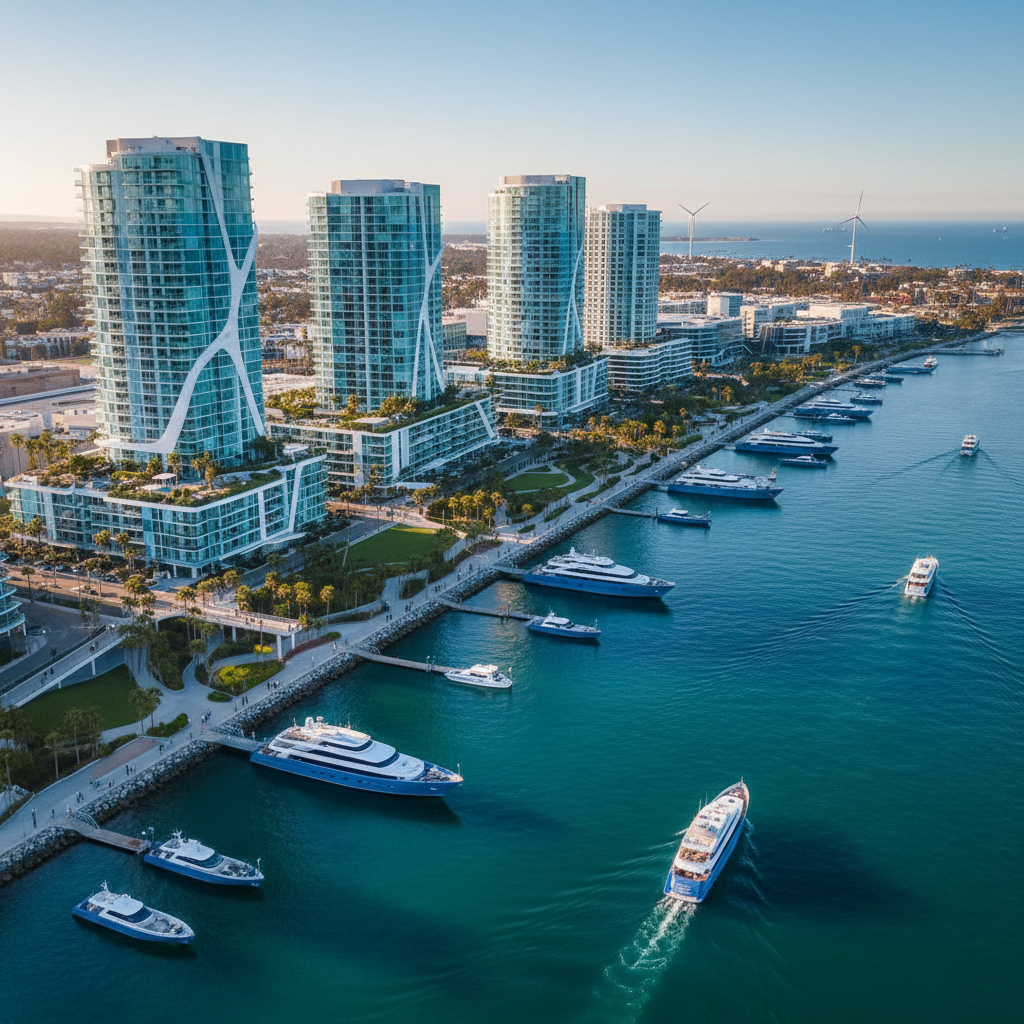
For decades, Long Beach was defined by its industrial port and its proximity to Los Angeles. However, as of mid-2026, the city has successfully carved out a distinct economic identity: the 'Blue Economy.' By leveraging its deep-water access and the presence of the AltaSea campus, Long Beach has attracted a cluster of ocean-sustainability startups and underwater robotics firms. This economic pivot has fundamentally altered the residential real estate landscape in the Downtown core, shifting it from a secondary market to a primary destination for high-income tech professionals.
Infrastructure: Reclaiming the Waterfront
A critical driver of this 2026 resurgence is the completion of the Shoreline Drive Realignment Project. This multi-year infrastructure effort has replaced aging freeway-style ramps with an 8-acre park and pedestrian-friendly boulevards. According to data from the Long Beach Economic Development Department, pedestrian traffic in the waterfront district has increased by 34% since the park's opening in late 2025. For real estate investors, this signifies a 'de-industrialization' of the living experience, making the high-rise condos along Ocean Boulevard significantly more attractive to families and remote workers who prioritize green space and walkability.
Market Data: The 2026 Pulse
According to the 2026 Q1 California Association of Realtors (CAR) report, the median sales price for a condo in the Long Beach Downtown core has reached $785,000, representing a 5.8% year-over-year increase. This outperforms the broader Los Angeles County average of 3.2% for the same period. Rental demand remains equally robust; vacancies in Class A multi-family buildings have compressed to 4.1%, driven by the 'reverse commute' of workers coming from the Silicon Beach area to work in Long Beach's burgeoning aerospace and marine-tech sectors.
Education and Talent Pipelines
The synergy between California State University, Long Beach (CSULB) and the local tech sector has created a stable demographic floor for the housing market. The university’s recent expansion of its marine biology and engineering programs into the downtown 'City Center' campus has brought 2,500 students and faculty into the urban core daily. This influx has spurred a wave of micro-unit developments and co-living spaces, specifically designed to bridge the gap between student housing and luxury lofts.
Practical Takeaways for Investors and Buyers
- For Investors: Focus on the 'Westside' of Downtown. With the expansion of the Port’s green hydrogen initiatives, properties within walking distance of the Blue Line (A-Line) stations are seeing the highest rent premiums due to their proximity to both the tech hub and transit to Los Angeles.
- For Buyers: Look for 'Adaptive Reuse' opportunities in the East Village Arts District. While new construction commands a premium, the mid-century commercial buildings currently being converted into live-work lofts offer more square footage and historically lower price-per-square-foot ratios.
- The Climate Factor: As of 2026, buyers should prioritize buildings with LEED Gold certification or higher. With California’s evolving building decarbonization mandates, pre-2010 buildings that have not been retrofitted are beginning to see 'brown discounts' in their valuation.
Long Beach is no longer just a more affordable alternative to Santa Monica or Irvine. It is a specialized hub where the intersection of marine science and urban density has created a resilient, high-growth real estate micro-market that is well-positioned for the remainder of the decade.