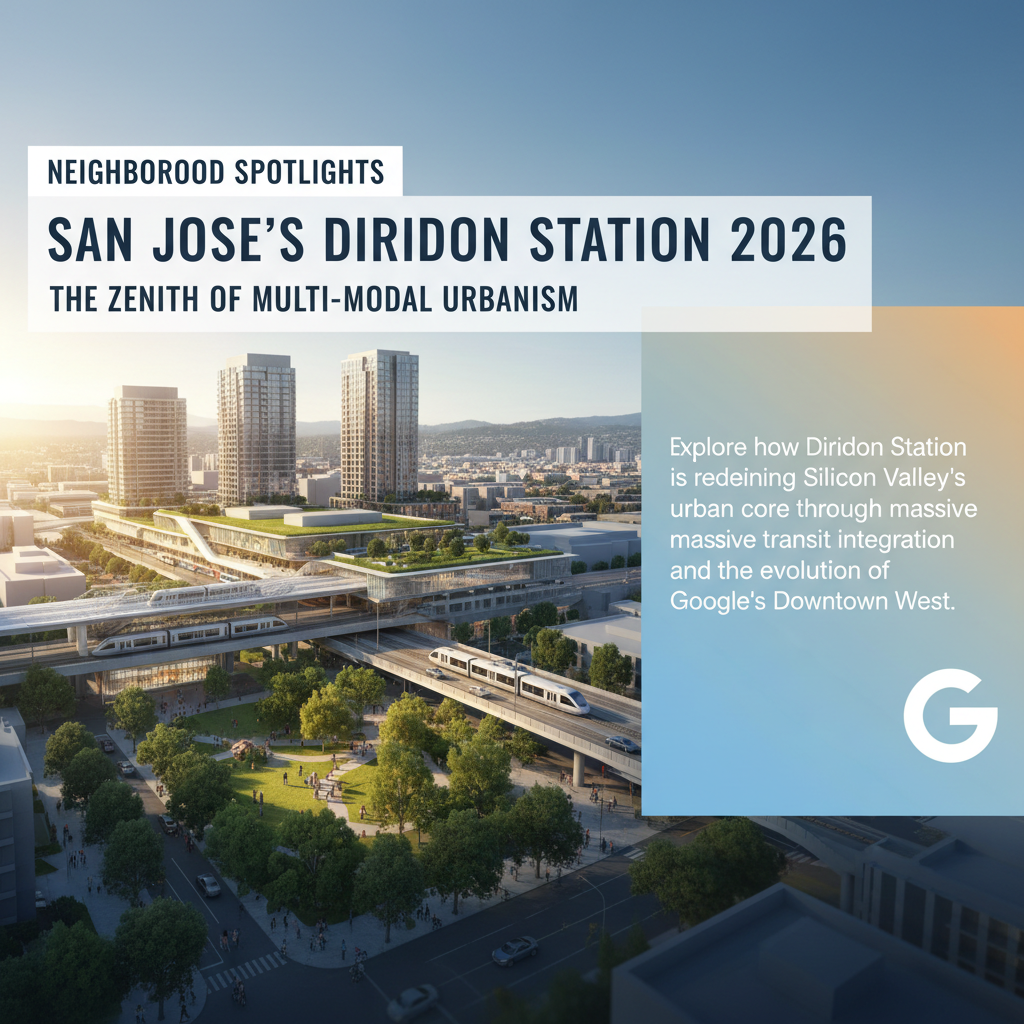
The Grand Central of the West Comes of Age
In mid-2026, the long-anticipated transformation of San Jose’s Diridon Station area has shifted from speculative blueprints to a tangible urban reality. Long overshadowed by the suburban sprawl of the wider Santa Clara Valley, the Diridon precinct now stands as the most significant multi-modal transit hub on the West Coast. This evolution, anchored by the maturation of Google’s 80-acre "Downtown West" development, represents a fundamental pivot in Northern California real estate: the transition from car-centric office parks to a high-density, transit-integrated lifestyle core.
Infrastructure as a Value Driver
The primary catalyst for the area's 2026 valuation surge is the progress of the BART Phase II extension. With tunneling well underway to connect the existing Berryessa station to Downtown San Jose and Santa Clara, the Diridon Station is the focal point of a $12 billion infrastructure investment. According to 2025 CBRE transit-oriented development reports, commercial properties within a half-mile radius of Diridon have maintained a 12% premium in lease rates compared to the wider Silicon Valley average, despite broader market fluctuations.
Current transit capacity at Diridon now includes:
- Electrified Caltrain: Providing high-speed, high-frequency service to San Francisco in under 60 minutes.
- VTA Light Rail & ACE Trains: Connecting the East Bay and Central Valley workforces.
- California High-Speed Rail: Early-stage utility relocation and station preparation for the future Gilroy-to-San Jose segment.
The Evolution of Downtown West
Google’s Downtown West project has reached a critical milestone in 2026. Eschewing the traditional closed-campus model, the tech giant has delivered its first phase of public-facing infrastructure, including the mid-rise residential towers and the redesigned Los Gatos Creek Park. This integration has created a "sticky" environment for talent. Data from the San Jose Downtown Association indicates a 15% year-over-year increase in foot traffic within the Diridon zone, driven by the blend of 15,000 projected on-site jobs and 4,000 units of mixed-income housing.
Education and Local Amenities
While the area is known for its commercial gravity, its residential appeal is bolstered by proximity to San Jose State University (SJSU), which continues to feed the local tech ecosystem. Families moving into the new luxury high-rises are served by the San Jose Unified School District, with specialized magnet programs in STEM reflecting the region's industry. The SAP Center, home to the NHL’s San Jose Sharks, remains the cultural anchor, but it is now complemented by a new wave of "micro-retail" and independent culinary concepts lining the renovated Autumn Street corridor.
Market Outlook and Investor Takeaways
For those looking to navigate the 2026 San Jose market, several key trends emerge:
- Buy on the Infill: Investors are shifting focus from luxury condos to "missing middle" townhomes in the adjacent Lakehouse and North Willow Glen neighborhoods, which benefit from Diridon’s proximity without the high HOA fees of high-rise living.
- Commercial Resilience: While traditional office space faces headwinds, the Diridon area’s specialized R&D and lab-capable builds are seeing 90%+ occupancy rates, per MLS and commercial data.
- Rental Demand: With the 2026 median home price in San Jose hovering near $1.9 million, the rental market in the Diridon zone remains robust. Properties offering transit subsidies or "work-from-hub" amenities are commanding the highest concessions-free rents.
As San Jose continues its ascent as the true urban capital of Silicon Valley, the Diridon Station area serves as the definitive blueprint for how California can solve its housing and mobility crises through concentrated, high-quality density.


