The Strategic Pivot to Adjustable-Rate Mortgages
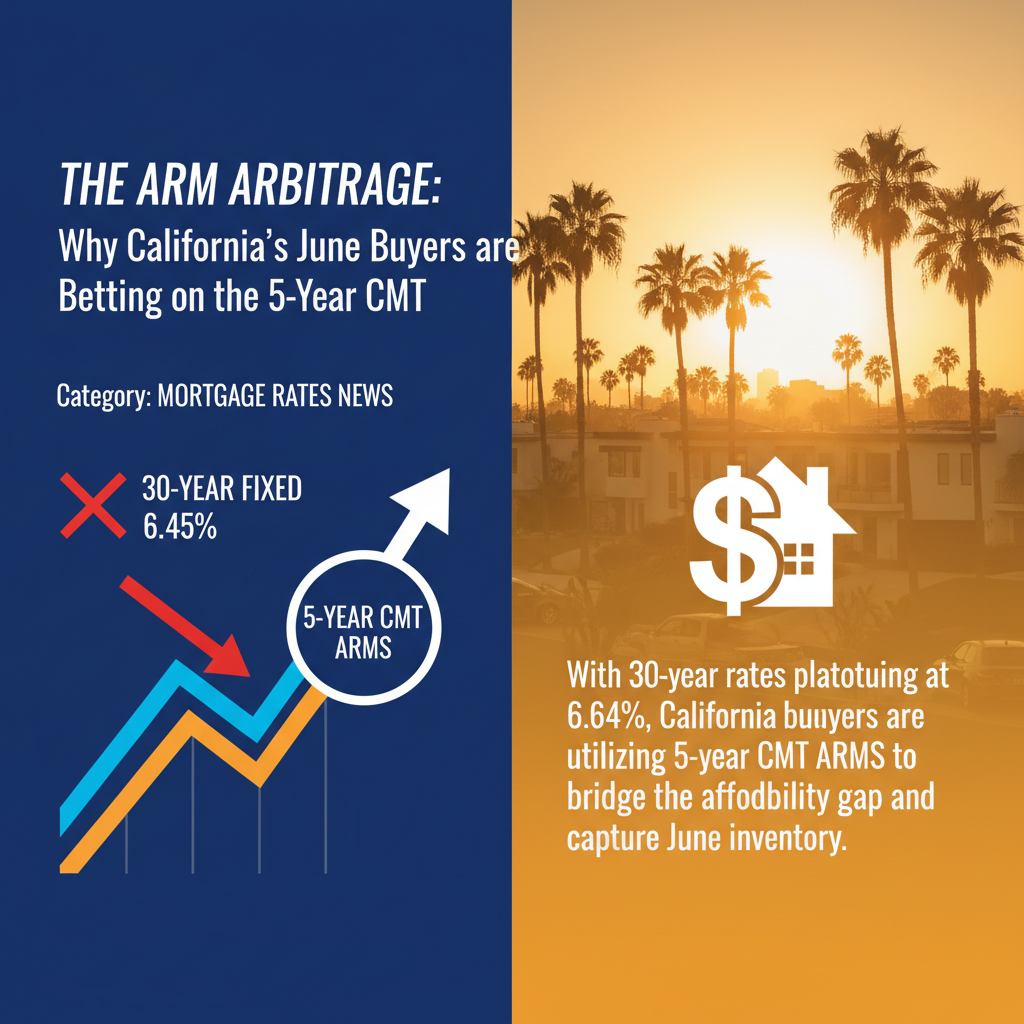
As we enter the first week of June 2026, the California real estate market is witnessing a tactical shift in financing. While the national average for a 30-year fixed-rate mortgage has plateaued at 6.45% per Freddie Mac’s latest survey, buyers in high-cost coastal regions are increasingly utilizing the 5-year Constant Maturity Treasury (CMT) ARM. This move is driven by a widening spread between short-term and long-term benchmarks that the market hasn't seen in over two years.
The 70-Basis Point Advantage
Data from the California Association of Realtors (CAR) shows the state's median home price remaining resilient at $925,000 as of May 2026. At this price level, the interest rate spread is no longer an academic exercise. Current 5/6-month ARMs are pricing near 5.75%, a substantial discount from the 30-year fixed-rate norm. On a standard $800,000 loan, this 70-basis point difference saves approximately $360 per month. In competitive hubs like Orange County and Santa Clara, where bidding wars have returned due to a 12% year-over-year drop in active listings, this increased purchasing power is often the deciding factor in securing a winning bid.
Why the CMT Index?
Sophisticated California lenders are favoring the CMT index over the Secured Overnight Financing Rate (SOFR) for mid-2026 originations. Historically, the 5-year CMT is less sensitive to the daily volatility of the overnight repo market, offering a smoother potential transition if the loan enters its adjustable phase. With inflation targets finally within reach of the Federal Reserve's 2% goal, buyers are anticipating a significant refinance window in the 2028-2029 economic cycle. This makes the five-year fixed period of the ARM a calculated duration hedge rather than a speculative risk.
Practical Takeaways for June Buyers
- Maximize DTI Flexibility: Use the 5.75% introductory qualifying rate to offset the impact of rising property insurance premiums, which have become a significant hurdle in California’s DTI (Debt-to-Income) calculations this year.
- Verify the Reset Caps: Prioritize loan products with a 2/2/5 cap structure. This ensures that even if rates spike unexpectedly, the first adjustment is capped at 2% and the lifetime increase cannot exceed 5% over the initial rate.
- The Five-Year Exit Strategy: This product is best suited for buyers who plan to either refinance when the cycle turns or sell before the first adjustment in 2031. For those in the 'forever home' mindset, the 30-year fixed remains the safer, albeit more expensive, harbor.