The Evolution of the San Fernando Valley’s Urban Core
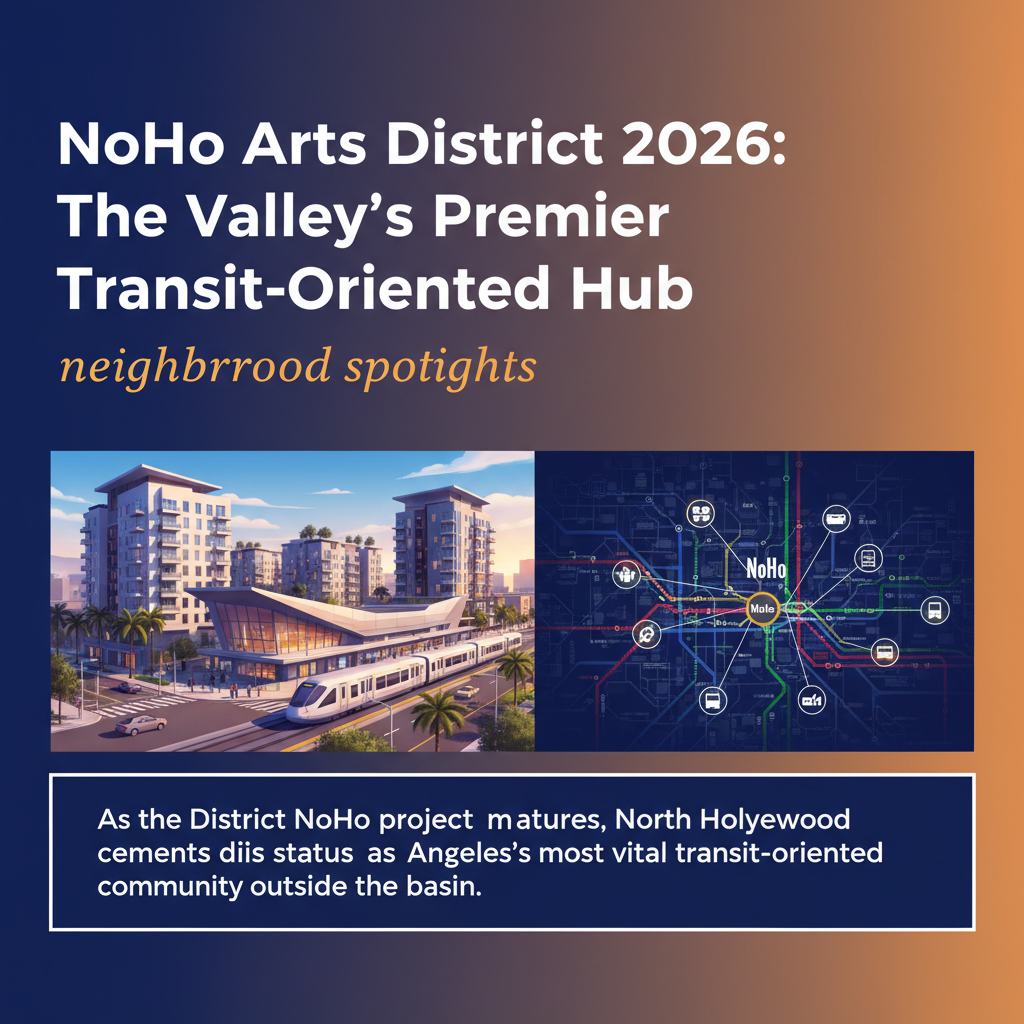
By mid-2026, the North Hollywood (NoHo) Arts District has transitioned from a bohemian enclave of independent theaters into the most significant transit-oriented development (TOD) success story in the San Fernando Valley. While other Los Angeles neighborhoods have struggled with the slow pace of infill development, NoHo has utilized its unique position as a dual-terminal hub for the Metro B-Line (Subway) and the G-Line (Bus Rapid Transit) to attract record levels of private investment.
The District NoHo Catalyst
The centerpiece of this transformation is the 'District NoHo' project, a 15-acre joint venture between Metro and private developers that has begun delivering its first phase of residential and retail units. According to 2026 CBRE market reports, this development has introduced over 1,500 mixed-income housing units to the area, significantly addressing the housing shortage in the Valley. Unlike traditional suburban developments, District NoHo prioritizes a 15-minute city model, offering 100,000 square feet of office space and 60,000 square feet of retail within a two-block radius of the transit portal.
Data-Driven Market Resilience
Real estate data reflects NoHo’s emergence as a premier submarket. MLS data for Q2 2026 shows that while the broader Los Angeles County saw a modest 3% year-over-year appreciation, the 91601 zip code experienced a 7.8% increase in median home values. This growth is largely attributed to the neighborhood's Transit Oriented Communities (TOC) Tier 4 status, which allows for higher density and reduced parking requirements. For investors, the rental market is equally robust; NAR-linked data indicates that Class A multifamily vacancy rates in NoHo have hovered below 4.2%, outperforming the Greater LA average of 5.5%.
Amenities and Infrastructure: Beyond the Commute
While transit is the spine of NoHo, the 'Arts' in its name remains a primary draw. The neighborhood boasts over 20 professional theaters, the highest concentration outside of New York City. In 2026, the local Business Improvement District (BID) has successfully integrated these cultural assets with new infrastructure, such as the Lankershim Boulevard streetscape improvements, which added protected bike lanes and expanded pedestrian walkways. Educationally, the area is served by LAUSD schools like North Hollywood High, which continues to rank highly for its highly gifted and STEM magnet programs, attracting young families who want urban density without sacrificing academic quality.
Strategic Takeaways for Stakeholders
- For Investors: Focus on 'missing middle' opportunities within a half-mile radius of the Metro station. The TOC Tier 4 incentives remain the most aggressive tool for maximizing floor-area-ratio (FAR) in the Valley.
- For Buyers: Look to the periphery of the Arts District, specifically the areas north of Chandler Boulevard, where single-family homes are increasingly being converted into ADU-heavy income properties.
- For Commercial Tenants: The influx of high-earning remote and hybrid workers has created a supply gap for 'third-space' retail—high-end coffee shops, boutique fitness, and coworking lounges.
As the G-Line conversion to light rail moves closer to its 2028 completion goal, NoHo’s connectivity to the West Valley and the broader Los Angeles basin will only strengthen, making it a critical node for the region's long-term urban growth strategy.


