The Evolution of the Southern Gateway
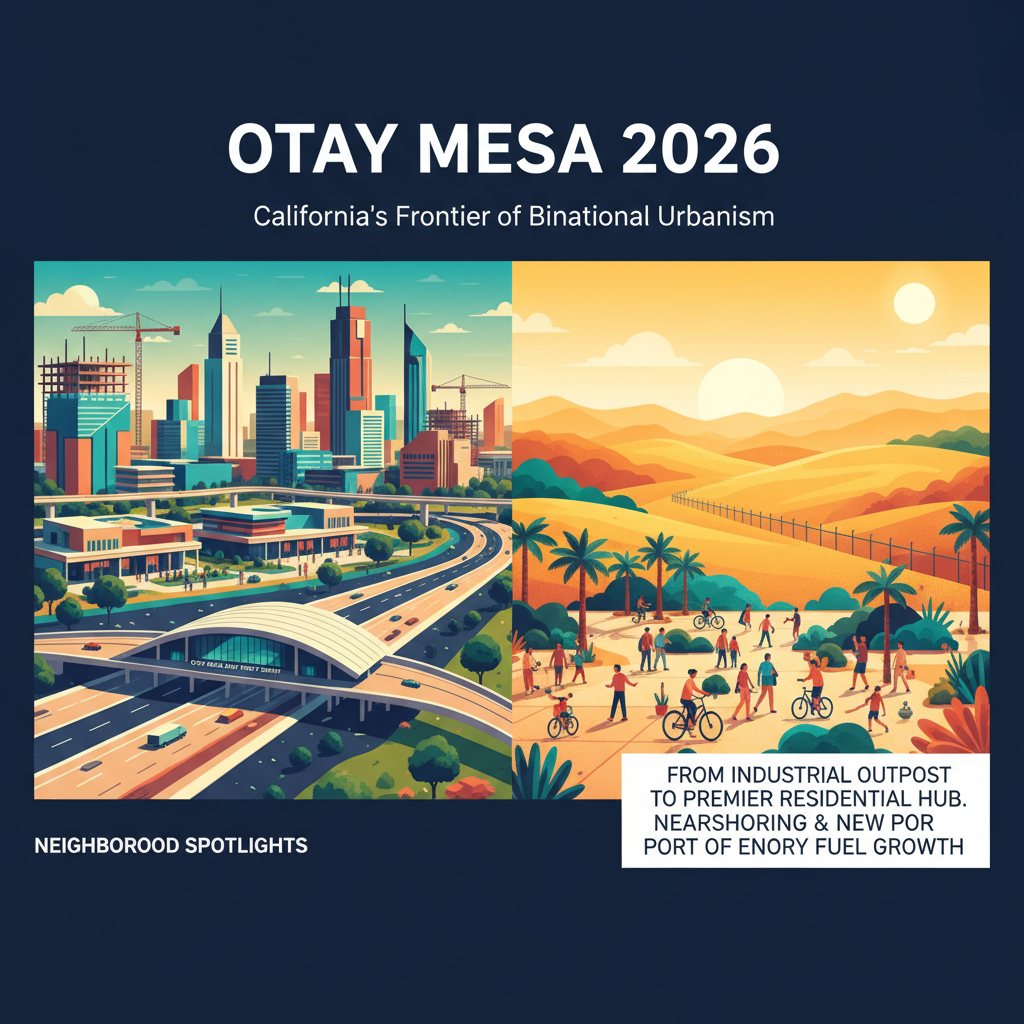
In 2026, Otay Mesa has shed its reputation as a mere industrial buffer zone. Historically defined by warehouses and logistics hubs, this San Diego neighborhood has matured into a sophisticated model of binational urbanism. The catalyst for this transformation has been the 2026 completion of the Otay Mesa East Port of Entry, a state-of-the-art border crossing that has fundamentally altered the economic and residential geography of the region. According to SANDAG (San Diego Association of Governments), the new port has reduced wait times by 50%, making daily cross-border professional commutes not just feasible, but efficient.
Infrastructure as a Catalyst for Growth
The neighborhood's appeal is rooted in infrastructure. Beyond the port of entry, the expansion of the State Route 11 and State Route 905 interchange has created a seamless link between the Pacific Coast and the inland logistics empires. This connectivity has sparked a residential boom. Unlike the dense, vertical growth seen in San Diego’s North Park or East Village, Otay Mesa offers a master-planned approach to density. Recent 2025 Census Bureau data indicates that Otay Mesa’s population has grown by 14% over the last three years, significantly outpacing the county average.
Education and Community Amenities
The influx of young families has been met with a rapid expansion of local services. The San Ysidro School District and Sweetwater Union High School District have recently debuted two new K-8 campuses in the area, designed with a focus on STEM and bilingual immersion to reflect the community's international character. For higher education, the presence of Southwestern College’s Otay Mesa campus provides a direct pipeline to the high-tech manufacturing jobs located within the district. Community features include the newly expanded Otay Valley Regional Park, which now provides over 20 miles of multi-use trails connecting the neighborhood to the salt ponds of Imperial Beach.
Real Estate Dynamics: The Industrial-Residential Nexus
For investors and buyers, Otay Mesa presents a unique value proposition. CBRE reports from Q1 2026 show industrial vacancy rates in the area holding at a record low of 2.1%, driven by the 'nearshoring' trend as companies move manufacturing from Asia to Baja California. This industrial strength has trickled down to the residential market. While the median home price in San Diego County has climbed toward $980,000, Otay Mesa offers new-construction townhomes and single-family residences in the $750,000 to $850,000 range, providing a rare entry point for middle-income earners.
Key Takeaways for Stakeholders
- For Buyers: Look to the 'Village' master-plans in the eastern quadrant. These developments offer the best balance of proximity to schools and the new transit corridors.
- For Investors: Focus on multi-family zoning near the SR-11 corridor. The demand for workforce housing for both the logistics sector and the cross-border professional class is currently underserved.
- For Sellers: The reduction in border wait times has expanded your buyer pool to include professionals working in Tijuana’s growing medical and tech sectors, who prefer a primary residence on the U.S. side.
A New Strategic Hub
Otay Mesa in 2026 is no longer the periphery; it is the center of a new, integrated economic zone. Its blend of modern infrastructure, educational investment, and relative affordability makes it a critical node in California’s housing strategy. As the state continues to grapple with supply shortages, Otay Mesa stands as a testament to how specialized, transit-heavy corridors can evolve into vibrant, self-sustaining communities.