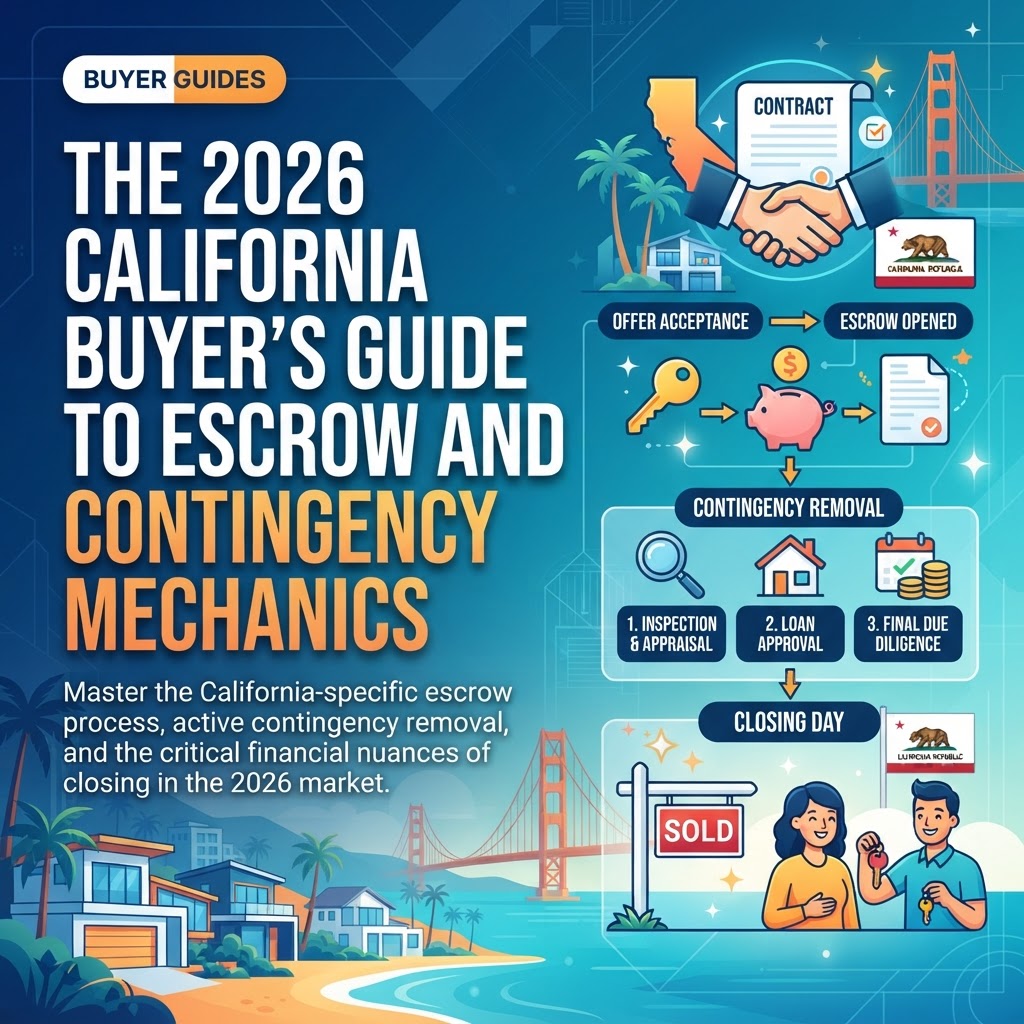
The Evolution of Due Diligence in a Balanced Market
As we enter the summer of 2026, the California housing market has transitioned from the frenetic bidding wars of the early 2020s to a more calculated, surgical environment. Data from the California Association of Realtors (CAR) indicates that while the median home price has stabilized near $865,000, the cost of labor and building materials has significantly outpaced general inflation. For today’s buyer, the primary risk is no longer just winning the bid, but inheriting a latent structural or legal liability that can jeopardize long-term equity.
The Unpermitted Addition Trap
In response to the prolonged housing shortage, many California homeowners in the last five years attempted DIY conversions or unpermitted Accessory Dwelling Units (ADUs). Regional MLS data suggests that up to 18% of listings in coastal metros like San Diego and the Bay Area now include 'bonus' square footage that lacks a certificate of occupancy. In 2026, mortgage underwriters have tightened 'subject to' requirements. A practical buyer must verify the 'Permit History' via the local building department early in the escrow period. Unpermitted spaces can lead to insurance denials or mandatory code enforcement actions under the latest municipal interpretations of SB 9.
Wildfire and Seismic Compliance: Beyond the Basics
While standard Natural Hazard Disclosures (NHD) are mandatory, 2026 buyers must look specifically for AB 38 compliance documentation. For properties located in High or Very High Fire Hazard Severity Zones, California law now strictly requires a seller to provide documentation of a successful defensible space inspection. Furthermore, with recent updates to the California Residential Code, buyers should prioritize 'Soft-Story' inspections for any property with 'tuck-under' parking or large open spans on the ground floor, as seismic retrofitting mandates are expanding from major hubs into suburban municipalities.
Practical Takeaways for the 2026 Buyer
- The 48-Hour Permit Pull: Do not rely solely on the seller’s Supplemental Property Questionnaire (SPQ). Use digital municipal portals to verify a property’s permit history independently within the first two days of escrow.
- Defensible Space Certification: Confirm that the seller has a 'Notice of Compliance' from CAL FIRE or a local fire agency. This document is becoming a non-negotiable prerequisite for securing a FAIR Plan insurance policy in high-risk zones.
- The Sewer and Gas Safety Audit: An increasing number of California cities now require Sewer Lateral and Automatic Gas Shut-Off Valve (AGSOV) certifications at the point of sale. If these are missing, budget between $4,500 and $12,000 for compliance costs post-closing.
- The 'As-Is' Credit Strategy: In the 2026 market, 'As-Is' is a starting point, not a finality. Use structural deficiency findings to negotiate a 'Closing Cost Credit' rather than a price reduction. This preserves your liquid cash to oversee repairs using your own vetted contractors.