The Evolution of the Central Waterfront
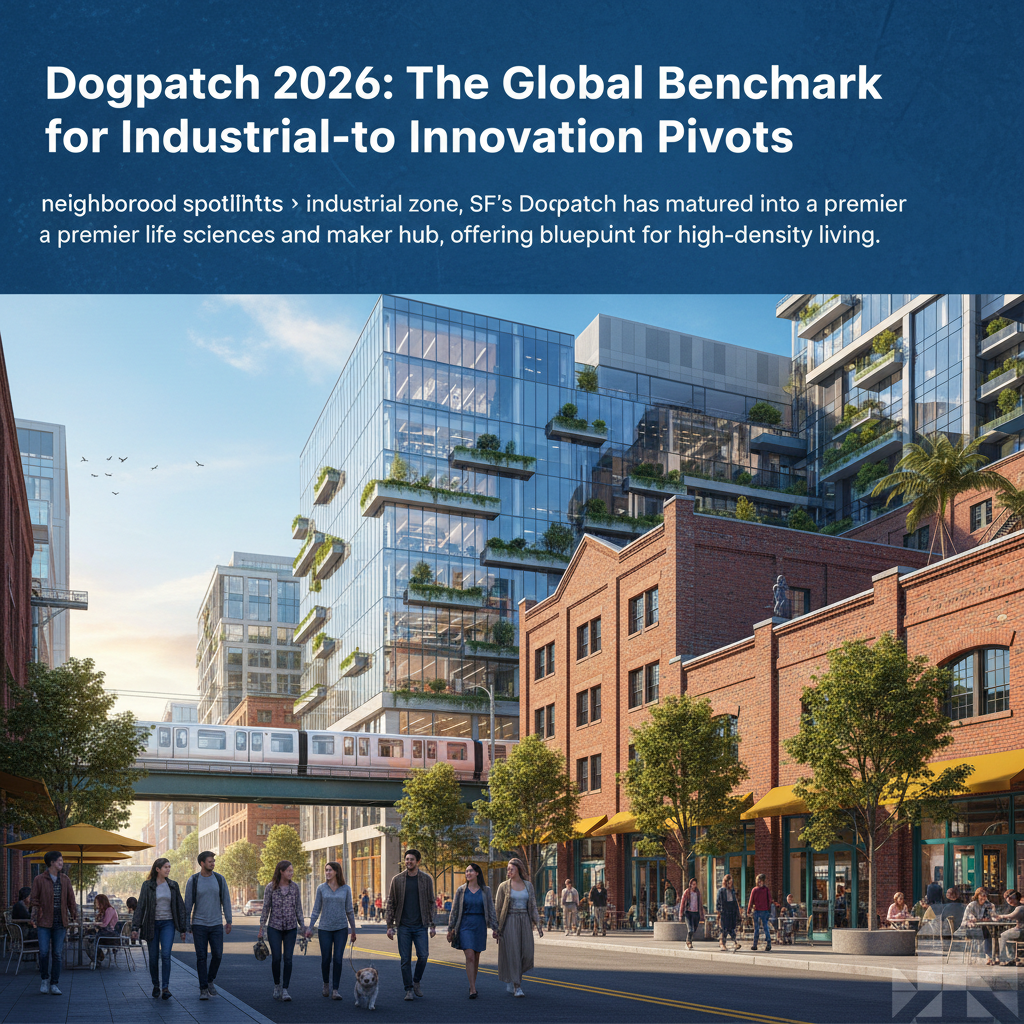
In mid-2026, San Francisco’s Dogpatch neighborhood stands as the definitive success story of adaptive reuse in the post-pandemic era. While traditional downtown cores struggled with office vacancies, the Dogpatch successfully leaned into its industrial heritage to create a resilient, hybrid economy. By blending high-spec life science laboratories with artisanal manufacturing and luxury residential density, the district has decoupled itself from the volatility of the general tech sector.
The Catalyst: Pier 70 and the Power Station
The primary drivers of value in 2026 are the completed phases of the Pier 70 and Potrero Power Station redevelopments. According to data from CBRE, these projects have added over 2 million square feet of lab and R&D space to the submarket since 2022. Unlike the glass towers of SoMa, these developments preserve historic masonry shells, attracting premium tenants in the biotech and green-tech sectors who prioritize unique, 'branded' headquarters.
For residents, this has meant the opening of the Power Station Park, a six-acre waterfront green space that serves as the neighborhood's new backyard. The integration of the Blue Greenway trail system now provides an uninterrupted bike and pedestrian path from the Embarcadero down to Hunters Point, significantly boosting the area's Walk Score to a 'Walker’s Paradise' rating of 94.
Market Resilience and Real Estate Data
Real estate fundamentals in the Dogpatch remain some of the strongest in Northern California. MLS data for Q2 2026 indicates a median condo price of $1.38 million, representing a 4.2% year-over-year increase—outperforming the broader San Francisco market. Inventory remains tight, with an average of only 2.1 months of supply, as the neighborhood’s 'sticky' community of young professionals and families resists the suburban migration seen elsewhere.
- Rental Premium: Purpose-built rental projects like those along the 3rd Street corridor are seeing a 15% rent premium over older stock in neighboring Potrero Hill, driven by proximity to UCSF Mission Bay.
- Education: The recent opening of the Mission Bay School (serving Pre-K through 6th grade) has stabilized the neighborhood for families, filling a critical gap in the local infrastructure.
- Connectivity: The T-Third Street light rail remains the neighborhood's arterial lifeline, providing a 15-minute transit time to the Yerba Buena/Moscone station via the Central Subway.
Amenities and the 'Maker' Culture
Dogpatch’s appeal is anchored by its 'Maker' culture. The American Industrial Center continues to house over 300 small businesses, from robotics startups to craft chocolatiers. This commercial diversity ensures that the neighborhood remains active 18 hours a day, a stark contrast to the commuter-heavy patterns of 2019. The retail landscape is dominated by local entrepreneurs rather than national chains, preserving a sense of place that drives long-term property value.
Practical Takeaways for Stakeholders
For Investors:
Focus on 'missing middle' opportunities—specifically older, low-rise multi-family units that can be modernized. The demand for 2-bedroom units remains exceptionally high due to the influx of UCSF medical staff and researchers who prioritize short commutes over suburban square footage.
For Buyers:
Look toward the southern edge of the neighborhood near the 22nd Street Caltrain station. While the northern 'Mission Bay border' is priced at a premium, the southern corridor is seeing significant infrastructure investment that will likely yield higher equity growth over the next five years.
For Sellers:
Highlight sustainable features and 'work-from-home' readiness. With the neighborhood's high concentration of high-earning knowledge workers, units equipped with LEED certification or high-speed fiber-optic upgrades are fetching 5-8% more than standard listings.
Conclusion
Dogpatch 2026 is no longer an 'up-and-coming' fringe. It is a mature, self-sustaining ecosystem that proves industrial preservation and high-density innovation are not mutually exclusive. As San Francisco continues to reinvent itself, Dogpatch serves as the gold standard for urban resilience and localized economic strength.