The Efficiency Alpha in a High-Rate Environment
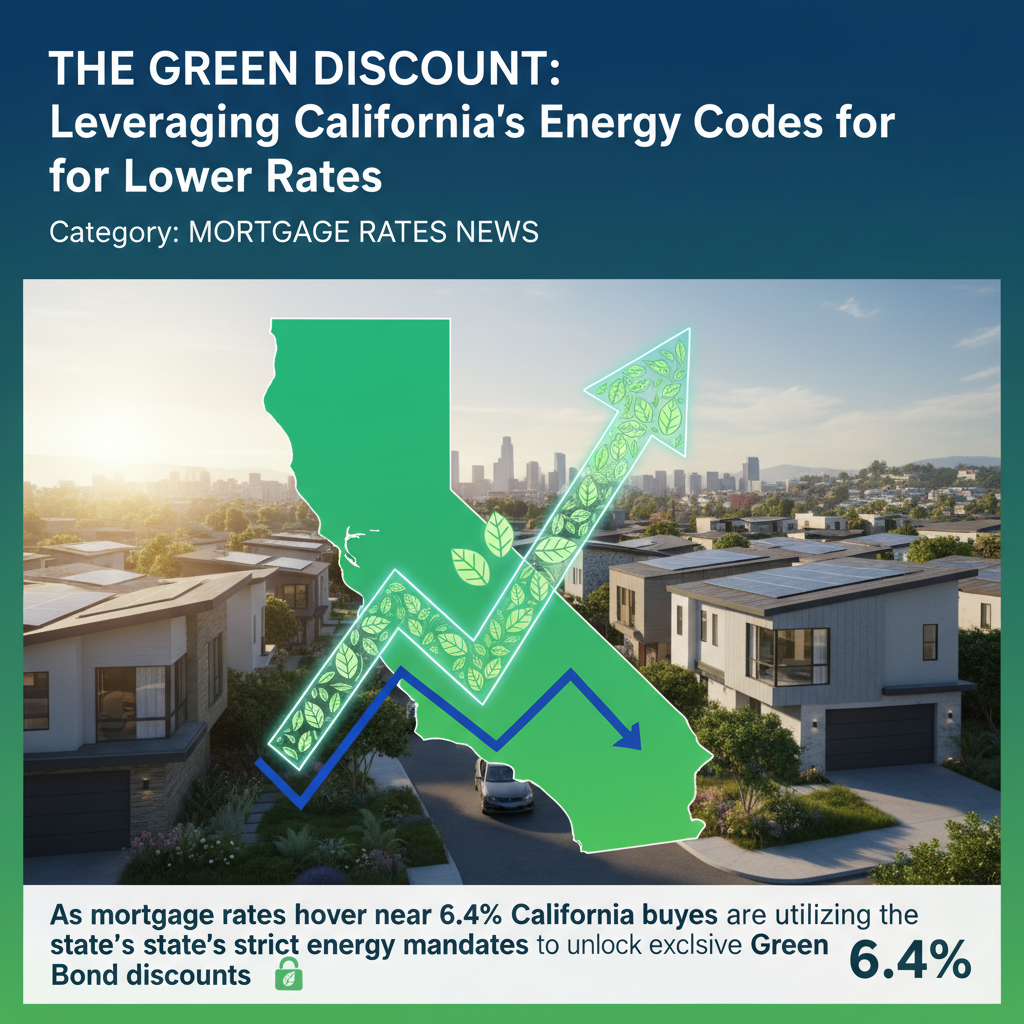
As of June 2, 2026, the national average for a 30-year fixed mortgage has stabilized at 6.38%, according to Freddie Mac data. While the 'rate shock' of previous years has faded into a predictable plateau, California buyers are facing a unique challenge: high entry prices coupled with persistent borrowing costs. However, a new trend is emerging where the state’s stringent environmental regulations—often viewed as a hurdle—are being transformed into a financial asset. Lenders are increasingly offering 'Green Bond' discounts for homes that meet or exceed California’s Title 24 Building Energy Efficiency Standards.
The 25-Basis Point 'Green' Spread
Data from the National Association of Realtors (NAR) indicates that homes with high-efficiency ratings now sell 20% faster in the Golden State than their non-certified counterparts. More importantly, secondary market demand for Green Mortgage-Backed Securities (MBS) has created a pricing arbitrage. Large institutional lenders are currently offering interest rate reductions of 12.5 to 25 basis points for properties with a verified HERS (Home Energy Rating System) index below a certain threshold.
In a market like Los Angeles or the Bay Area, where the average loan size often exceeds $800,000, a 0.25% rate reduction translates to a savings of approximately $140 per month, or over $50,000 over the life of the loan. This 'Green Discount' is effectively a reward for California's mandatory solar requirements and high-insulation standards in new builds and major renovations.
Turning Title 24 into a Lending Asset
While traditional appraisals focus on square footage and comparable sales, 'Energy Improvement Mortgages' (EIMs) allow the projected utility savings to be added to the borrower’s income profile. According to recent California Energy Commission reports, homes built under the 2023 or 2026 code cycles use roughly 40% less energy than those built a decade ago. Forward-thinking lenders are now factoring these reduced carrying costs into Debt-to-Income (DTI) calculations, allowing buyers to qualify for slightly higher loan amounts despite elevated rates.
Practical Takeaways for June 2026 Buyers
- Request the HERS Report: When touring homes built after 2020, buyers should request the Home Energy Rating System certificate. This document is the primary evidence needed to secure green-tier pricing from national lenders.
- The Retrofit Bridge: For older California bungalows, some lenders are offering 'Green Add-ons' where the cost of heat pump installation or window upgrades can be rolled into the mortgage at the discounted 'green rate' rather than a standard renovation loan rate.
- Audit During Escrow: If a property doesn't have a certification, a certified energy audit during the 17-day inspection period can determine if the home is eligible for specific ESG-focused lending products.
By shifting the focus from the macro-economic 'rate watch' to property-specific efficiency metrics, California buyers are finding a path to sub-6% effective rates in a 6.4% market. As the state moves toward its net-zero goals, the intersection of climate policy and mortgage liquidity is becoming the new frontier for housing affordability.


