As we reach the midpoint of 2026, the California real estate landscape has shifted from a battle of high interest rates to a search for 'intrinsic density.' With the California Department of Housing and Community Development (HCD) now strictly enforcing the 6th Cycle Regional Housing Needs Allocation (RHNA) plans, the most savvy buyers are no longer looking at houses as single-family residences, but as 'middle housing' opportunities. This guide outlines how to navigate the 2026 density landscape to secure a property with built-in appreciation potential.
The RHNA Enforcement Era
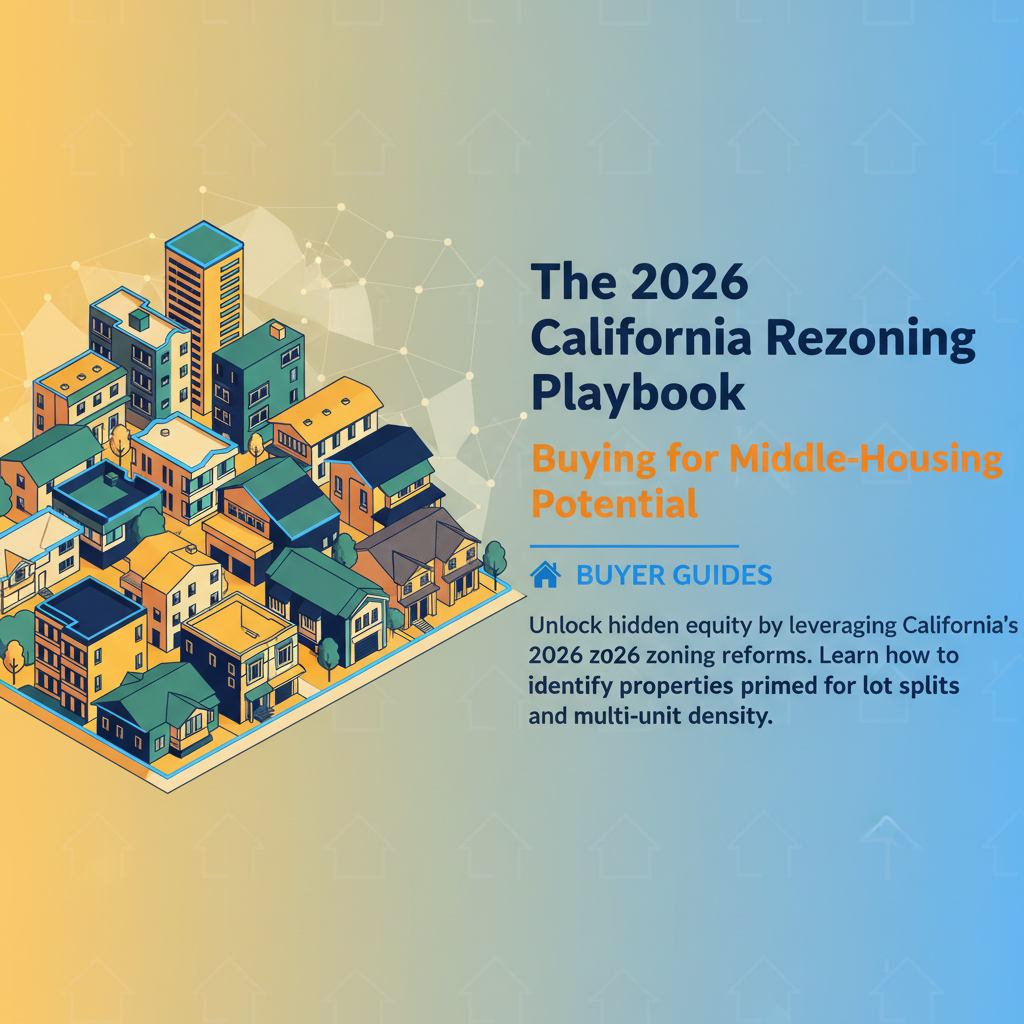
By May 2026, the grace periods for many municipal housing elements have expired. Under the 'Builder’s Remedy' and state-mandated rezoning, thousands of parcels previously restricted to single-family use are now eligible for multi-unit development by-right. According to recent MLS data, properties with 'Lot Split Potential' or 'SB 9 Eligibility' are commanding a 12% premium over standard lots in coastal metros. For a buyer, identifying these parcels before they are marketed as 'development sites' is the key to long-term equity.
Identifying 'By-Right' Opportunities
When touring homes, look beyond the kitchen finishes and evaluate the 'Objective Design Standards' of the municipality. Since 2024, California law has increasingly prohibited 'subjective' design reviews that used to kill small-scale projects. Look for:
- Proximity to High-Quality Transit Areas (HQTAs): Properties within a half-mile of a major transit stop often qualify for zero-parking requirements and increased Floor Area Ratios (FAR).
- Lot Configuration: Under current state law, a lot split is often feasible if the resulting parcels are at least 1,200 square feet each. A deep backyard or a corner lot is gold in this market.
- Utility Capacity: Check the 'Will Serve' status of local water and power districts. In 2026, the constraint on density isn't just zoning; it is the physical capacity of the local grid.
The 2026 Streamlined Permitting Advantage
A critical takeaway for 2026 buyers is the utilization of SB 423 and related streamlining measures. If you purchase a property in a jurisdiction that has failed to meet its state-mandated housing goals, your application for a duplex or small multi-family conversion cannot be blocked by discretionary public hearings. This reduces the 'entitlement risk'—historically the largest hurdle for California investors—to near zero for projects of 2-4 units.
Practical Takeaways for Buyers
First, verify the 'Housing Element' status of your target city via the HCD dashboard. If the city is out of compliance, you have significantly more leverage for density. Second, work with a lender who understands 'Renovation-to-Permanent' financing for middle housing. Traditional 30-year fixed mortgages are difficult for lot splits, but 2026 has seen an influx of specialized 'Density Bridge' loans. Finally, ensure your inspection includes a 'sewer lateral' and 'utility load' assessment to confirm the site can handle the additional units you plan to add. By buying for what a property can become under 2026 laws, you are insulating your investment against the volatility of the standard resale market.