The Evolution of Silicon Beach
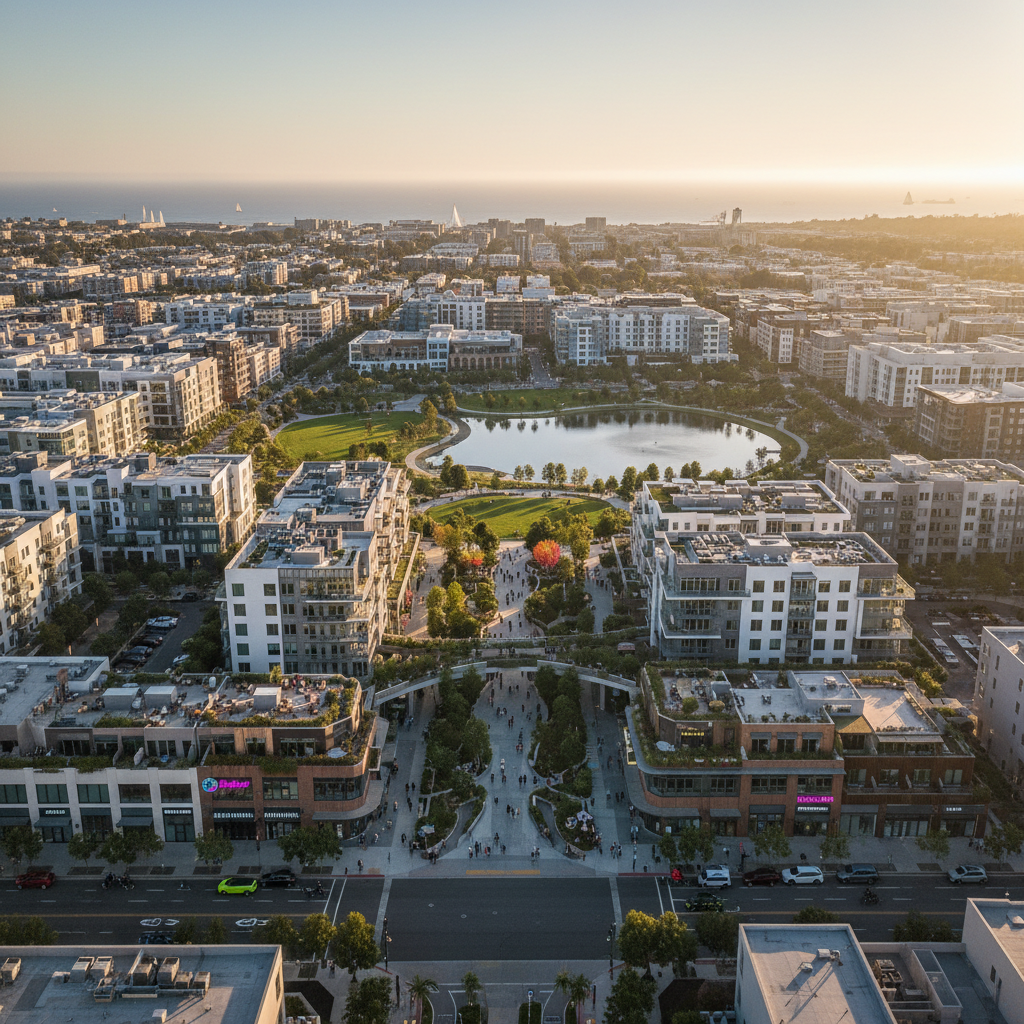
In 2026, Playa Vista has transitioned from a localized tech experiment into the gold standard for master-planned urbanism in Southern California. Often referred to as the heart of "Silicon Beach," this neighborhood has successfully integrated over 3 million square feet of Class A office space with a high-density residential footprint, creating a 15-minute city where the commute is measured in steps rather than miles. According to recent data from the California Association of Realtors (CAR), Playa Vista maintains a 15% pricing premium over neighboring Westchester, largely driven by its rare combination of walkable modern infrastructure and preserved green space.
The Tech-Residential Synergy
The neighborhood’s anchor tenants—including Google, Meta, and YouTube—have moved beyond mere office presence to become integrated community stakeholders. Unlike the traditional corporate campuses of the 1990s, the "Campus" at Playa Vista is porous, flowing directly into residential sectors like Phase II’s luxury condos and apartments. Data from CBRE indicates that while the broader Los Angeles office market has faced vacancy headwinds, the Playa Vista submarket remains resilient with occupancy rates 12 points higher than the regional average. This stability is credited to the 'live-work' lock-in effect, where employees choose to live within a mile of their workstations to avoid the notorious 405 freeway congestion.
Community Amenities and Ecological Balance
Playa Vista’s appeal lies in its dual identity. On one side sits the 'Runway,' a retail epicenter anchored by Whole Foods, CVS, and high-end dining. On the other lies the Ballona Freshwater Marsh and the Riparian Corridor. This 51-acre ecological preserve acts as a natural buffer, providing residents with outdoor recreation that is increasingly rare in the dense Westside. For families, the neighborhood is anchored by the Playa Vista Elementary School, which consistently ranks in the top 5% of California public schools according to GreatSchools data, making the area a magnet for young professionals transitioning into parenthood.
Transportation and Connectivity
Transportation in 2026 has shifted toward micromobility and transit-led solutions. The neighborhood’s internal shuttle system, the 'Daily Breeze,' now connects directly to the Metro K Line extension, providing a rail link to LAX and Downtown Los Angeles. Furthermore, the completion of the Culver Boulevard bike path enhancement project has made it possible for residents to cycle to the beaches of Playa del Rey in under 10 minutes, further reducing the reliance on single-occupancy vehicles.
Practical Takeaways for Real Estate Stakeholders
- For Buyers: Expect high competition for 'Phase II' properties. Inventory levels in Playa Vista remain historically low (under 1.5 months of supply), making quick-close capability and pre-approval essential.
- For Investors: The rental market is bolstered by a consistent influx of high-earning tech talent. Data suggests that two-bedroom units see the highest demand-to-supply ratio, yielding CAP rates approximately 50 basis points higher than traditional Santa Monica multi-family assets.
- For Sellers: Modernity is your greatest asset. Highlighting smart-home integration and LEED-certified features resonates with the local demographic’s focus on sustainability and tech-forward living.
Conclusion
Playa Vista represents the successful execution of the 'Village' concept within a major metropolitan area. By 2026, it has proven that density and nature can coexist, provided they are supported by high-performing schools and a robust corporate tax base. For those seeking the future of California urbanism, Playa Vista is no longer a project in progress—it is a finished, flourishing reality.