The Evolution of Density: Beyond the ADU
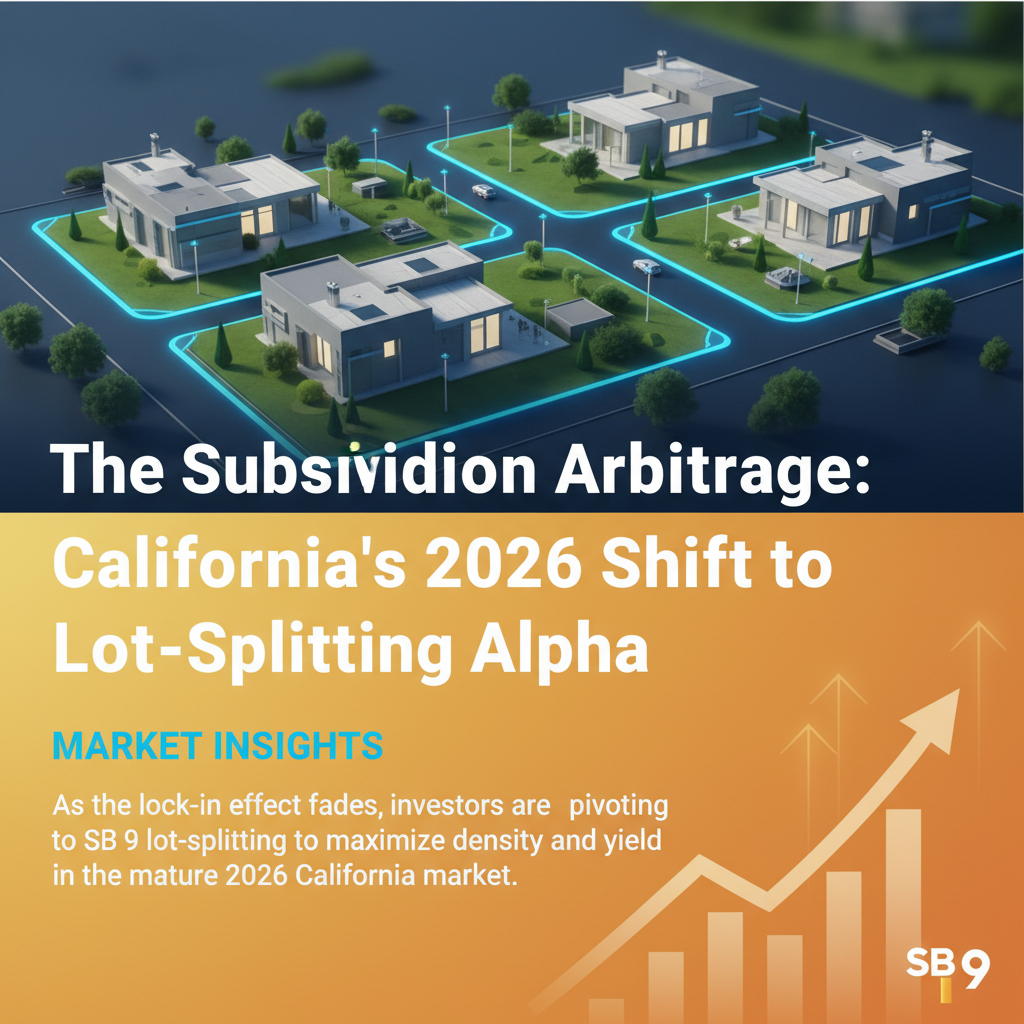
By mid-2026, the California residential market has transitioned from a crisis of inventory to a sophisticated game of density optimization. While previous years focused on the Accessory Dwelling Unit (ADU) as a secondary income stream, 2026 marks the maturity of Senate Bill 9 (SB 9) applications. According to the California Department of Housing and Community Development (HCD), lot-split approvals have surged by 42% year-over-year, creating a new class of high-yield asset: the subdivided urban lot.
The Economics of the Split
Data from the 2026 California Association of Realtors (CAR) mid-year report indicates that properties marketed with 'verified subdivision potential' now command a 15-18% premium over standard single-family homes. This 'Subdivision Arbitrage' allows investors to acquire underutilized large-lot properties in Tier-1 markets like San Jose, San Diego, and Los Angeles, split the title, and develop up to four units where once only one stood. The yield on cost for these projects is currently averaging 8.4%, significantly outperforming the 5.1% cap rates seen in traditional buy-and-hold residential portfolios in the same zip codes.
Strategic Perspectives for 2026 Investors
The 2026 market favor is shifting toward 'infill-specialist' syndicates. CBRE’s latest West Coast Outlook highlights that institutional capital, once wary of the granular nature of lot-splitting, is now partnering with local developers to scale 'mini-multifamily' projects. For the individual investor, the opportunity lies in the 'Permit-Ready' sale. Sellers who navigate the complex local zoning hurdles to deliver a shovel-ready split lot are seeing the fastest days-on-market metrics in the state, often closing in under 14 days with non-contingent offers.
Practical Takeaways for the Current Market
- Analyze the Zoning Floor: Focus on R1-zoned lots exceeding 5,000 square feet in high-demand coastal corridors. In 2026, the spread between raw land value and finished 'missing middle' unit value is at a five-year high.
- Leverage Specialized Financing: 2026 has seen the rise of specialized 'construction-to-permanent' loans tailored specifically for SB 9 projects, offering preferential rates for units that meet density-bonus criteria.
- Monitor Local Ordinances: While state law mandates approvals, local 'objective standards' vary. Investors should prioritize cities that have streamlined their 2026 planning department workflows, such as Sacramento and Long Beach, to minimize carry costs during the permitting phase.