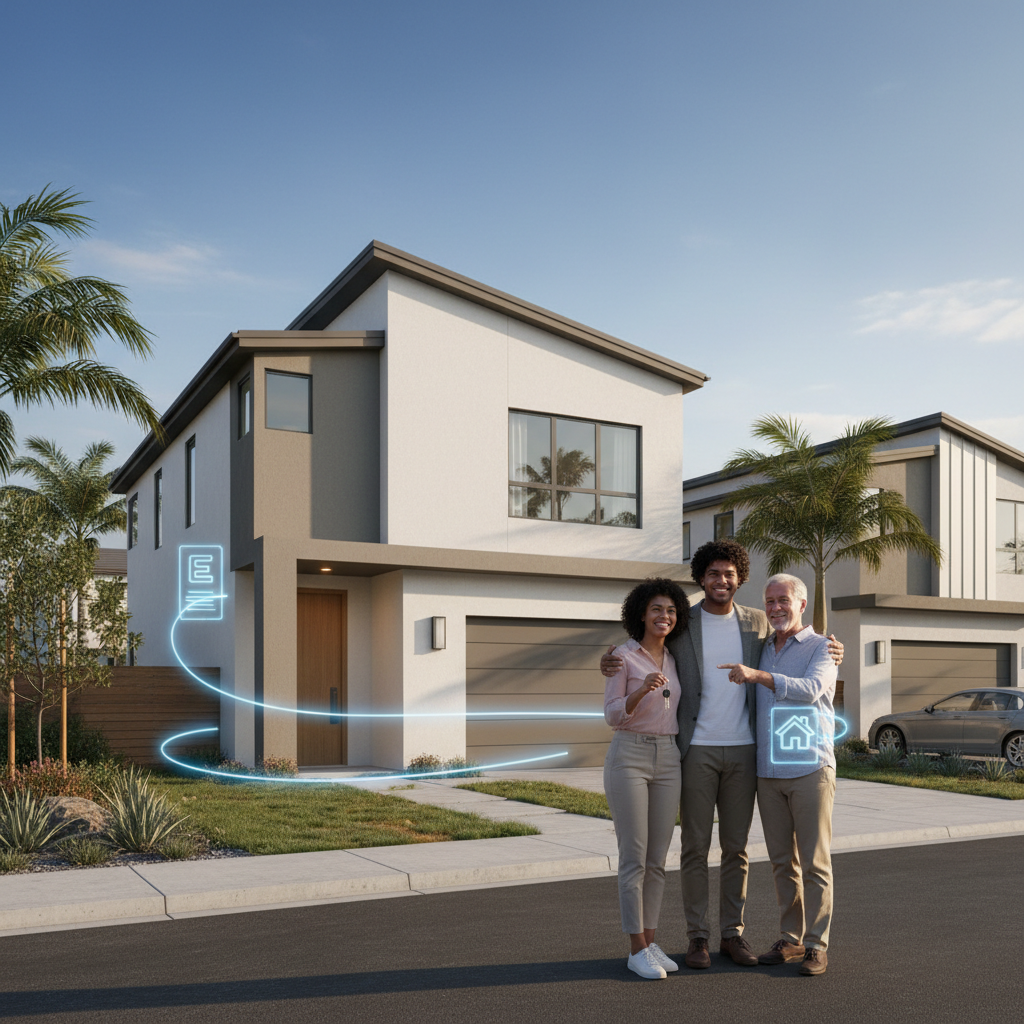
The 2026 Intergenerational Pivot
As of late May 2026, the California real estate market continues to defy gravity. Despite 30-year fixed mortgage rates hovering between 6.35% and 6.6%, the California Association of Realtors (CAR) reports that the median home price in the state has climbed another 4.2% year-over-year. For the emerging cohort of buyers, the primary obstacle is no longer just the interest rate, but the massive capital requirement to avoid the 'Jumbo' surcharge and Private Mortgage Insurance (PMI).
Enter the Equity Pledge—a lending structure rapidly gaining traction in high-cost hubs like the Bay Area and Orange County. Unlike a traditional cash gift for a down payment, which requires parents to liquidate assets and potentially trigger capital gains taxes, the equity pledge allows buyers to use a portion of the untapped equity in a secondary property (typically a parent’s primary residence) as collateral for their own mortgage.
Why Collateral is Outpacing Cash
Data from the Federal Reserve suggests that California homeowners over the age of 55 hold more than $2.8 trillion in untapped home equity. In the current lending environment, moving this value via an equity pledge offers three distinct advantages:
- Elimination of PMI: By pledging parental equity to reach a combined 20% loan-to-value (LTV) ratio, buyers can save between $300 and $700 monthly on mortgage insurance.
- Jumbo-to-Conforming Transition: Pledging equity can effectively lower the primary loan amount into conforming limits, allowing buyers to access lower interest rates typically reserved for smaller loans.
- Tax Neutrality: Unlike a cash gift, which may require selling stocks in a high-tax environment, a collateral pledge is a non-taxable event for the guarantor.
The Mechanics of the Cross-Collateralized Loan
In a typical 2026 'Pledge' scenario, a lender places a secondary lien on the parents' property for the amount of the down payment deficit. For example, on a $1.2 million Los Angeles condo, if the buyer has only 5% ($60,000) saved, the parents can pledge $180,000 of their own home’s equity to satisfy the 20% requirement.
Lending news from Q2 2026 indicates that several regional California banks have streamlined this process, offering 'release clauses' where the secondary lien is automatically removed once the buyer’s home appreciates to a point where the LTV reaches 75% on its own.
Strategic Takeaways for California Families
For those considering this path, the following practical steps are essential:
- Appraisal Sequencing: Ensure both properties are appraised by the same lending institution to prevent valuation discrepancies that could stall the bridge.
- Liability Protection: Guarantors should understand that while they aren't making monthly payments, their property is legally tied to the new loan's performance.
- Refinance Exit Strategies: With market analysts predicting a potential 50-basis point drop by early 2027, buyers should ensure their equity pledge doesn't include 'lock-out' clauses that prevent refinancing the primary loan.
The 'Equity Pledge' represents a sophisticated evolution of the California market, shifting the focus from liquid wealth to the massive, stagnant equity pools held by the previous generation. As inventory remains tight, this strategy is becoming the go-to maneuver for keeping the dream of California homeownership alive in a high-rate era.


