The Transformation of the East Bay Shoreline
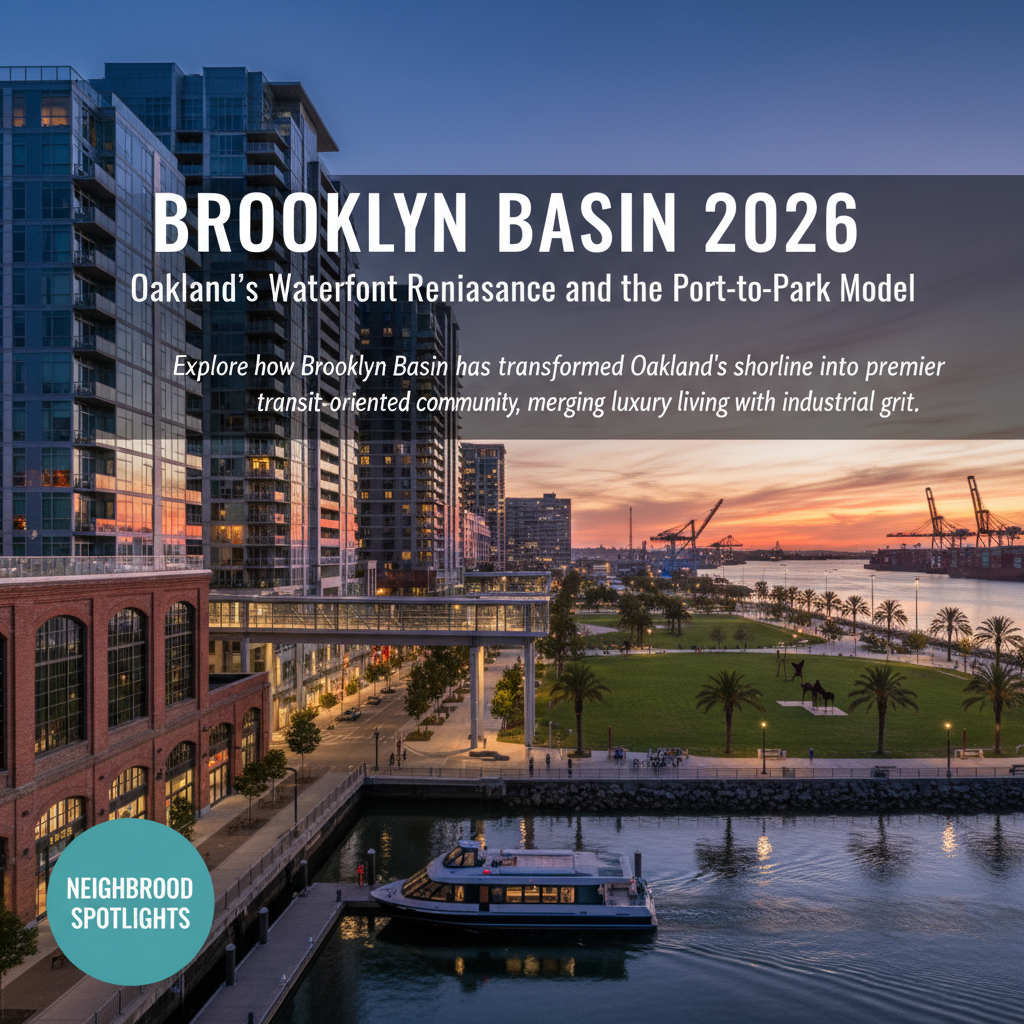
Once a desolate stretch of industrial warehouses and shipping terminals, Brooklyn Basin has emerged in 2026 as Oakland’s most significant residential achievement in a generation. This 64-acre master-planned community has successfully bridged the gap between the city’s gritty maritime history and its future as a high-density, sustainable urban hub. As of Q2 2026, the district has delivered over 2,500 of its planned 3,700 residential units, creating a self-sustaining 'city within a city' that challenges the traditional dominance of San Francisco’s waterfront.
Community Features and Modern Amenities
The centerpiece of the neighborhood is Township Commons, an award-winning public park built on the skeletal remains of a historic shipping terminal. In 2026, this space serves as the community’s social anchor, hosting weekly farmers' markets and outdoor yoga. The architectural language of the neighborhood—characterized by the flagship buildings like 'Orion' and 'Artisan'—features expansive glass facades that maximize views of the Estuary and the San Francisco skyline. Residents enjoy a '15-minute city' lifestyle, with an on-site grocery anchor, boutique fitness studios, and a growing row of waterfront restaurants that have become regional destinations.
Education and Institutional Stability
Families moving into Brooklyn Basin are primarily served by the Oakland Unified School District (OUSD), with Franklin Elementary and Roosevelt Middle School being the local anchors. However, the 2026 market has seen a surge in interest for the neighborhood due to its proximity to the recently expanded Head-Royce School and several high-performing charter institutions. According to 2025 Census Bureau data, the demographic shift in the area shows a 14% increase in households with school-aged children, signaling a move away from the 'transient renter' profile toward long-term residency.
Connectivity: The Transit-Oriented Advantage
Transportation is the linchpin of Brooklyn Basin’s appeal. While the neighborhood offers easy access to I-880, the real draw is the diversified transit network. The private shuttle service connects residents to the Lake Merritt BART station in under 10 minutes, while the 2025 launch of the expanded WETA Water Transit ferry service now offers a direct 25-minute commute to the San Francisco Ferry Building. For the eco-conscious, the Bay Trail runs directly through the community, providing a seamless cycling artery that connects to Jack London Square and beyond.
Market Data and Investment Potential
Data from the California Association of Realtors (CAR) and local MLS listings indicate that Brooklyn Basin has outperformed the broader Alameda County market in terms of price resiliency. In May 2026, the median sales price for a two-bedroom condo in the district stands at $945,000, representing a 6.2% year-over-year increase. The rental market remains robust, with occupancy rates hovering at 94%, driven by the 'reverse commute' of tech workers seeking more space and lower costs than the Peninsula. The inclusion of roughly 465 affordable housing units within the master plan has also ensured a level of economic diversity often missing from luxury redevelopments.
Practical Takeaways for Stakeholders
- For Buyers: Focus on units with 'protected views' of the Estuary. As the final phases of construction begin near the southern edge, these views carry a premium that is expected to appreciate as the waterfront becomes fully built out.
- For Investors: The professional-managed rental pool is strong, but the real opportunity lies in the burgeoning commercial condo market near the Embarcadero entry point, catering to the neighborhood's high-disposable-income residents.
- For Sellers: Highlight the 'wellness' amenities and the direct access to the Bay Trail. In the 2026 market, proximity to open-air recreation is the top-cited priority for East Bay move-up buyers.