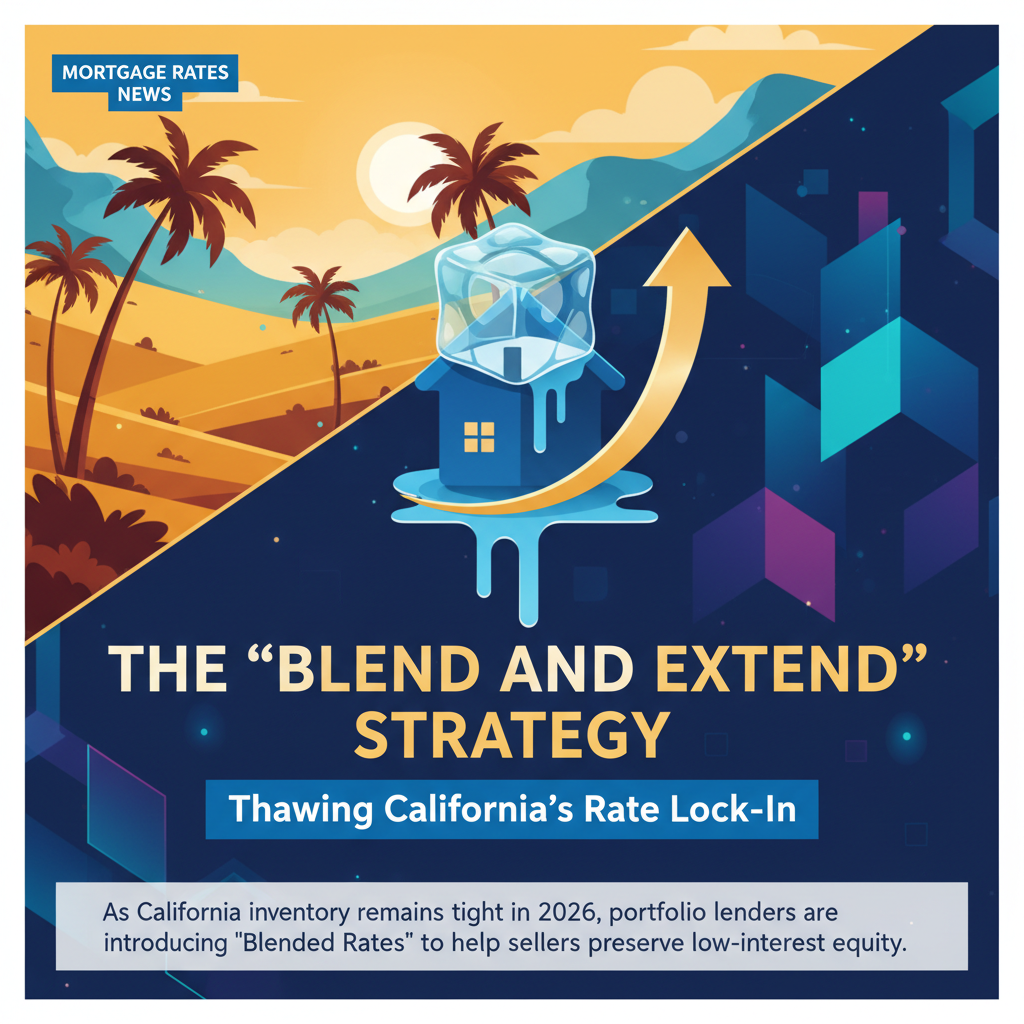
The Inventory Impasse of 2026
As of May 23, 2026, the California housing market continues to grapple with a persistent 'lock-in effect.' While the 30-year fixed mortgage rate has moderated to approximately 6.42%—down from the 2024 peaks—the California Association of Realtors (CAR) reports that nearly 72% of existing homeowners in the state are still holding mortgages with rates below 4.5%. This creates a significant financial disincentive for move-up buyers. However, a new lending trend is emerging in the private and portfolio sectors to bridge this gap: the 'Blend and Extend' mortgage.
What is 'Blend and Extend' Financing?
Distinct from a standard refinance or a recast, the Blend and Extend strategy is a retention tool used primarily by California portfolio lenders and private banks. Instead of requiring a seller to abandon their 3% legacy rate for a new 6.4% rate on a larger property, the lender offers a 'blended' rate. This rate is a weighted average of the client's current low rate and the prevailing market rate, applied to the new, larger loan balance.
For example, a homeowner with a $500,000 balance at 3% looking to move into a $1.2 million home would, under traditional circumstances, face a 6.4% rate on the entire new balance. With a Blend and Extend product, the lender may offer a consolidated rate of roughly 4.8% to 5.1%, depending on the equity position and relationship depth. This significantly lowers the monthly debt service compared to a standard market-rate mortgage.
Why California is the Testing Ground
California is the ideal environment for these products due to two factors: high loan balances and the concentration of high-net-worth individuals with complex financial profiles. Data from the latest MLS reports show that the median home price in coastal California has risen 4.5% year-over-year, making affordability a mathematical puzzle that traditional lending cannot solve.
The Impact on Supply
According to Census Bureau data, California’s housing turnover rate hit a 15-year low in late 2025. By offering blended rates, lenders are incentivizing 'locked-in' sellers to finally list their properties. This creates a ripple effect, opening up entry-level inventory that has been stagnant for years. For the California buyer, this means a potential increase in active listings in mid-to-high-tier neighborhoods where portfolio lending is most prevalent.
Practical Takeaways for 2026 Market Participants
- For Sellers: Inquire with your current servicer—specifically if you are with a private bank or a regional California lender—about 'Retention Pricing' or 'Blended Rate Portability.' This can make a move-up purchase significantly more affordable than the headline rates suggest.
- For Buyers: When negotiating on properties that have been on the market for 30+ days, investigate if the seller is using a portfolio lender. Some lenders allow the 'blended' benefit to be partially transferable to a new borrower if they maintain the relationship with that institution.
- For Investors: Focus on the 'Weighted Average Cost of Capital.' In a 6% environment, securing a 4.9% blended rate on a 1031 exchange property can drastically improve your capitalization rate and cash-on-cash return.
The Bottom Line
The 'Blend and Extend' movement represents a shift from the rigid, secondary-market-driven lending of the past decade toward a more flexible, relationship-based model. As we move into the 2026 summer buying season, these products are becoming the primary tool for unlocking California's high-end inventory and providing a path forward for homeowners who felt trapped by their own low interest rates.