The 2026 Pivot: Why Location Now Means 'Linkage'
As California enters the second half of the decade, the traditional real estate mantra of 'location, location, location' has evolved into a specific technical metric: proximity to High Quality Transit Areas (HQTAs). With the state's aggressive push toward Carbon Neutrality by 2045 and the full implementation of transit-oriented housing laws, 2026 buyers are finding that the highest appreciation potential lies within the 'half-mile radius' of major transit hubs.
Understanding the HQTA Advantage
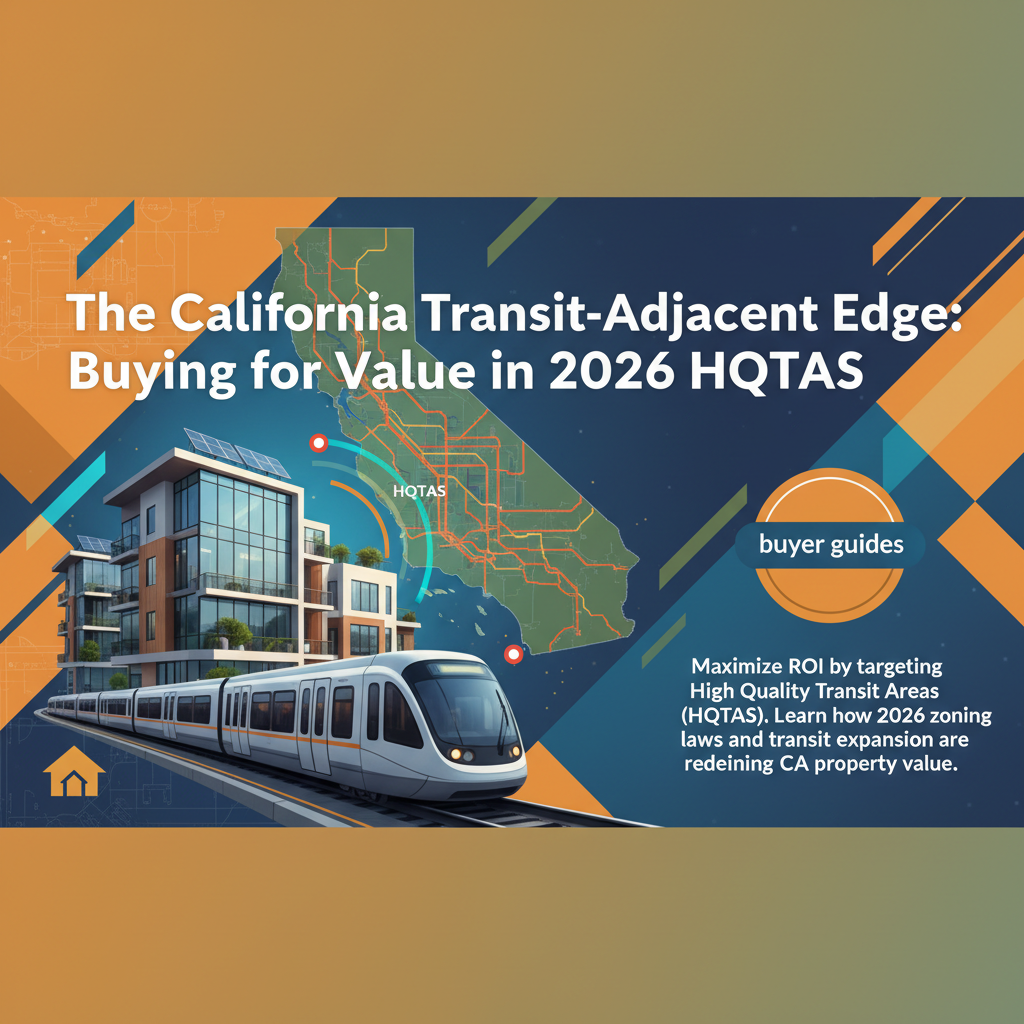
An HQTA is defined by the California Department of Housing and Community Development (HCD) as an area within a half-mile of a major transit stop or a high-quality transit corridor. In 2026, these zones are no longer just for high-density apartments; they represent a significant opportunity for single-family and multi-unit buyers due to several legislative shifts:
- Elimination of Parking Minimums: Under laws matured by 2026, residential developments within HQTAs are often exempt from costly parking requirements, allowing for more square footage to be dedicated to living space or ADUs.
- CEQA Streamlining: Properties in these zones frequently qualify for faster environmental review exemptions, reducing the cost and time for future renovations or expansions.
- Density Bonuses: Even for individual homeowners, being in a transit-adjacent zone often unlocks higher 'Floor Area Ratio' (FAR) allowances, increasing the long-term land value.
Market Data: The 'Transit Premium' in 2026
Recent 2025-2026 data from the California Association of Realtors (CAR) indicates that properties within 0.5 miles of fixed-rail or high-frequency bus rapid transit (BRT) stations have seen a 4.2% higher year-over-year price appreciation compared to car-dependent suburbs. Furthermore, a 2026 study by the Southern California Association of Governments (SCAG) found that transit-oriented homes spend 15% fewer days on the market, as remote-hybrid workers prioritize connectivity to urban cores for their 'in-office days.'
Practical Steps for the 2026 Buyer
To capitalize on this trend, buyers should integrate the following tactics into their search:
1. Audit the 'Transit Score' Beyond the App
Generic walkability scores are insufficient. Buyers should use the CA Transit-Oriented Development (TOD) Dashboard to verify if a specific parcel sits within a designated HQTA. This status affects everything from your ability to build a 'Junior ADU' to your long-term resale value to institutional investors.
2. Evaluate the 'Final Mile' Infrastructure
The value of transit adjacency is tied to the quality of the 'final mile.' Look for municipal investments in protected bike lanes and micro-mobility hubs. Cities like Culver City, San Diego, and Sacramento have seen localized price spikes specifically where 'Active Transportation' plans have been completed in 2025.
3. Financing Transit-Oriented Assets
In 2026, certain 'Green Mortgages' and state-backed incentives provide preferred rates for homes with high energy efficiency ratings located in HQTAs. Ask your lender about the 2026 'California Green-Lending Initiative' which offsets points for buyers reducing their carbon footprint through transit-centric living.
Strategic Takeaways
- Target 'Emerging' Hubs: Look for areas where BRT (Bus Rapid Transit) lines were recently completed in late 2025. These offer lower entry prices than established rail corridors but similar 'HQTA' legal benefits.
- Verify Zoning Upside: Before closing, check the local 'Specific Plan.' Many California municipalities have rezoned transit corridors for mixed-use, meaning your backyard could potentially host a small commercial or multi-family structure in the future.
- Factor in Insurance Savings: While fire insurance remains a challenge statewide, transit-oriented urban infill areas often face lower 'High Fire Threat District' (HFTD) risks, potentially lowering your annual premiums compared to the Wildland-Urban Interface (WUI).