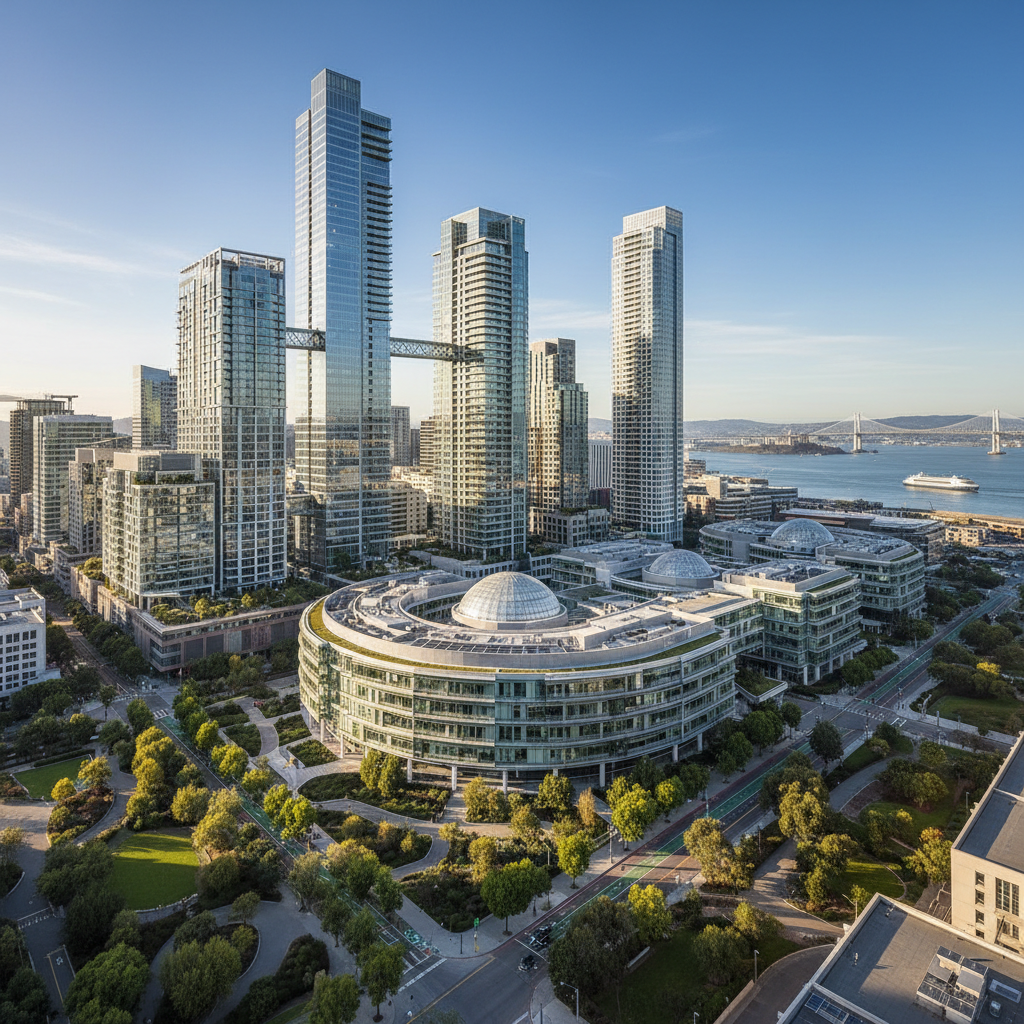
The Evolution of San Francisco’s Last Frontier
In 2026, Mission Bay stands as a stark contrast to the traditional narratives surrounding San Francisco’s urban core. While other districts have grappled with the 'office-to-residential' conversion dilemma, Mission Bay was built from the ground up as a purpose-built, mixed-use environment. Today, it has transitioned from a specialized biotech hub into a fully realized 'Vertical Village,' where life science professionals, professional athletes, and young families share a common footprint.
The Institutional Economic Engine
The primary driver of the neighborhood's stability remains the UCSF Mission Bay campus. As of Q1 2026, the life science vacancy rate in this submarket remains under 4.5%, significantly outperforming the broader San Francisco office market. According to CBRE data, the concentration of research and clinical space has created a 'sticky' tenant base. Unlike traditional tech firms, lab work cannot be performed remotely, ensuring a consistent daily population of over 25,000 employees and students who support local retail and service providers.
Amenities and the ‘Third Space’
Mission Bay’s appeal in 2026 is anchored by its meticulously planned public spaces. The Commons and Spark Social SF have evolved into more than just food truck hubs; they are the neighborhood’s living rooms. The completion of the Mission Bay Waterfront Park has finally connected the neighborhood to the Embarcadero via a continuous greenway, increasing property values for eastern-facing residences by an estimated 12% year-over-year. The proximity to the Chase Center continues to drive a robust short-term rental market and high demand for premium hospitality services, creating a 24/7 ecosystem that many other SF districts lack.
Infrastructure and Education
A critical milestone for the neighborhood in 2026 is the full integration of the Mission Bay Hub, a joint-use school and community center. This facility has solved the historical 'flight to the suburbs' for families who previously left the city once children reached school age. Furthermore, the Central Subway expansion is now fully optimized, providing a 15-minute transit link to Union Square and Chinatown, effectively ending the neighborhood’s previous isolation from the rest of the city.
Investment and Market Outlook
For investors and prospective buyers, Mission Bay offers a unique profile:
- Resilience: Median condo prices in Mission Bay have held steady at $1.2M, showing less volatility than the SoMa or Financial District markets due to the high density of healthcare owner-occupants.
- Rental Yields: Proximity to UCSF and Kaiser Permanente ensures a steady stream of high-income tenants, with two-bedroom units commanding a 15% premium over the city average.
- Inventory: With the final parcels of the 303-acre master plan nearing completion, the neighborhood is transitioning from a high-growth phase to a scarcity phase, suggesting long-term price appreciation.
Practical Takeaways
For Buyers: Focus on units within the 'Biotech Row' that offer protected views of the Creek or Bay. These units are currently seeing the highest resale value retention.
For Investors: Look for opportunities in the few remaining multi-family developments that offer specialized amenities for healthcare workers, such as 24-hour gyms and secure bike storage.
For Sellers: Highlight the 'transit-optional' lifestyle. With the new school and grocery infrastructure (Whole Foods and Gus’s Community Market), the neighborhood is now a true 15-minute city segment.


