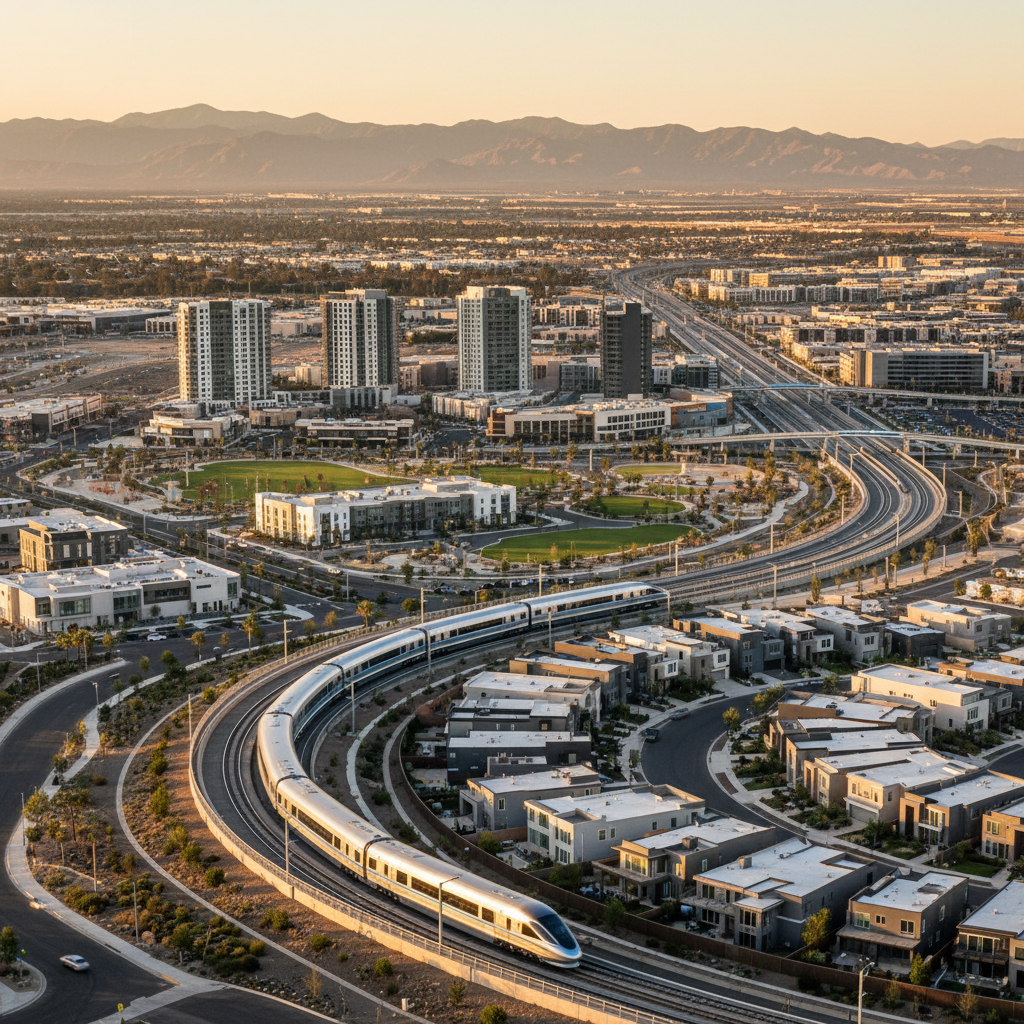
The Infrastructure Pivot: Beyond the Coastal Core
In mid-2026, the California real estate narrative has shifted from 'coastal vs. inland' to 'connected vs. isolated.' While major metros like Los Angeles and San Francisco grapple with inventory stabilization, a new class of real estate is emerging: the Transit-Linked Exurb. Driven by the 2026 milestones of the Brightline West high-speed rail and the expansion of electrified regional rail corridors, regions once considered 'commuter fringe' are witnessing a significant capital influx.
The Brightline Effect and San Bernardino’s Appreciation
Recent data from the California Association of Realtors (CAR) and local MLS services indicate that the 'High Desert' corridor—specifically Victorville and Apple Valley—has seen a 14% year-over-year price appreciation as of May 2026. This outperforms the 3.8% state average. The catalyst is the 2026 completion of key station infrastructure, which has transformed these areas from speculative play zones into viable satellite hubs for the Greater Los Angeles workforce.
According to CBRE’s 2026 Transit Impact Study, residential property values within a 10-mile radius of planned high-speed rail stations have historically seen a 22% 'connectivity premium' compared to non-linked exurbs. This trend is now hitting its peak as the reality of a 45-minute transit time to the Las Vegas or Los Angeles basins replaces the dread of a three-hour freeway commute.
The New 'Lifestyle Arbitrage' Demographic
The 2026 investor is no longer looking for simple fix-and-flips. Instead, the focus has shifted to 'Lifestyle Arbitrage.' Census Bureau data from Q1 2026 shows a net migration of professionals aged 30-45 from West LA to the San Bernardino and Riverside 'transit nodes.' These buyers are trading 800-square-foot condos for 2,500-square-foot homes with dedicated home offices, utilizing the rail link for 1-2 days of in-person collaboration per week.
- Rental Demand: Proximity to rail hubs has pushed Class-A multi-family vacancy rates down to 2.4% in the Victor Valley, compared to 5.1% in the urban core.
- Commercial Sprawl: New mixed-use zoning around transit stations is creating a 'second downtown' effect, attracting service-based retail and co-working spaces.
Strategic Takeaways for 2026 Investors
For those looking to navigate the 2026 California market, the following strategies are yielding the highest risk-adjusted returns:
- Focus on the 'Last Mile' Connectivity: Properties within three miles of a rail station or an integrated shuttle loop are commanding a 15% rent premium over those that require a private vehicle for the entire journey.
- Monitor Commercial Permit Trajectory: Look for zip codes where commercial building permits for 'neighborhood services' (grocery, medical, fitness) are outpacing residential growth, signaling a maturing sub-market.
- The ADU Multiplier: In these transit corridors, the California 'density-by-right' laws allow for the addition of ADUs on larger exurb lots. Investors are using these to offset high interest rates, achieving 'house hacking' at scale in areas that were previously single-family exclusive.
The Economic Forecast
As we head into the second half of 2026, the resilience of the California market is anchored in infrastructure. While high interest rates remain a hurdle, the tangible utility of high-speed connectivity is creating a floor for valuations. For the first time in a decade, the 'Inland Empire' and 'High Desert' are not just affordable alternatives—they are the primary targets for long-term equity growth in a transport-transformed state.