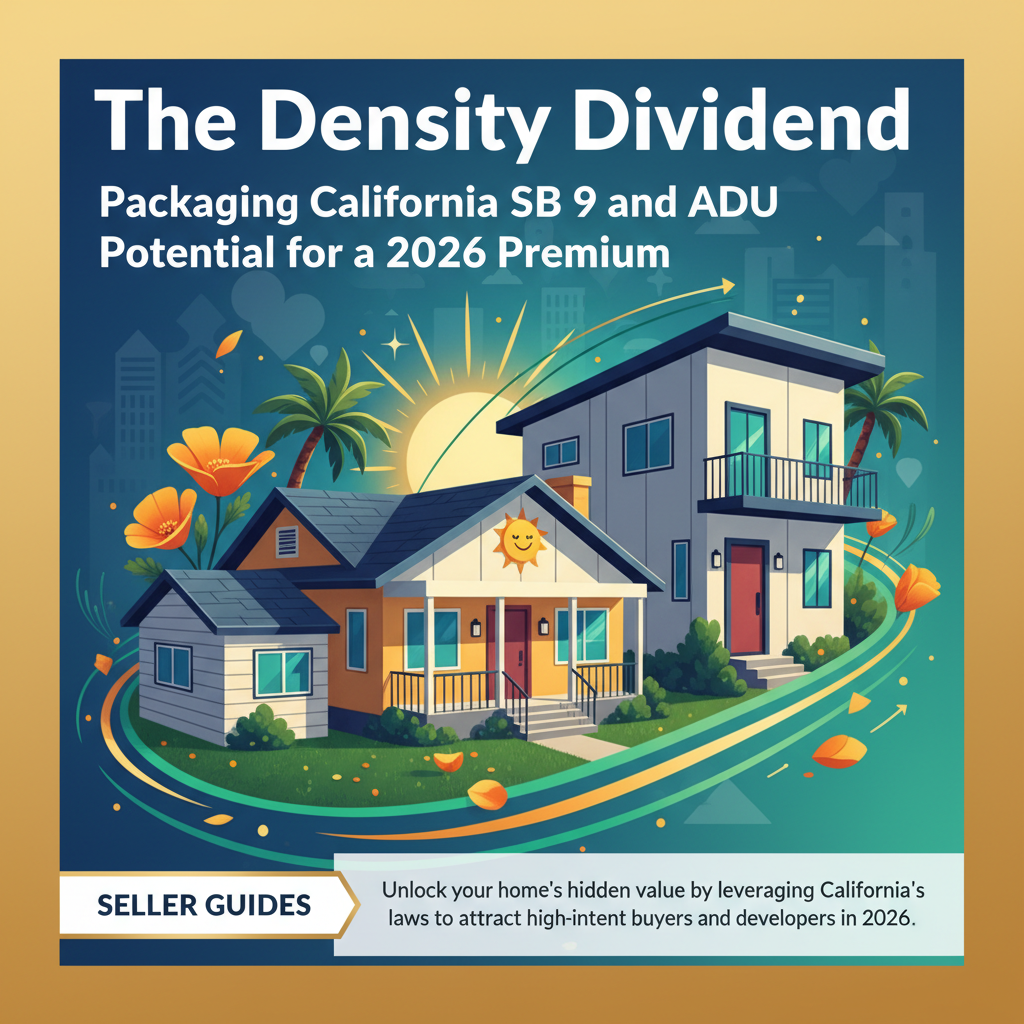
The Density Dividend: Packaging California SB 9 and ADU Potential for a 2026 Premium
In the California real estate market of May 2026, the traditional metric of bedrooms and bathrooms has been superseded by a more lucrative variable: development potential. As the state continues to grapple with a housing deficit exceeding 2 million units, according to the California Department of Housing and Community Development (HCD), sellers who can demonstrate latent density are capturing premiums that far outpace standard market appreciation.
Understanding the 2026 Infill Landscape
Legislative shifts, specifically Senate Bill 9 (SB 9) and the evolved ADU (Accessory Dwelling Unit) mandates, have effectively ended single-family zoning across the state. For a seller in 2026, your property is no longer just a residence; it is a potential multi-unit portfolio. A 2025 report from the Terner Center for Housing Innovation suggests that homes marketed with verified lot-split potential or pre-approved ADU envelopes sell for approximately 14% more than comparable properties without such designations.
Step 1: The Site Capacity Audit
To maximize value, do not leave the buyer to guess. Conduct a Site Capacity Audit before listing. This involves hiring a land-use consultant or utilizing AI-driven zoning platforms to produce a Feasibility Report. This report should detail your property's eligibility under SB 9 (minimum lot size, urban area requirements) and identify the specific Building Envelope for an ADU or Junior ADU (JADU). Providing this data upfront positions your property as a turn-key investment rather than a speculative risk.
Step 2: Securing the Permit-Ready Premium
While building an ADU yourself offers the highest ROI, simply providing Permit-Ready plans is a more cost-effective strategy for sellers. By submitting plans for an ADU and obtaining Ready to Issue (RTI) status from the local building department, you remove 6 to 9 months of bureaucratic friction for the buyer. In high-demand markets like San Jose or San Diego, RTI status attracts house-hackers who are willing to pay a premium for immediate project viability to offset 2026 interest rates.
Step 3: Strategizing Disclosures and Marketing
In California, transparency is a legal mandate, but it can also be a marketing tool. Use the Seller’s Property Questionnaire (SPQ) to highlight recent utility upgrades, such as upgraded electrical panels or sewer laterals, that specifically support future density. Marketing materials should pivot from quaint backyard to income-producing potential. Use virtual renderings to show what an ADU or a lot split would look like on the property, providing a visual bridge for the buyer’s imagination.
Practical Takeaways for 2026 Sellers
- Verify SB 9 Eligibility: Check if your property is in a historic district or a high-fire-hazard zone, as these can limit lot-split rights regardless of lot size.
- Upgrade Infrastructure: A 200-amp electrical panel is a green flag for buyers looking to add an ADU or EV charging, adding measurable value in a tech-forward market.
- Leverage the Income Offset: In your listing description, use current market rent data for ADUs in your zip code to show how an ADU could offset a buyer's 2026 mortgage payment.
By shifting the focus from the existing structure to the property’s future capacity, California sellers can unlock a tier of value that transcends current market fluctuations.