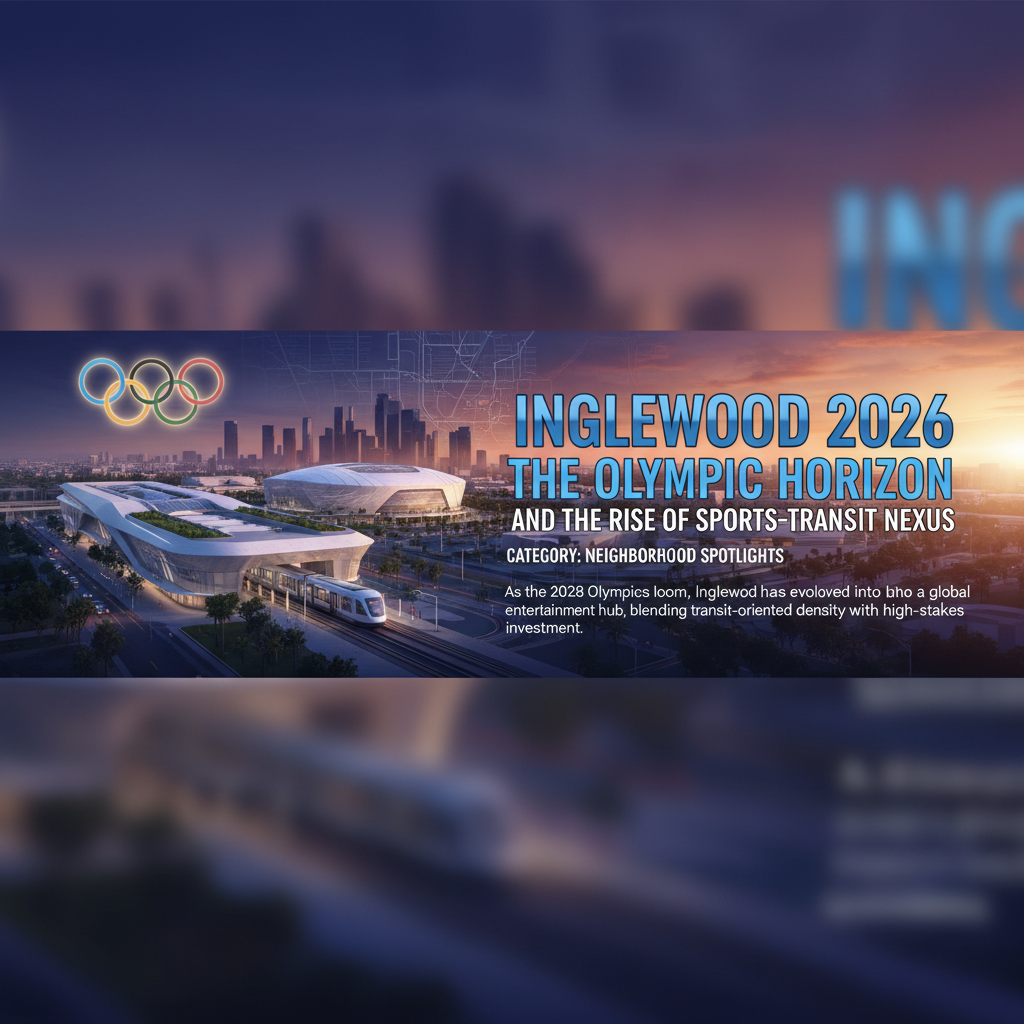
The Transformation of the City of Champions
As of May 2026, Inglewood has officially shed its former status as a bedroom community to the Los Angeles core, emerging instead as the epicenter of Southern California’s sports and entertainment economy. With the 2028 Olympic Games just two years away, the city’s strategic investments in the Hollywood Park district and the K Line (Crenshaw/LAX) extension have created a unique real estate climate defined by rapid appreciation and institutional-grade density.
Infrastructure and the Transit Premium
The defining feature of Inglewood in 2026 is the completion of the Inglewood Transit Connector (ITC). This 1.6-mile automated people mover now links the Metro K Line directly to the Intuit Dome, SoFi Stadium, and the Kia Forum. According to 2025 MLS data, residential properties within a half-mile radius of the ITC stations have seen a 14% higher appreciation rate compared to the broader Los Angeles County average. This 'transit premium' is driven by a new demographic of young professionals who prioritize car-free access to major employment hubs in Silicon Beach and Downtown LA.
The Hollywood Park Ecosystem
The 300-acre Hollywood Park master plan has reached critical mass. Beyond the stadiums, the development now hosts over 500,000 square feet of retail and office space, anchored by the NFL Media headquarters and a growing cluster of tech firms. For investors, the appeal lies in the high-density residential offerings. The latest phase of luxury apartments at Hollywood Park maintains a 96% occupancy rate, with rents consistently commanding a 20% premium over nearby neighborhoods like Westchester. This success has spurred a wave of 'missing middle' housing—duplexes and ADUs—across the North Inglewood area as homeowners capitalize on the rezoning for increased density.
Education and Community Amenities
While the headlines focus on sports, the Inglewood Unified School District has seen a revitalization through public-private partnerships. The 'Champions Initiative,' funded in part by local corporate anchors, has modernised STEM facilities at Inglewood High School. Additionally, the multi-million dollar renovation of Edward Vincent Jr. Park has provided the community with Olympic-grade aquatic facilities and renovated green spaces, balancing the neighborhood's urban intensity with necessary recreational outlets.
Market Data and Investment Outlook
Current market reports from CBRE indicate that Inglewood’s commercial sector saw $1.2 billion in transaction volume over the last 18 months. The residential median home price in Inglewood has reached $945,000, representing a steady 6.5% year-over-year increase since 2023. Unlike the speculative bubble of the early 2020s, the 2026 market is supported by tangible infrastructure and long-term lease commitments from major entertainment entities.
Practical Takeaways
- For Buyers: Focus on the 'K Line' corridor. Properties in the Fairview Heights and Morningside Park areas offer the best balance of historical character and proximity to new transit nodes.
- For Investors: Look for R2 and R3 zoned lots. The city’s favorable stance on Accessory Dwelling Units (ADUs) makes 'house hacking' a highly viable strategy for offsetting high mortgage rates.
- For Sellers: The pre-Olympic window is currently open. With global eyes turning toward Inglewood for 2028, demand for short-term rental-capable properties and executive housing is at an all-time high.
Inglewood’s evolution proves that targeted infrastructure spending can redefine a city's trajectory. As the world prepares to descend on the South Bay in 2028, Inglewood stands as a model for transit-oriented, entertainment-led urban renewal.


