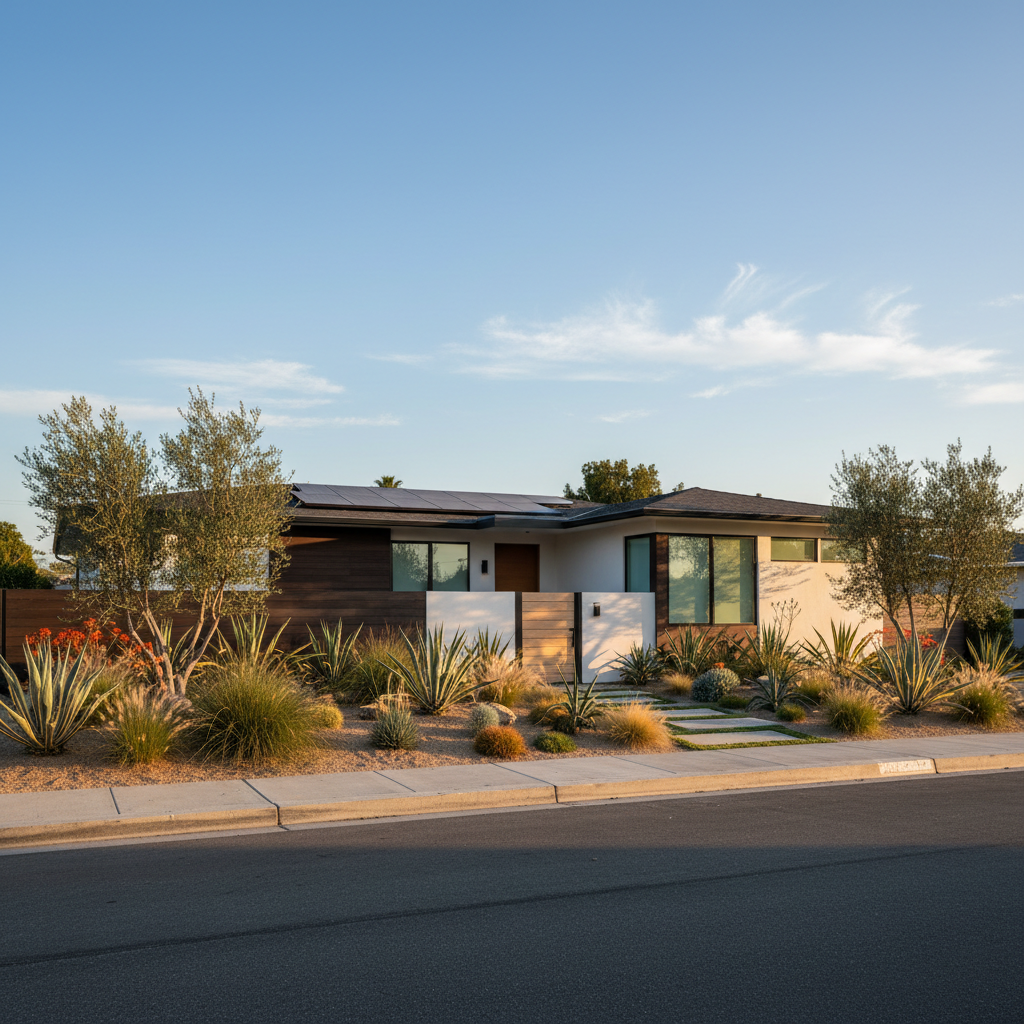
The 2026 Aesthetic: Resilience as the New Luxury
In the May 2026 California real estate market, 'curb appeal' has undergone a fundamental transformation. While lush green lawns were once the gold standard, the combination of state-mandated water restrictions and the expansion of Assembly Bill 38 (Defensible Space) has shifted buyer preferences. Today’s high-value buyers in regions from the Santa Monica Mountains to the Sierra Foothills prioritize 'climate-resilient' aesthetics. According to recent data from the California Association of Realtors (C.A.R.), homes featuring professional climate-adapted landscaping saw a 4.2% price premium over traditional counterparts in the first quarter of 2026.
The AB 38 Compliance Advantage
For sellers in High or Very High Fire Hazard Severity Zones, compliance is no longer a footnote—it is a deal-breaker. In 2026, the 'Defensible Space Inspection' is often the first document a savvy buyer’s agent requests. To maximize value, sellers must look beyond mere compliance and treat fire-wise landscaping as a design element.
- The Zero-to-Five Foot Zone: Replace wood mulch with decorative river rock or decomposed granite. This 'non-combustible' zone is now a visual hallmark of a well-maintained California home.
- Vertical Clearance: Ensure trees are limbed up to at least 6-10 feet. This creates a 'park-like' feel that enhances property depth while meeting CAL FIRE standards.
- Strategic Privacy: Move away from flammable cypress or eucalyptus hedges. Instead, utilize fire-resistant species like Toyon or Coffeeberry, which offer lush privacy without the insurance liability.
The Native ROI: Lowering the 'Cost of Ownership'
In 2026, the 'hidden cost' of a home is a primary concern for buyers. A traditional turf lawn in the Central Valley or Inland Empire can cost upwards of $300 per month in water and maintenance. Sellers who convert to California native landscapes are effectively selling a lower monthly carrying cost. Data from the 2025 Landscape Architecture Trends Report indicates that native gardens return approximately $1.50 for every $1.00 invested at the time of sale.
Key Plant Selections for 2026 Sellers:
- Ceanothus (California Lilac): Provides vibrant spring color (perfect for May listings) with zero summer water requirements.
- Bouteloua Gracilis: A 'mow-free' grass alternative that satisfies the desire for a soft foreground without the water waste.
- Salvia Apiana (White Sage): Offers the 'California Coastal' scent that serves as a natural, outdoor aromatherapy during open houses.
The 'Smart Exterior' Integration
Preparation in 2026 also involves the integration of smart irrigation. Systems like Rachio or Rain Bird, linked to local weather stations, are now expected features in mid-to-high-tier listings. Highlighting a 'fully autonomous, EPA WaterSense-certified irrigation system' in your marketing materials speaks directly to the tech-savvy, eco-conscious buyer demographic dominating the current market.
Practical Takeaways for a May 2026 Sale
To maximize your home’s value this season, follow this climate-forward preparation protocol:
- Audit Your Hardscape: Ensure all pathways are clear and porous. Clean or refresh decomposed granite paths to provide a crisp, 'new construction' feel.
- Secure Your Certification Early: Do not wait for escrow to request a CAL FIRE defensible space inspection. Having a 'Passed' certificate in your disclosure packet eliminates buyer anxiety and prevents closing delays.
- The 48-Hour Refresh: If a full landscape overhaul isn't in the budget, focus on the 'immediate eye-line.' Replace thirsty annuals with potted succulents and use dark charcoal volcanic rock as a high-contrast mulch alternative to make your home’s colors pop in listing photos.
By aligning your property with California’s environmental reality, you are not just selling a home; you are selling a sustainable, low-friction lifestyle—the most valuable commodity in the 2026 market.


