The High Cost of Power: A New Real Estate Metric
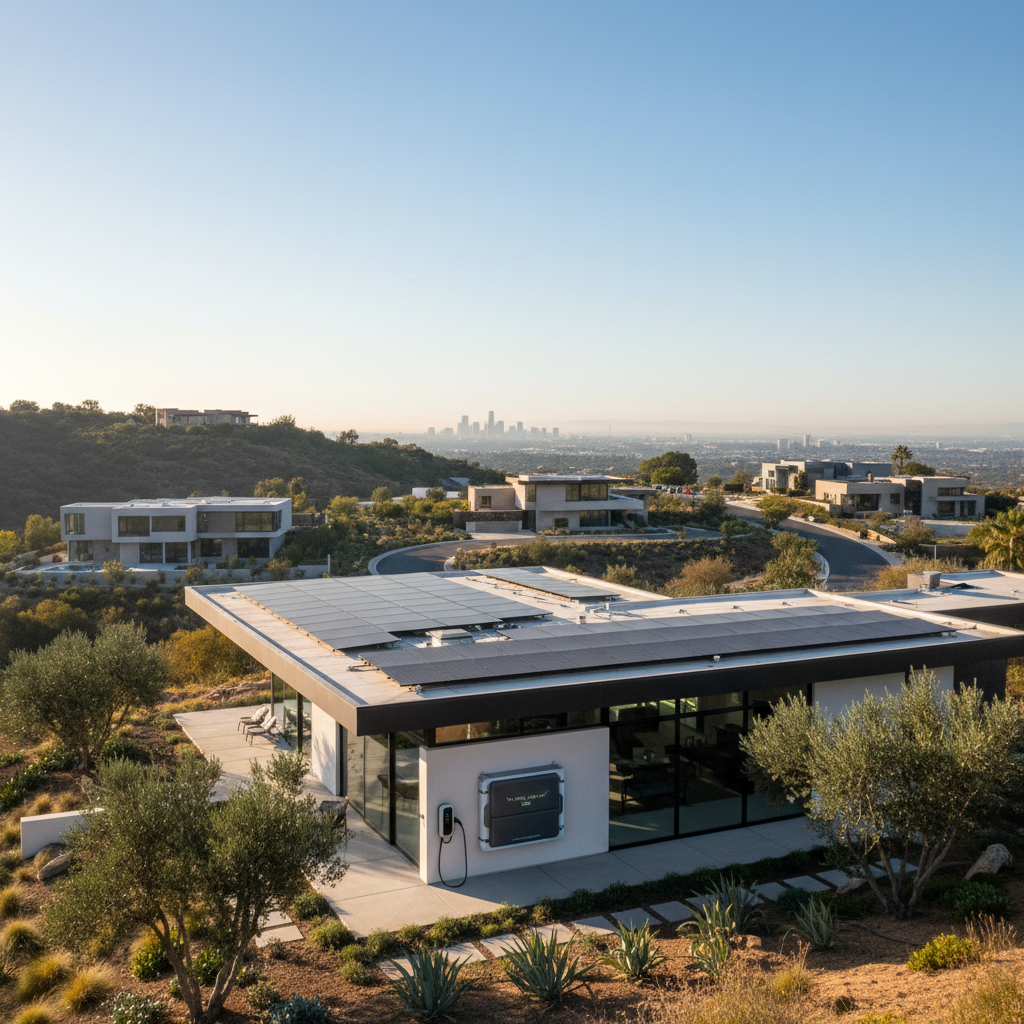
By mid-2026, the definition of a 'luxury amenity' in California has shifted. While 2024 was defined by interest rate volatility, 2026 is being defined by utility volatility. Recent MLS data across the state indicates that homes with 'Net-Zero' certifications or comprehensive solar-plus-storage systems are fetching a 9.5% price premium compared to identical homes on the same block. This 'Grid-Decoupled Premium' is no longer just an environmental statement; it is a calculated hedge against the rising cost of living in the Golden State.
The Economic Backdrop: Energy as a Fixed Cost
According to a May 2026 report by the National Association of Realtors (NAR), nearly 70% of California buyers now list 'energy efficiency' among their top three priorities, up from 41% just two years ago. The shift is driven by the economic reality of the 2026 rate environment. Data from the California Public Utilities Commission (CPUC) shows that residential electricity rates have climbed 28% since 2024, far outstripping the 4.2% statewide wage growth. In regions like the Inland Empire and the Central Valley, where HVAC demand is high, the monthly utility savings of a fully autonomous energy system can equal a $50,000 to $70,000 reduction in effective mortgage debt over a ten-year horizon.
Investment Perspective: The Retrofit Arbitrage
For investors, the opportunity lies in the 'Energy Retrofit Arbitrage.' Professional fix-and-flip firms are moving away from cosmetic upgrades toward structural energy resilience. By acquiring older, energy-inefficient 1970s stock and installing integrated microgrids including V2H (Vehicle-to-Home) charging and solid-state batteries, investors are seeing internal rates of return (IRR) increase by 350 basis points over traditional renovations. CBRE analysis suggests that institutional buyers are increasingly prioritizing portfolios that meet the new 2026 'Resilience Standards' to mitigate long-term operational expenses.
Practical Takeaways for 2026 Market Participants
For Sellers: Before listing, prioritize an energy audit. In the current market, a certified energy independence score can be more valuable than a kitchen remodel. Highlight your battery capacity and peak-shaving capabilities in the MLS description to attract the growing pool of utility-conscious buyers.
For Buyers: Calculate the 'True Cost of Ownership.' A lower-priced home with no solar may actually be more expensive monthly than a higher-priced 'decoupled' home when factored into a 30-year cash flow analysis. Look for homes with 2025-compliant battery storage to ensure maximum rebate eligibility.
For Investors: Focus on the 'Middle-Market Gap.' Luxury homes are already equipped, but the entry-level and mid-tier sectors remain underserved by energy-efficient infrastructure, providing the highest delta for value-add strategies and long-term appreciation.