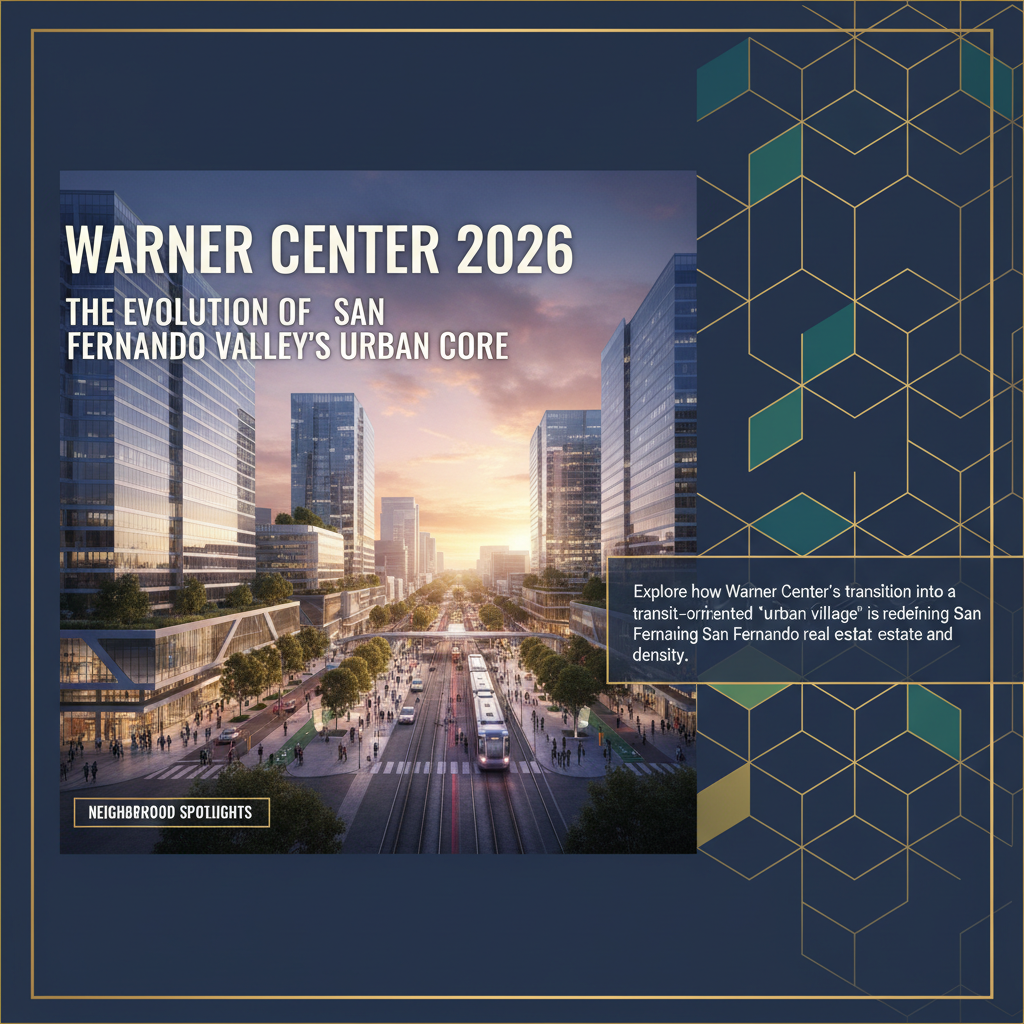
The Rise of the 'Downtown of the Valley'
For decades, the San Fernando Valley was the global poster child for suburban sprawl. However, as of mid-2026, the Warner Center district in Woodland Hills has fundamentally decoupled from that narrative. Driven by the ambitious Warner Center 2035 Plan, this 1,100-acre neighborhood has transitioned from a collection of isolated office parks and shopping malls into a high-density, mixed-use 'urban village' that functions as the primary economic engine of North Los Angeles.
Density and Demographic Shifts: By the Numbers
Data from the Los Angeles Department of City Planning and recent MLS reports highlight a dramatic shift in the area’s residential profile. Since the plan's inception, over 14,000 residential units have been approved or completed, with 2025 and early 2026 seeing the delivery of several marquee high-rise projects. According to CBRE research, the submarket has maintained a sub-5% vacancy rate for Class-A multifamily assets, despite the influx of supply.
- Median Condo Prices: Up 8.2% year-over-year in Q1 2026, driven by demand for walkability.
- Rental Premium: Units within a 0.5-mile radius of the Warner Center Transit Hub command a 15-18% premium over the broader Woodland Hills market.
- Commercial Mix: A 12% increase in creative office leasing, notably from media and green-tech firms moving inland from the Westside.
Transportation and Connectivity
The linchpin of Warner Center’s 2026 appeal is its enhanced transit infrastructure. The Metro G Line (Orange Line) improvements, completed in late 2025, have reduced travel times to the North Hollywood Red Line station, providing a viable rail-linked commute to Hollywood and Downtown LA. Within the neighborhood, the internal 'Warner Center Circulator'—an autonomous electric shuttle pilot—now connects the major residential nodes with the Westfield Topanga and the newly revitalized Promenade district.
Education and Community Amenities
Families are increasingly drawn to the neighborhood due to the strength of the local school ecosystem. Warner Center is served by high-performing institutions such as Woodland Hills Academy and the prestigious El Camino Real Charter High School, which consistently ranks among the top in the state for academic decathlon performance. Public amenities have also expanded, with the 2026 completion of the 'Green Loop'—a 5-mile pedestrian and bicycle path that circles the district, integrating pocket parks and public art installations into the urban fabric.
Investor and Buyer Takeaways
For those looking to enter the Warner Center market, the following strategies are supported by current market conditions:
- Target the Transit-Priority Area (TPA): Properties located within the TPA qualify for specific zoning incentives and are seeing the highest rate of capital appreciation.
- The 'Rams Effect': With the Los Angeles Rams' training facility and headquarters now fully integrated into the district, surrounding hospitality and short-term rental demand has spiked.
- Focus on Amenities: In a high-density environment, buildings offering robust 'work-from-home' infrastructure and private outdoor space are outperforming standard luxury builds.
Warner Center in 2026 represents a rare success story in California urban planning: the conversion of a car-centric commercial zone into a vibrant, walkable neighborhood. For investors and residents alike, it offers the amenities of an urban core with the stability and educational resources of a legacy suburban community.


