The 2026 Spring Market Reality: Stability Meets Friction
As of mid-May 2026, the California real estate market has reached a delicate equilibrium. While the industry has largely accepted the "Neutral Rate Anchor" of 6%, the day-to-day reality for buyers remains one of high-frequency volatility. According to data from the California Association of Realtors (CAR), the median home price in the state has climbed 4.2% year-over-year, making the sensitivity to even a 25-basis-point shift in mortgage rates significant for the average household budget.
The Cost of Indecision in a 6% Environment
In previous cycles, buyers often waited for a "dip" to lock in their rate. In the current 2026 landscape, that strategy is proving hazardous. Mortgage News Daily and Freddie Mac data indicate that while the 30-year fixed rate is averaging 6.15% nationally, regional spreads in high-cost California pockets like the Bay Area and Orange County are seeing daily fluctuations driven by shifting 10-year Treasury yields. For a $1.2 million loan—common in these metros—a mere 0.25% increase in the rate results in an additional $200 per month in principal and interest. Over a 30-year term, that is $72,000 in lost purchasing power.
The Rise of the Extended Lock-and-Shop
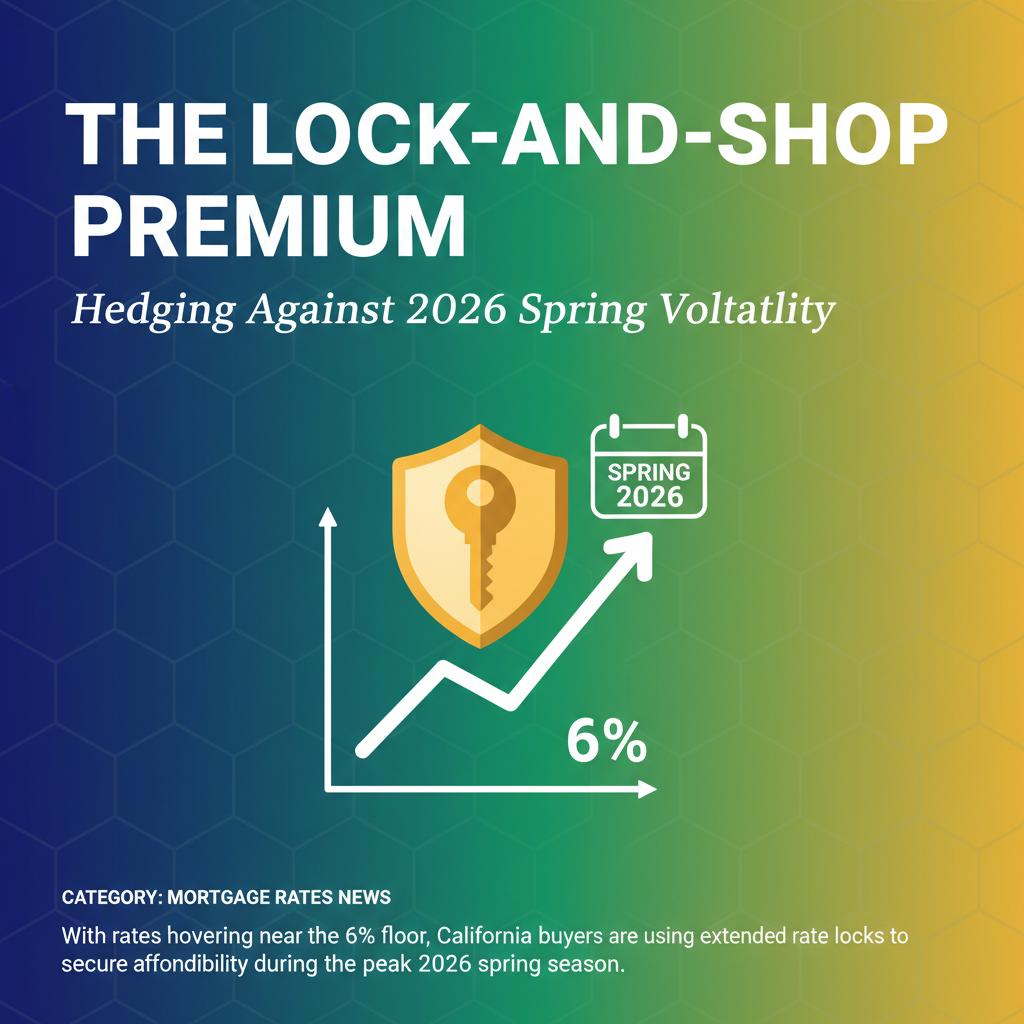
To combat this, a growing segment of California lenders is promoting "Lock-and-Shop" programs. Unlike traditional locks that occur after a property is under contract, these programs allow buyers to freeze a rate for 60 to 90 days while they browse the inventory-constrained market.
Current market data suggests that California’s inventory remains 15% below pre-pandemic norms, meaning the average search time for a buyer is now 45 to 55 days. The "Lock-and-Shop" removes the primary anxiety of the 2026 buyer: the fear that the home they qualify for today will be out of reach by the time their offer is accepted.
Practical Takeaways for 2026 California Buyers
- Budget for the Lock Fee: Many lenders charge an upfront fee (often 0.125% to 0.25% of the loan amount) for an extended lock. However, in a volatile market, this fee is often cheaper than the cost of a rate hike.
- Negotiate the "Float-Down": Ensure your lock agreement includes a one-time float-down option. If the market improves by more than 0.25% while you are in escrow, you can capture the lower rate.
- Identify the High-Balance Thresholds: For 2026, ensure your lock applies to the specific loan product (Conforming vs. High-Balance) you need. California’s unique loan limits mean a rate lock on a conforming loan may not translate if you end up bidding on a property that pushes you into high-balance territory.
Strategic Implications for Sellers
Sellers are also benefiting from this trend. A buyer with a locked rate is a more "certain" buyer. As we move through the May 2026 buying peak, listing agents are increasingly prioritizing offers from buyers who can demonstrate a locked rate, as it significantly reduces the risk of a deal falling through due to a sudden spike in the cost of capital during the contingency period.


