The Rise of the 'Sandwich Generation' Buyer
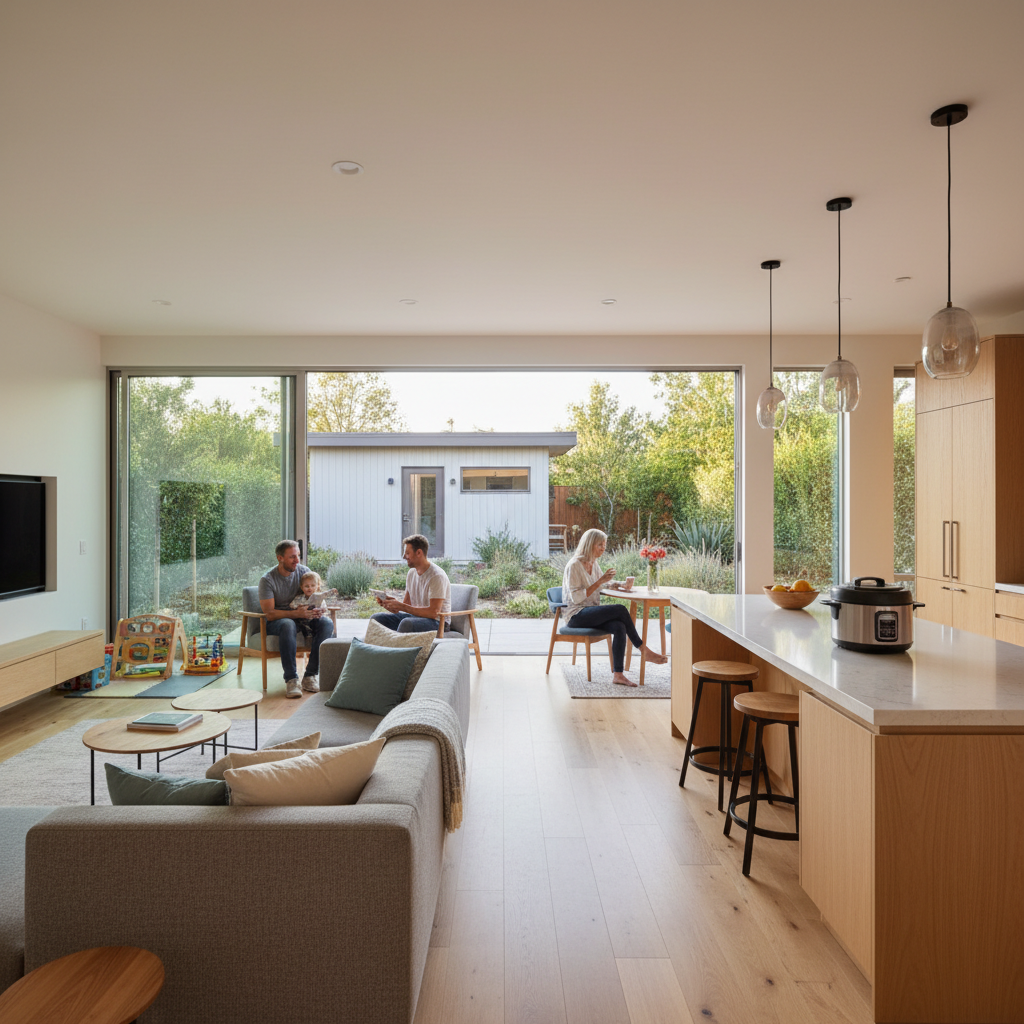
As of May 2026, the California real estate landscape is being reshaped by a significant demographic shift. Data from the California Department of Finance indicates that the 65-and-older population is the state’s fastest-growing age group, while simultaneously, high entry-level housing costs have kept adult children in parental homes longer. For sellers, this has created a 'Multi-Generational Premium'—a measurable increase in home value for properties that can seamlessly accommodate three generations under one roof.
According to recent 2025-2026 National Association of Realtors (NAR) regional data, approximately 18% of buyers in the Western United States specifically sought out multi-generational living arrangements. Sellers who strategically prepare their homes to meet this demand are seeing 10-12% higher closing prices compared to traditional single-family layouts.
1. Internal Configuration: The 'Junior Suite' Pivot
Unlike the external ADU (Accessory Dwelling Unit) strategies governed by SB-9, the multi-generational pivot focuses on internal flexibility. Sellers should prioritize the creation of a 'Junior Suite'—a bedroom with an ensuite bathroom and, if possible, a private entrance or direct access to a common area.
- Practical Action: Convert a formal dining room or a redundant home office into a ground-floor bedroom. If the budget allows, adding a walk-in shower instead of a tub increases the 'aging-in-place' appeal.
- The ROI: Real estate analysts at CBRE suggest that a dedicated ground-floor suite adds significantly more liquidity to a listing in high-density markets like Los Angeles, San Jose, and San Diego.
2. Implementing Universal Design (UD) Principles
In 2026, 'Universal Design' is no longer just for specialty housing; it is a mainstream luxury standard. Buyers are looking for homes that won't require expensive retrofitting as they or their parents age. Practical upgrades include:
- Zero-Threshold Entries: Ensuring at least one entrance has no step-up.
- Lighting and Tech: Installing smart, motion-sensor lighting in hallways and bathrooms, which serves both convenience and safety for older residents.
- Hardware: Swapping traditional door knobs for lever-style handles and installing 'D-shaped' cabinet pulls. These are inexpensive updates that signal a 'future-proof' home to savvy buyers.
3. Zoning the 'Common' vs. 'Private' Experience
Multi-generational buyers are hyper-sensitive to acoustic privacy. When preparing your home for sale, emphasize the 'buffer zones.' If your floor plan allows for a 'split-wing' configuration where the primary suite is separated from other bedrooms by the living area, highlight this in your marketing materials.
Pro-Tip: Invest in sound-dampening insulation for walls shared between living areas and bedrooms. Mentioning 'enhanced acoustic privacy' in the listing description is a major selling point for families with different sleep schedules.
4. Marketing Strategy: Keywords for the 2026 MLS
To capture the attention of multi-generational buyers, your listing must use specific, searchable terminology. Avoid vague terms like 'large house' and instead use high-intent phrases that trigger alerts for specialized agents:
- 'Dual Primary Suites'
- 'Universal Design Integrated'
- 'Flexible Multi-Gen Floorplan'
- 'Ground-Floor Living Ready'
5. Financial and Appraisal Considerations
Ensure your appraiser understands the value of these modifications. Provide a 'Value Supplement' document that lists the costs of recent conversions or universal design upgrades. Because these features are in high demand but low supply, they often qualify as 'quality of construction' or 'functional utility' adjustments in the appraisal process, helping to support a higher contract price during the escrow phase.
By shifting focus from a single-family mindset to a multi-generational strategy, California sellers can tap into the state's most resilient and well-capitalized buyer pool in 2026.