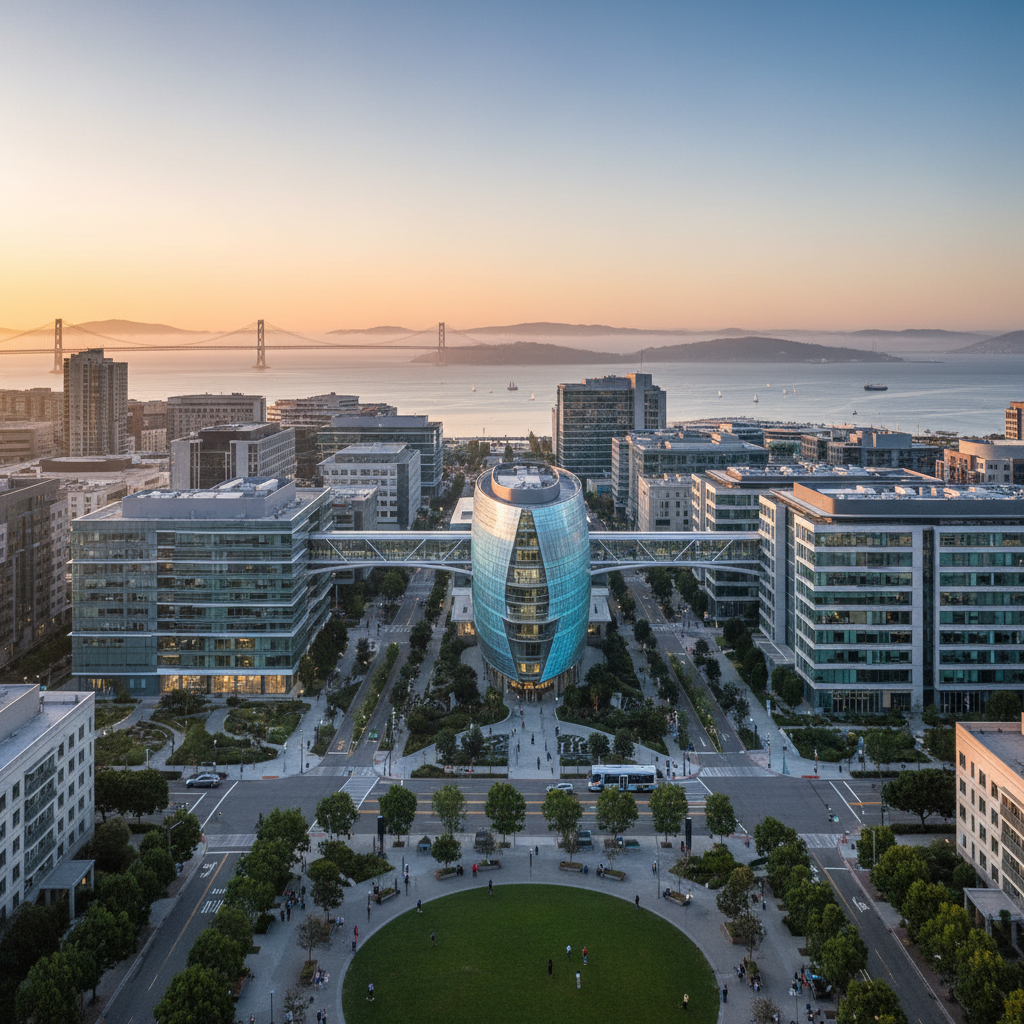
The Anchor Effect: Life Sciences as a Real Estate Stabilizer
In the spring of 2026, San Francisco’s Mission Bay has decoupled from the volatility seen in the city’s traditional financial core. While the mid-market and SOMA districts continue to navigate the post-remote-work transition, Mission Bay has solidified its status as a specialized 'knowledge cluster.' According to recent CBRE Life Sciences reports, vacancy rates for Class A lab space in the district have tightened to 7.2%, significantly lower than the city's general office vacancy. This commercial stability provides a unique floor for residential property values, as the neighborhood serves a workforce that cannot perform their duties—wet lab research and clinical trials—from home.
Inventory Dynamics: The Shift to High-Liquidity Luxury
Mission Bay’s residential landscape is characterized by its high-density, modern condo stock. Data from the San Francisco MLS for Q1 2026 indicates that the median sale price for a two-bedroom unit in Mission Bay has stabilized at $1.35 million, representing a 4.5% year-over-year increase. This growth is driven by a lack of new supply; with the initial master-planned phases largely complete, the neighborhood has shifted from a construction zone to a mature community. Buyers are primarily high-earning professionals from UCSF, Gladstone Institutes, and the various venture-backed biotech firms that call the neighborhood home.
Infrastructure and Connectivity: The Central Subway Dividend
A primary driver of the neighborhood’s 2026 appeal is the full integration of the Central Subway (T-Third Line). This infrastructure project has finally matured into a reliable transit artery, connecting Mission Bay to Union Square and Chinatown in under 10 minutes. For residents, this eliminates the isolation previously associated with the neighborhood’s southeastern location. Furthermore, the proximity to the Caltrain terminal at 4th and King continues to attract 'super-commuters' who work between the Mission Bay labs and the venture capital hubs of Palo Alto and Menlo Park.
Community Amenities and the 'Park-First' Design
Unlike older San Francisco neighborhoods, Mission Bay was built with 21st-century urban planning principles. The neighborhood features over 20 acres of new parks, including the recently enhanced Spark Social SF area and the Mission Creek Park corridor. These amenities are not just aesthetic; they are functional 'third places' that support a high quality of life for a younger demographic. For families, the Mission Bay School—a joint project between San Francisco Unified and UCSF—has become a top-tier attraction, offering a STEM-focused curriculum that mirrors the district’s industrial identity.
Practical Takeaways for Stakeholders
- For Buyers: Focus on units with views of Mission Creek or the Bay, as these assets have shown the highest appreciation and lowest days-on-market. The 2026 market favors those who view Mission Bay as a long-term hold linked to the healthcare sector.
- For Investors: Rental demand remains robust, with one-bedroom units commanding upwards of $4,200 per month. The target demographic—medical residents and biotech researchers—typically offers low turnover and high credit reliability.
- For Sellers: Highlight the 'transit-optional' lifestyle and the neighborhood’s superior safety ratings compared to other high-density SF districts. Professional staging that emphasizes a 'home office' remains critical, even in a lab-driven economy.
As we move through 2026, Mission Bay stands as a testament to the power of specialized urban planning. It is no longer just a redevelopment project; it is a self-sustaining ecosystem that offers a blueprint for how San Francisco can evolve beyond the traditional tech-office model.


