The Shift from Insurance to Underwriting
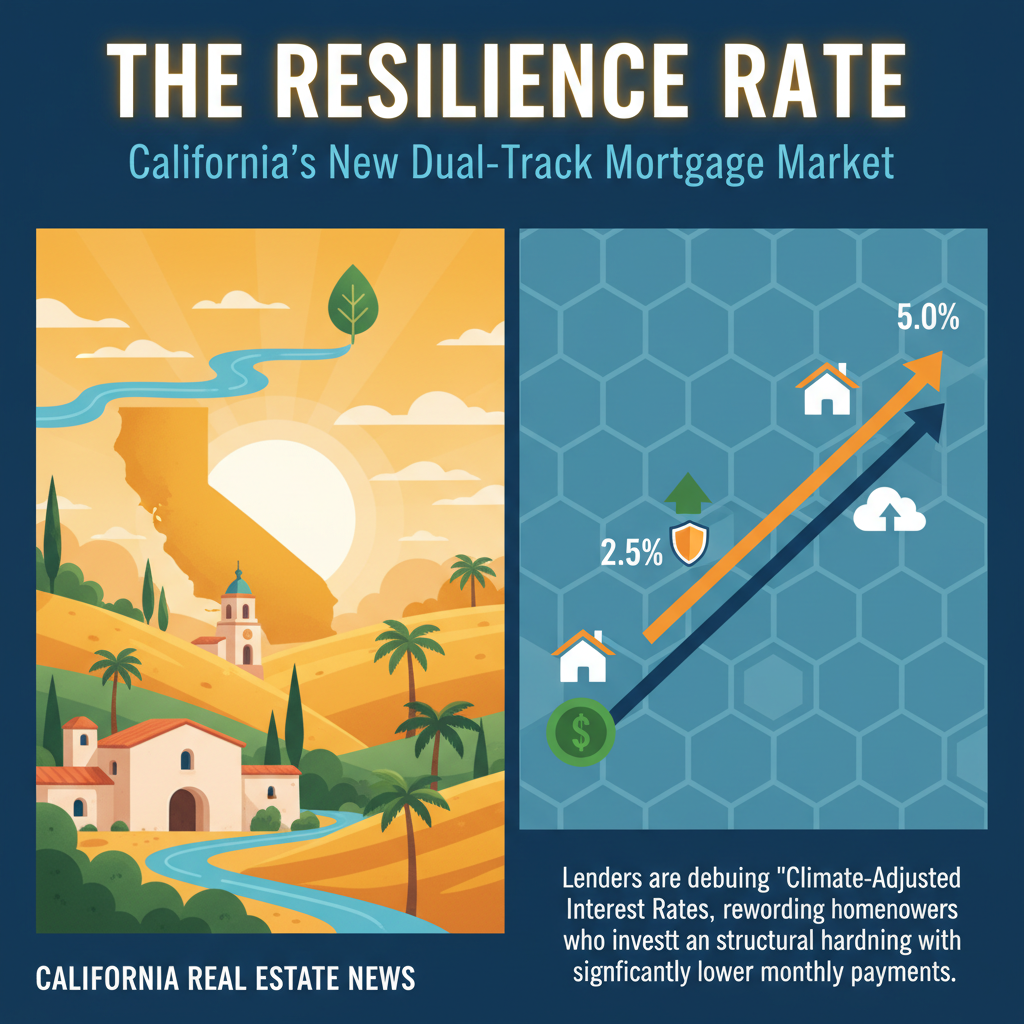
For decades, California real estate has been governed by the mantra of 'location, location, location.' As of May 2026, a new variable has entered the equation: the Climate Resilience Score (CRS). Following the stabilization of the insurance market earlier this year, institutional lenders including Wells Fargo and several California-based credit unions have begun implementing risk-adjusted mortgage pricing that goes beyond credit scores and loan-to-value ratios.
This 'Resilience Premium' represents a fundamental shift in how capital is deployed in the Golden State. Homes that meet the 2025 Wildfire-Hardening Standards or those located in upgraded flood zones are now qualifying for 'Green-Tier' interest rates, often 40 to 60 basis points lower than the state average.
Data-Backed Divergence
Recent data from the California Department of Financial Protection and Innovation (DFPI) reveals a growing spread in the market. In the first quarter of 2026, homes with a CRS of 80 or higher (out of 100) saw a 12% faster closing rate than those with scores below 50. According to the California Association of Realtors (C.A.R.), the median price for a 'hardened' home in the Inland Empire has risen 7.4% year-over-year, while un-retrofitted properties in similar zip codes have plateaued.
- Inventory Split: 65% of new mortgage applications in May 2026 included a request for a resilience-based rate reduction.
- Cost Offset: The average cost of structural hardening ($15,000–$25,000) is now being recouped in just 4.2 years through a combination of lower insurance premiums and reduced mortgage interest.
The Rise of 'Climate Alpha'
Real estate investment trusts (REITs) are now targeting 'Climate Alpha'—the value gained by purchasing vulnerable properties and retrofitting them to achieve higher resilience scores. This is particularly prevalent in the Sacramento Delta and the Sierra Foothills. By upgrading roofing materials, installing ember-resistant vents, and implementing greywater defensible space systems, investors are effectively 'manufacturing' equity by lowering the property's long-term cost of capital.
Practical Takeaways for the 2026 Market
For Sellers
Before listing, obtain a certified Resilience Audit. A property with a pre-certified high CRS is now more attractive to buyers than one with cosmetic upgrades like quartz countertops. In 2026, a 'Resilience Certificate' is as vital as a pest inspection.
For Buyers
Look for 'Resilience-Ready' financing. Many lenders now offer 'Fix-and-Fortify' loans that allow buyers to roll the costs of climate retrofitting into their initial mortgage, automatically triggering a lower interest rate once the work is certified.
For Investors
Focus on the 'Resilience Gap.' Properties that are structurally sound but lack modern fire or flood mitigation offer the highest potential for appreciation as the market continues to price in climate risk at the lending level.
As California's housing market matures, the ability to withstand the elements is no longer just a safety concern—it is a financial imperative that defines the true cost of homeownership.


