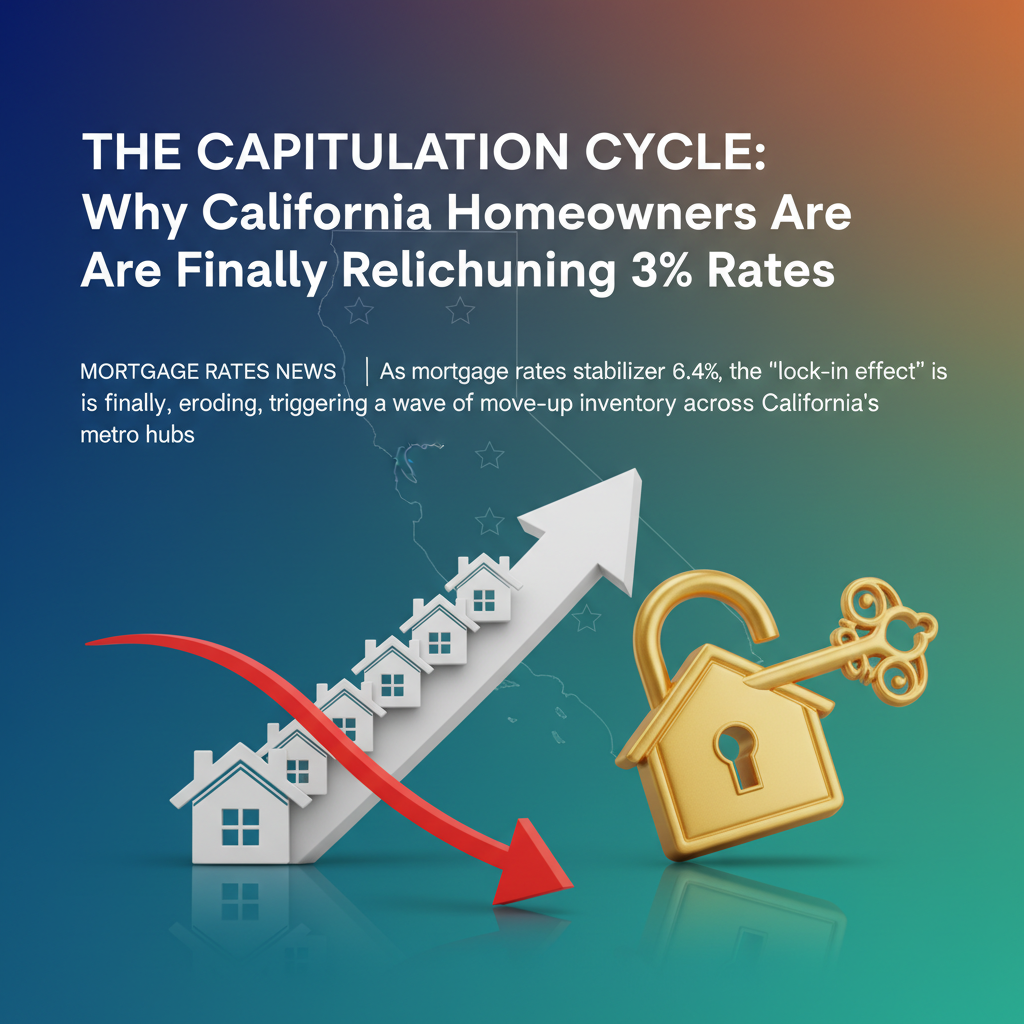
The Great Migration from the 3% Anchor
As of May 8, 2026, the 30-year fixed mortgage rate sits at 6.42%, according to Freddie Mac data. For nearly three years, the California housing market was paralyzed by the "lock-in effect"—the massive gap between pandemic-era 3% rates and the post-inflation reality. However, Q2 2026 marks a structural turning point: homeowner capitulation. After years of delaying life transitions, California sellers are finally bringing inventory to market, accepting that the era of sub-4% rates is a historical anomaly rather than a pending return.
Deciphering the 2026 Yield Spread
The 10-year Treasury yield is currently hovering at 4.15%. Historically, mortgage rates trade roughly 170 basis points above the 10-year note. Today, the spread remains bloated at 227 basis points. This "risk premium" is largely driven by the Federal Reserve’s continued reduction of its Mortgage-Backed Securities (MBS) portfolio and lower-than-average prepayment speeds. For California buyers, this means rates are effectively 50 basis points higher than the economic fundamentals suggest they should be, creating a market sensitive to any sign of spread compression.
Inventory Thaw in the Golden State
The California Association of Realtors (CAR) reports a 12.4% year-over-year increase in new listings this month, the sharpest rise since 2021. The psychological barrier of 6% has been replaced by a "life-stage necessity" phase. Families who delayed moves to San Diego, the Bay Area, or Sacramento in 2024 and 2025 due to rate shock are now prioritizing square footage and school districts over low-interest debt maintenance. This influx of supply is providing a much-needed vent for the pressure cooker of California home prices, which have seen growth moderate to a sustainable 3.2% annually.
Practical Takeaways for 2026 Borrowers
- Monitor the Spread, Not Just the Fed: If the 10-year Treasury dips without a corresponding drop in mortgage rates, it indicates the MBS market is lagging. Buyers should consult with lenders who track secondary market liquidity to timing their locks.
- Leverage the "Equity Buffer": The average California homeowner now holds over $610,000 in tappable equity. Using a high down payment from a previous sale to minimize the loan balance is the primary tool to combat 6.4% interest while keeping monthly payments manageable.
- The 15-Year Pivot: With the 15-year fixed rate hovering at 5.75%, move-up buyers are increasingly choosing shorter terms. This strategy allows them to bypass the high interest-to-principal ratio of the first five years of a 30-year loan, effectively "buying back" the equity lost to higher rates.


