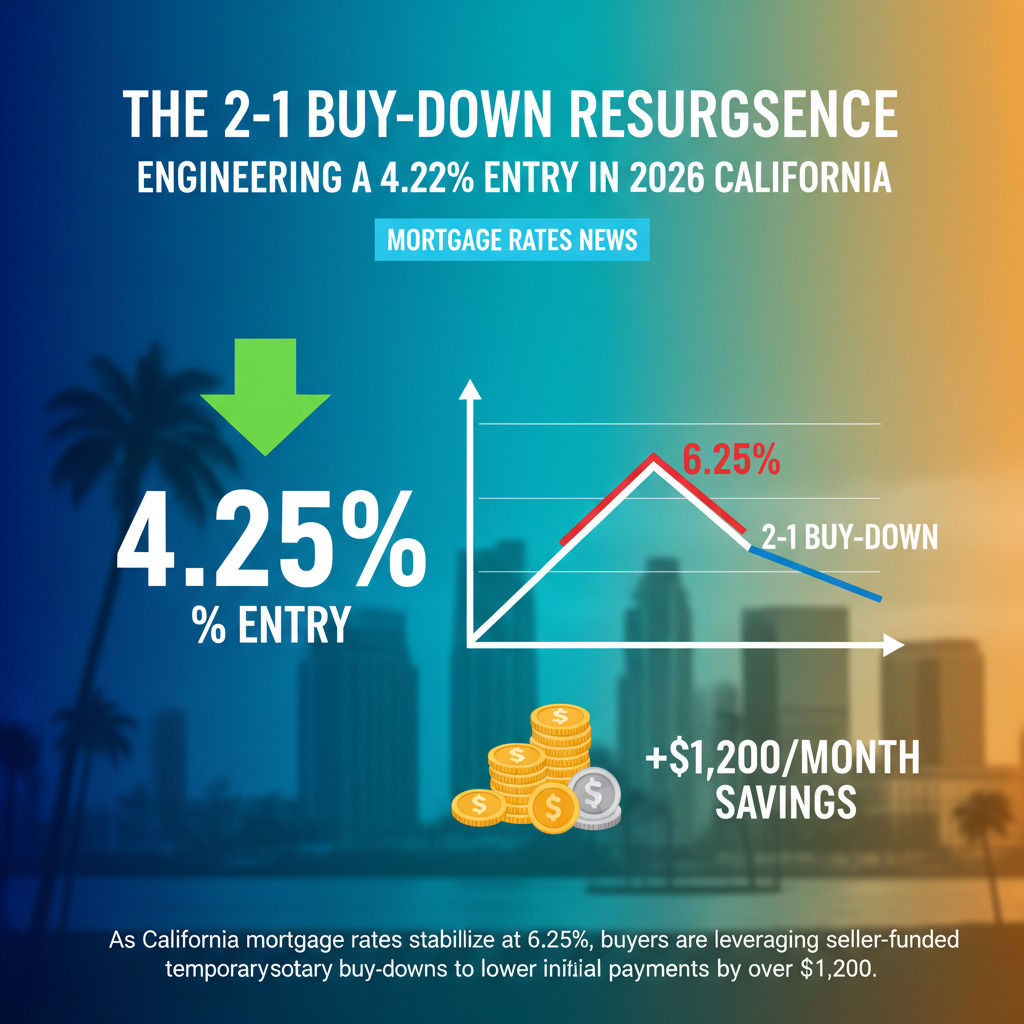
The 6.25% Plateau and the California Affordability Gap
As of May 7, 2026, the California mortgage market has entered a period of relative stability. Following the volatility of the mid-2020s, the 30-year fixed-rate mortgage has found a structural anchor near 6.25%. While significantly lower than the peaks of 2023, this 'new normal' still presents a formidable barrier for first-time buyers in high-cost corridors like the Bay Area, San Diego, and Orange County, where the median home price remains north of $850,000.
According to recent data from the California Association of Realtors (CAR), the housing affordability index remains near historic lows, with only 16% of households able to comfortably afford a median-priced home at current rates. However, a strategic shift is occurring in the negotiation phase of the transaction: the resurgence of the temporary 2-1 buy-down as a tool to bridge the gap between today’s rates and the anticipated easing cycle of 2027.
The Mechanics of the 2-1 Buy-Down
A 2-1 buy-down is not a permanent rate reduction, but a subsidized payment structure usually funded by the seller. In the current 6.25% environment, the buy-down works as follows:
- Year 1: The buyer’s effective rate is 4.25% (2% below the note rate).
- Year 2: The buyer’s effective rate is 5.25% (1% below the note rate).
- Years 3-30: The rate adjusts to the fixed note rate of 6.25%.
The difference in monthly payments is held in an escrow account, funded entirely by a seller concession at closing. For a $1,000,000 loan in a high-cost California county, this strategy saves the buyer approximately $1,250 per month in the first year, providing significant liquidity during the expensive transition into homeownership.
The Math: Buy-Down vs. Price Reduction
In the May 2026 market, inventory levels have risen slightly to 3.4 months of supply, giving buyers more leverage to request concessions. Many buyers instinctively ask for a price reduction, but the math often favors the buy-down. For example, on a $1.2 million purchase, a $25,000 price reduction only lowers a monthly payment by roughly $150 at 6.25%. That same $25,000 applied as a 2-1 buy-down credit can lower the monthly payment by over $1,200 in the first year.
This 'refi-ready' strategy assumes that by 2028, the Federal Reserve will have reached its neutral target, potentially allowing the buyer to refinance into a permanent 5.5% or 5.75% rate before the buy-down expires. If a refinance occurs before the two-year period ends, the remaining funds in the buy-down escrow account are typically applied as a principal reduction on the new loan.
Strategic Takeaways for California Buyers
To successfully execute this strategy in the current landscape, buyers and investors should consider the following:
- Target High-Days-on-Market Listings: Properties sitting for more than 30 days in markets like Riverside or Sacramento are prime candidates for seller-funded credits.
- Verify Concession Limits: For conforming loans, seller concessions are generally capped at 3% to 9% depending on the down payment. In California’s high-balance and Jumbo markets, these limits can vary, so consult with a lender early.
- Qualify at the Note Rate: Despite the lower initial payments, buyers must still qualify for the loan based on the full 6.25% rate. This ensures long-term stability if a refinance opportunity does not materialize.
By shifting the focus from the 'sticker price' to the 'effective rate,' California buyers can navigate the 6.25% plateau without sacrificing their monthly cash flow or their ability to enter the market before the next appreciation cycle begins.


