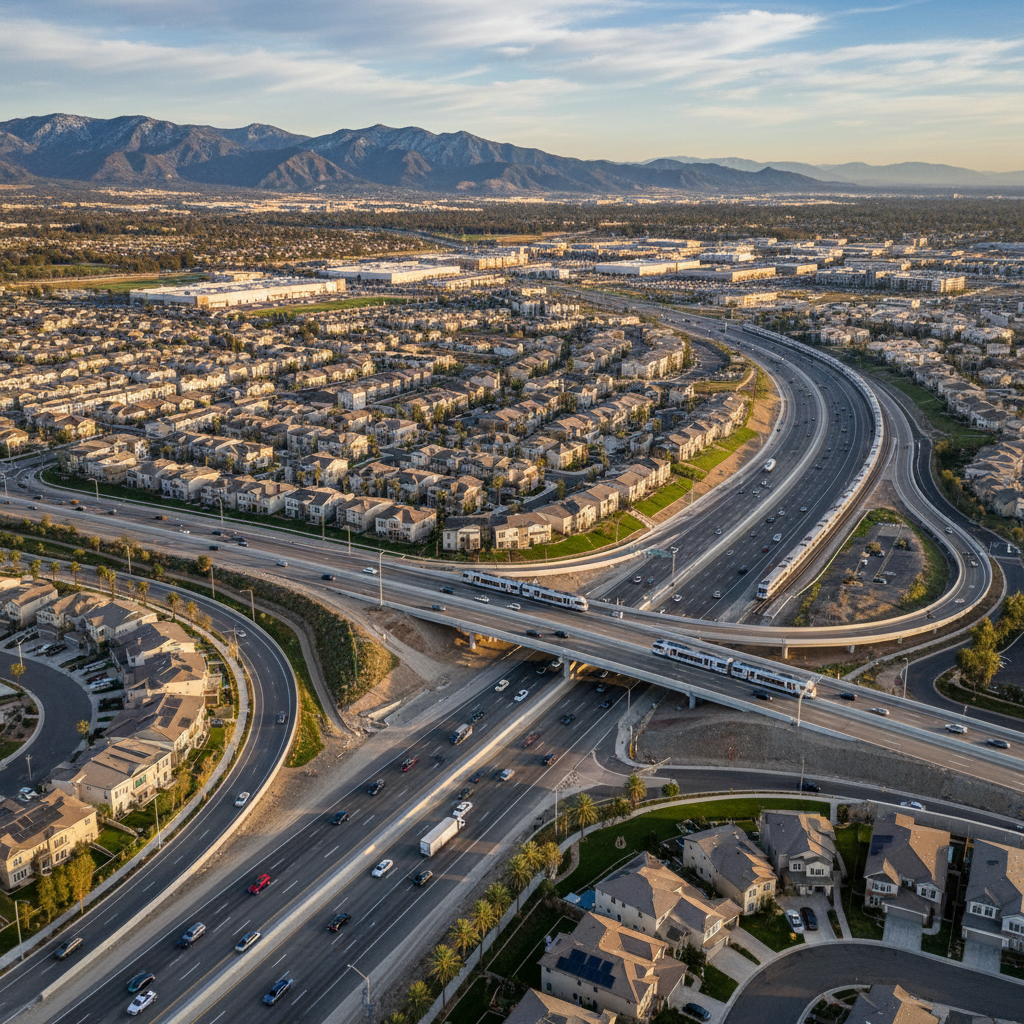
The Infrastructure Alpha: Beyond the Coastal Core
As of May 2026, the California real estate market is witnessing a fundamental geographic reorganization. While previous years focused on the recovery of coastal urban cores, the current narrative is dominated by the 'Infrastructure Alpha'—a surge in valuation driven by the nearing completion of high-speed rail segments and the Brightline West project. This shift is transforming former bedroom communities into primary residential hubs for a new class of super-commuter.
The 'Brightline' Effect and Central Valley Connectivity
Data from the California High-Speed Rail Authority and recent MLS reports indicate a significant correlation between construction milestones and local appreciation rates. In the Inland Empire, specifically around the Rancho Cucamonga transit node, residential property values have outpaced the state average by 12.4% over the last 18 months. According to Census Bureau migration flow data, the Inland Empire saw a net inflow of 45,000 residents from the Los Angeles basin in 2025 alone, driven by the promise of a 45-minute transit time to the Las Vegas corridor and enhanced connectivity to the LA Metro system.
In the Central Valley, cities like Fresno and Bakersfield are no longer viewed as secondary markets. CBRE reports show a 15% increase in institutional land acquisitions near proposed rail stations. Investors are banking on the 'Polycentric California' model, where high-speed transit allows workers to maintain high-paying coastal jobs while building equity in more affordable inland regions.
Investment Perspectives: The New Nodes of Growth
The investment thesis for 2026 has shifted from 'buy-and-hold coastal' to 'strategic inland development.' The maturity of Senate Bill 9 and 10, combined with new transit-oriented development (TOD) incentives, has made multi-unit projects near transit hubs the most lucrative play in the state. Commercial-to-residential conversions are also pivoting; rather than focusing on downtown San Francisco, developers are targeting aging retail centers along the rail corridors that can be rezoned for high-density transit housing.
Practical Takeaways for 2026
1. Identify 'Transit-Adjacent' Zones
Buyers and investors should focus on properties within a 3-mile radius of confirmed rail stations. Historical data from similar global transit projects suggests that the 'proximity premium' peaks approximately 12 months before a line becomes operational and continues to appreciate for the first 24 months of service.
2. Monitor Zoning for Transit-Oriented Development (TOD)
Stay apprised of local municipal updates regarding TOD overlays. Many inland cities are offering expedited permitting and reduced parking requirements for developments within half a mile of rail hubs, significantly increasing the potential Return on Investment (ROI) for small-to-mid-sized developers.
3. Evaluate the 'Super-Commuter' Rental Market
For landlords, the 2026 market favors units that cater to the professional super-commuter. This includes amenities such as dedicated home offices, high-speed fiber connectivity, and proximity to 'last-mile' transit solutions like bike-shares and shuttle loops.
Conclusion
California’s real estate map is being redrawn by the rail. As the state moves toward the 2028 Olympic games and the launch of new transit arteries, the distinction between 'coastal wealth' and 'inland affordability' is blurring. The Super-Commuter Corridor represents the next phase of California’s economic evolution, offering a rare window for appreciation in a stabilizing market.